
Flocked perfume bottle: The sensory Revolution Begins with Soft touch
In the world of sophisticated perfumes that highly rely on vision and smell, a silent texture revolution is unfolding on the surface of perfume bottles. Flocking technology - a technique historically used in textiles and automotive interiors – is now bringing an unprecedented sensory experience to high-end perfume packaging.
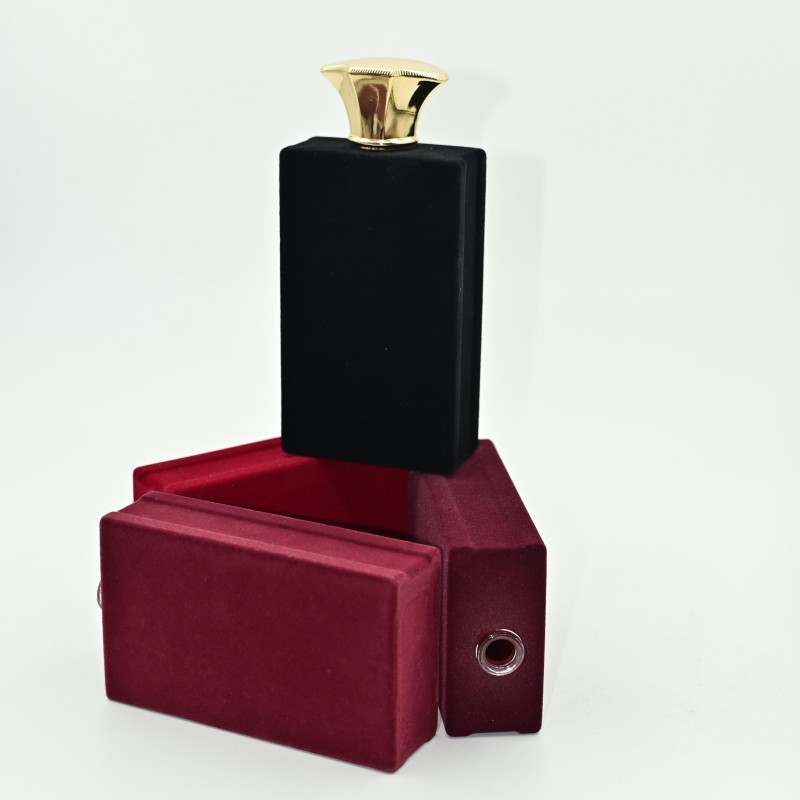
The revealed technique: When Glass meets Velvet
The core of flocking is to use static electricity or adhesives to vertically bond short fibers to the glass surface, creating a fine and soft velvet texture. The technicians first sprayed a special adhesive on the glass bottle. Then, in a high-voltage electrostatic field, millions of microfibers – each usually less than one millimeter long – are arranged and evenly attached to each other. Each square centimeter of the bottle can hold tens of thousands of these fibers, forming a microscopic forest similar to velvet.
Unlike traditional smooth or frosted glass, the surface of bee colonies interacts with light in a unique way. It does not reflect dazzling strong light but absorbs and diffuses light, bringing a warm and soft glow to the bottle. This dual innovation in touch and sight redefines the way consumers interact with fragrance bottles.
** Market drivers: The Evolution from Containers to collections **
Emilie DuPont, the director of the French Perfume Museum, pointed out: “Perfume consumption has evolved from a simple selection of scents to a comprehensive sensory experience.” The new generation of consumers seek complete harmony in the visual, tactile and olfactory aspects of products.
According to a recent report by the International Perfume Packaging Association, the market share of high-end perfume bottles with special surface treatments has increased by 47% in three years. Although still relatively novel, clustering technology is developing rapidly due to its unique differences.
This trend is driven by the constantly changing consumer psychology. In the digital age, people are increasingly eager for genuine tactile experiences. The warm and soft touch of the bee colony bottle forms a sensory contrast with the cold electronic device, becoming a new dimension of appeal for physical luxury goods.
Brand Innovation: Telling Stories through Touch
Pioneering brands have already been exploring the narrative potential of gathering crowds.
The French niche perfume brand “msammoire Touch” has launched a “Nostalgia Series”, wrapping retro-style bottles in a soft velvet texture. “We want to recreate the tactile memory of opening the drawer of our grandmother’s dressing table,” explained creative director Lucas Bamnard. The contrast between the soft touch and the coolness of the glass itself is an emotional experience.
“Technical Challenges and Breakthroughs
Applying flocking to perfume bottles is not without challenges. Bottles are often exposed to moisture and cosmetics, thus requiring high surface durability. Leading materials laboratories have developed specialized waterproof and stain-resistant fiber coatings to ensure that a large number of surfaces remain beautiful during daily use.
Interactive innovation is particularly attractive. A German design studio recently showcased thermochromic flocking, where hidden patterns appear on bottles when the temperature changes. Another company is developing “fragrance release” flocking – a small amount of fragrance will be released by gently rubbing the surface of the bottle, and samples can be taken without opening the bottle.
Sustainability considerations.
With the enhancement of environmental awareness, the ecological footprint of clusters has also received close attention. The industry is moving in several directions: using recycled PET to produce regenerated fibers, developing non-toxic water-based adhesives, and designing composite structures that are easier to separate and recycle. Some brands even advocate a “use first” design, where consumers keep the luxurious shell and only replace the sachets inside.

“Future Outlook: Multi-Sensory Design Language
Industry observers predict that this is just the beginning of ground-based innovation. We may soon see more applications of hybrid materials, such as the combination of partial flocking and metal inserts, or bottles embedded with micro-sensors that respond to touch.
Packaging designer Sarah Chen said, “Perfume bottles are transforming from passive containers to active communication interfaces.” Tactile design is becoming a design language as important as color and form.
For consumers, this means a richer and more personalized product experience. For brands, it offers a new way out
Post time: Dec-12-2025


