
Stage 1: The Art of Batching
The journey of a glass bottle begins in the batching department. Here, mountains of silica sand, limestone, dolomite, feldspar, soda ash, along with large quantities of recycled cullet (broken glass) and other mineral and chemical raw materials, are stockpiled. Under the control of automated systems, these raw materials undergo precise weighing and mixing, transforming into a uniform “batch.” This step is crucial, as it directly determines the purity and quality of the subsequent molten glass. Furthermore, to ensure the glass’s high transparency and brightness, iron impurities in the raw materials must undergo a rigorous removal process.
Stage 2: The Fiery Melting
The prepared batch is transported via conveyors to the melting workshop and fed into a massive glass furnace. Here, the temperature soars to a scorching 1450°C to 1600°C. Inside this blazing “alchemy furnace,” the powdery materials gradually melt, undergoing complex chemical reactions, ultimately forming a homogeneous, bubble-free viscous liquid glass—the molten glass. This stage is the core of the entire production process and must operate continuously. Once a glass furnace is ignited, it typically runs non-stop for several years or even longer.
Stage 3: The Magic of Forming
The molten glass is channeled through a feeder to the forming equipment—the bottle-forming machine (IS machine) . This is the critical leap where the shapeless glass takes form. Currently, there are two mainstream forming processes, representing the “magical craftsmanship” of modern industry:
The first is the “Blow & Blow” process. This method is primarily used for producing narrow-neck bottles like beer bottles. First, the molten glass flows into a blank mold, where compressed air is used to form the finish (the bottle mouth) and the initial parison (a hollow preform). This glowing hot “gob” is then transferred to a final blow mold, where compressed air is applied again, inflating it against the mold’s inner walls to create the familiar bottle shape.
The second is the “Press & Blow” process. This is a more advanced technology, particularly suitable for producing wide-mouth containers like jars, and is now also widely adopted for manufacturing lightweight beer bottles. Unlike the Blow & Blow method, once the glass gob enters the blank mold, a metal plunger first presses the glass, simultaneously forming the bottle finish and the parison. A final blow then completes the shaping. This process results in more uniform wall thickness distribution and higher strength. Bottles produced this way can be 20% to 50% lighter than those made with the traditional Blow & Blow method, saving raw materials and reducing transportation costs.
Stage 4: Eliminating Stress
Glass bottles fresh from the forming machine are still very hot and relatively brittle. At this stage, they are neatly lined up on a conveyor belt, steadily making their way into a long annealing lehr. Annealing is an indispensable step in glass production. Its purpose is to slowly and evenly cool down the bottles, eliminating the internal stresses that developed due to rapid cooling during forming. Without this process, a glass bottle might shatter spontaneously from a minor temperature difference or a slight impact. After spending several hours undergoing a controlled, uniform cooling process, the glass bottles finally acquire their stable physical properties.
Stage 5: Rigorous Inspection
Fresh off the production line, the glass bottles must face a series of discerning “eyes.” Modern production lines utilize automated inspection equipment to conduct a comprehensive “physical examination” on every single bottle: Scanning the body for defects like cracks, bubbles, or stones (embedded particles); inspecting the sealing surface of the finish for flatness; and testing the bottle’s resistance to internal pressure and vertical load. Only products that pass these checks with a 100% qualification rate proceed to the final packaging stage.
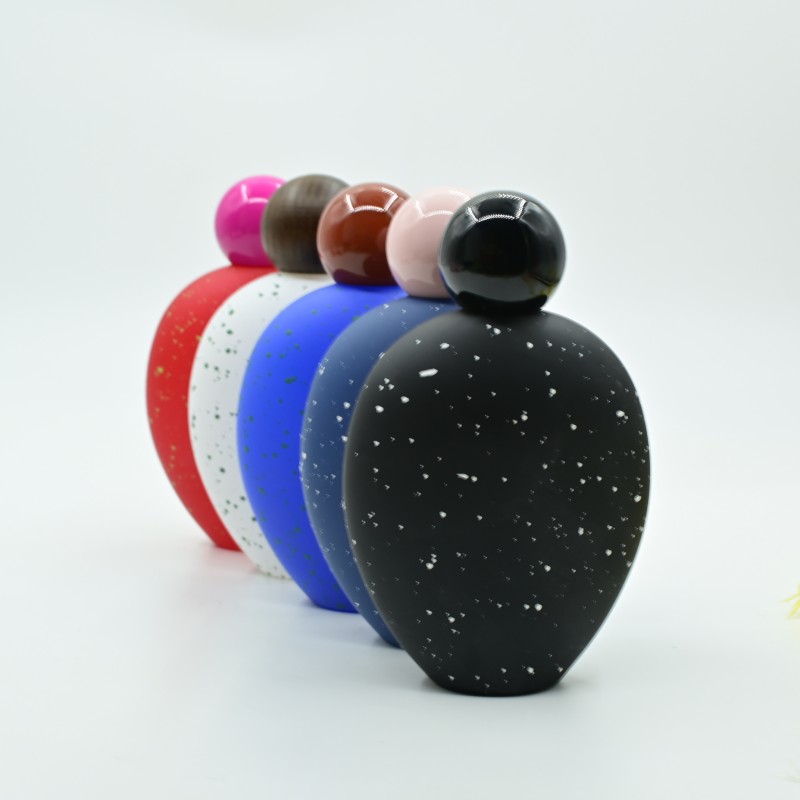
From ordinary sand to lustrous, clear glass bottles, every single step embodies the precision of material science and industrial manufacturing. Whether it’s the time-honored Blow & Blow method or the Press & Blow process representing the trend towards lightweighting, the technology behind glass bottle production continues to evolve, providing us with packaging containers that are both traditional and modern, environmentally friendly and safe.
Post time: Mar-12-2026


