
- Double wall cream jars signal premium value through weight, structure, and finish.
- Anti aging packaging must balance aesthetics, barrier performance, and dispensing hygiene.
- The best jar choice depends on formula sensitivity, filling method, and brand positioning.
- Material, decoration, and closure compatibility matter as much as capacity.
- Consistent packaging systems help skincare brands build recognition across product lines.
Double wall cream jars are widely used in anti aging packaging because premium skincare buyers respond to packaging that looks stable, refined, and technically credible. In practice, this matters when a brand is trying to position a cream, eye treatment, or overnight formula as high value rather than mass market. The packaging decision is not cosmetic only: oxygen exposure, consumer handling, and closure fit all influence product integrity. For reference, ISO 22716:2007 sets cosmetic GMP principles, while FDA cosmetics regulations define the compliance framework brands must consider. If your goal is to launch cream jars that feel premium, double wall construction is often the most direct way to elevate perceived quality without changing the formula itself.
Why double wall cream jars fit premium anti aging packaging
Double wall cream jars work because they communicate protection, density, and refinement in a single object. A thick outer wall visually separates the product from everyday commodity packaging, and that separation matters in anti aging categories where consumers expect controlled, high-performance skincare. Brands using skincare set packaging often choose this structure to create a consistent shelf story across day cream, night cream, and eye cream lines.
Anti aging products also tend to justify a higher unit price, so packaging must support perceived value from the first touch. A jar that feels lightweight can weaken that perception, even if the formula is strong. In contrast, a double wall jar can deliver a more stable tactile cue and make the product feel deliberate, engineered, and giftable. That is one reason premium skincare brands frequently pair jars with matching airless bottles or coordinated outer cartons to reinforce a complete regimen.
| Packaging factor | Double wall cream jar | Basic single wall jar |
|---|---|---|
| Perceived weight | High | Medium to low |
| Visual premium effect | Strong | Moderate |
| Formula separation | Better structural isolation | Direct contact with outer shell |
| Best use case | Anti aging, eye cream, rich moisturizer | Mass market cream, body care |
Anti aging packaging needs more than a luxury look
Anti aging packaging must protect texture, support hygiene, and align with product claims. Consumers buying a wrinkle cream or lifting cream usually expect a sophisticated formula, and packaging should not undermine that expectation. A premium jar that is difficult to open, unstable on the vanity, or incompatible with the filling process can harm adoption even if the design is attractive.
For sensitive formulas, barrier strategy is often as important as branding. Many anti aging creams contain oils, silicones, peptides, antioxidants, or emulsions that can degrade if exposed to heat, light, or repeated finger contact. This is why some brands evaluate not only jars but also airless packaging for specific actives. The right choice depends on the formula, the expected consumer use pattern, and the required shelf presentation.
On the compliance side, packaging must align with manufacturing and quality expectations. Cosmetic GMP guidance in ISO 22716:2007 is especially relevant when brands are moving from concept to commercial production. For material safety and migration concerns, many packaging teams also review plastic and polymer guidance from ASTM standards as part of internal qualification workflows.
Key technical reasons premium brands choose cosmetic cream jars
Double wall cream jars are not just decorative; they solve several practical packaging problems at once. The inner container can help maintain cleaner product contact, while the outer shell improves rigidity and enhances visual depth. That combination is especially useful for anti aging packaging where the customer is paying for both formula performance and brand presentation.
- Better shelf impact: The layered structure creates depth and a more expensive visual profile.
- Improved handling feel: The jar feels more substantial in hand, which supports premium positioning.
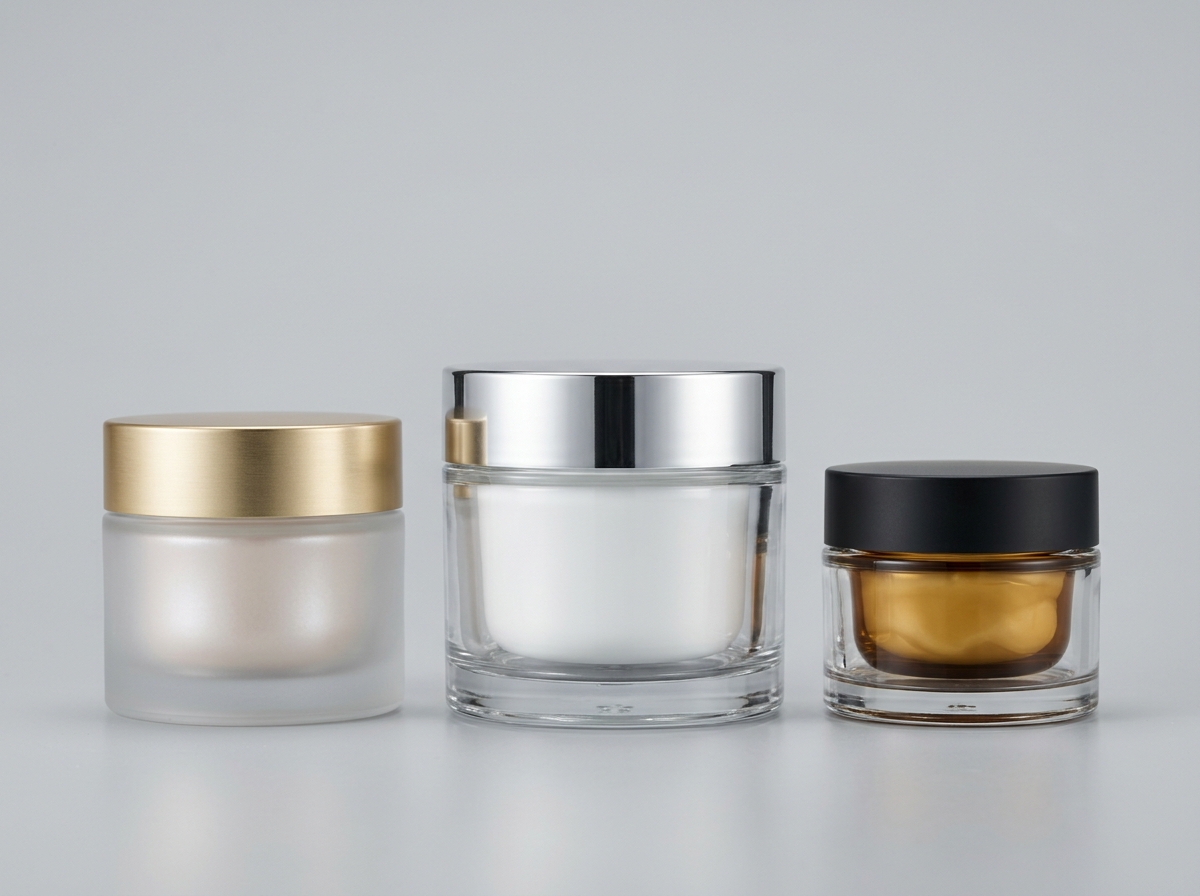
- More flexible decoration: Brands can combine matte, glossy, metallic, or frosted finishes.
- Broader SKU coherence: The same visual language can extend across cream, balm, and treatment products.
- Compatibility with sets: Jars can be matched with bottles and pumps in a coordinated regimen system.
If you are building a premium line, the jar should not look like an isolated item. It should fit into a wider packaging family that includes perfume bottles, accessories, and secondary packaging where appropriate. That systems thinking is what makes a brand feel mature rather than improvised.
Material choice and capacity matter in anti aging packaging
Material selection affects both appearance and usability. Many double wall cream jars use PET, acrylic, PP, or mixed structures depending on budget, decoration target, and compatibility needs. For brands pursuing sustainability messaging, high-recyclability materials can support the story, but the packaging team still has to verify stiffness, clarity, and closure fit before launch.
Capacity should match the product purpose. Anti aging creams commonly sit in smaller volumes because the formula is used in controlled amounts and the price per gram is higher than body care. The most common jars are in the 15 ml to 100 ml range, with 30 ml, 50 ml, and 60 ml being practical choices for premium facial care. Smaller capacities help keep the perceived value high and reduce the risk of formula aging after opening.
| Capacity | Typical use case | Brand signal | Common consumer expectation |
|---|---|---|---|
| 15 ml | Eye cream or treatment sample | Very premium, targeted | Concentrated formula |
| 30 ml | High-value day or night cream | Premium | Daily facial use |
| 50 ml | Core anti aging cream | Premium mainstream | Full regimen staple |
| 100 ml | Body cream or family-size moisturizer | Value-driven premium | Longer usage cycle |
For teams comparing jar and bottle systems, it is often useful to review the full portfolio of cosmetic jars alongside bottle formats. That makes it easier to align capacity, closure type, and decoration across an entire launch plan.
Decoration choices shape perceived anti aging value
Decoration often determines whether a jar looks truly premium or merely standard. In anti aging packaging, the most effective visual cues are usually controlled color palettes, metallic accents, matte surfaces, and precise typography. A jar with a poor print finish or weak coating can make even a strong formula feel less trustworthy.
Common premium finishes include hot stamping, screen printing, soft-touch coating, electroplating, and frosted effects. These methods are useful because they create differentiation without changing the core pack architecture. Brands seeking a more luxurious identity may also use custom lids, metallized collars, or layered color systems to reinforce hierarchy within the line.
The best decoration is the one that supports brand memory. If every SKU in the anti aging range uses the same jar silhouette, the same cap family, and the same color logic, consumers can identify the line faster at retail or online. That recognition effect is especially useful for repeat purchase categories, where visual recall influences replenishment.
| Decoration method | Premium effect | Durability | Best for |
|---|---|---|---|
| Hot stamping | High | Medium to high | Logos and accent lines |
| Screen printing | Moderate to high | High | Brand name and dosage text |
| Soft-touch coating | High | Medium | Tactile luxury positioning |
| Frosted finish | High | High | Serum and anti aging cream lines |
 What formula teams should check before choosing cream jars
Formula compatibility should be checked before artwork is approved. A beautiful jar is not useful if the closure leaks, the inner cup deforms, or the dispensing experience becomes messy after repeated use. This is especially important for rich anti aging formulas, which may contain oils, butters, active ingredients, or fragrances that interact differently with plastics and liners.
The most practical qualification process includes filling trials, closure torque testing, stability observation, and transport simulation. Packaging teams often compare the jar with a pump or airless alternative before locking the final format. If the product is more treatment-like than cream-like, an airless bottle may provide better control. If the product is a rich day cream with a focus on vanity presentation, a double wall jar usually wins on aesthetics.
Quality assurance should also examine the consumer’s opening motion. A premium jar should be easy to open, close, and reseal without feeling fragile. This is one of the subtle reasons high-end brands invest in consistent packaging systems rather than sourcing isolated components.
- Confirm formula compatibility with the inner cup and liner.
- Test leak resistance after repeated open-close cycles.
- Check print and coating resistance to abrasion.
- Validate transport stability under temperature and vibration.
- Review whether the closure supports premium tactile feedback.
How double wall cream jars support premium brand storytelling
Double wall cream jars help brands tell a credible luxury story because the object itself looks engineered. Consumers may not articulate the technical reasons, but they do notice balance, thickness, and finish. In anti aging packaging, those cues are important because they reduce the gap between product promise and physical experience.
This is where packaging becomes part of the product, not just a container. A brand selling advanced anti aging skincare can use a double wall jar to imply care, control, and formulation seriousness. That works best when the packaging family is coherent across a range, including matching bottles, pumps, and accessories from a unified supplier. For brands building a full launch system, skincare set packaging can make line architecture easier to manage and more attractive to distributors.
Packaging consistency also helps in ecommerce, where consumers often make decisions from small images. A jar with recognizable shape and clear hierarchy can outperform a generic container because it is easier to remember and compare. In premium skincare, memorability is a commercial asset.
Comparison: when to use double wall jars versus other formats
The best format depends on the formula and the claim strategy. Double wall cream jars are best when presentation and tactile value are central to the purchase decision. Airless bottles are usually better when the formula is more sensitive or the brand wants a more hygienic dispensing story. Standard cosmetic jars remain useful for value-oriented products or broader household lines.
| Format | Main strength | Main limitation | Typical fit |
|---|---|---|---|
| Double wall cream jar | Premium feel and strong shelf appeal | Less hygienic than fully sealed dispensing | Luxury anti aging creams |
| Airless bottle | Better protection and controlled dosing | Higher mechanism complexity | Serums and active treatments |
| Single wall jar | Cost efficiency | Lower perceived value | Mass market creams |
For many brands, the right answer is not choosing only one format. It is building a tiered system where jar, bottle, and accessory each support a different product role. A coordinated line can improve both brand recognition and operational efficiency.
Practical buying checklist for premium anti aging packaging
A good procurement decision should balance branding, performance, and commercial feasibility. The more premium the product, the more important it is to test the packaging in real production conditions instead of judging only by renderings.
- Check the target capacity against the expected usage cycle.
- Verify material compatibility with oils, actives, and fragrance components.
- Review closure fit, seal quality, and repeated-use performance.
- Evaluate decoration methods for wear resistance and brand clarity.
- Confirm whether the jar supports your filling line and lead-time plan.
- Assess whether the full packaging family looks coherent across SKUs.
For brands sourcing internationally, logistics and sample approval also matter. A supplier with a broader packaging range can reduce coordination friction because the same team can support jars, bottles, pumps, and matching accessories in one program. That can shorten launch planning and reduce the risk of visual inconsistency.
Frequently asked questions about double wall cream jars
Are double wall cream jars better for anti aging products?
Yes, when the goal is to create a premium look and strong shelf presence. They are especially effective for eye creams, rich moisturizers, and prestige skincare where packaging perception influences purchase intent.
Do double wall jars protect formulas better than standard jars?
They can improve structural separation and perceived protection, but they do not replace formula-specific barrier testing. For highly sensitive actives, airless systems may still be the better choice.
What capacity is best for premium anti aging cream?
Most premium anti aging creams use 30 ml, 50 ml, or 60 ml. Smaller capacities often feel more exclusive and fit the pricing logic of treatment products.
Which materials are common for cosmetic cream jars?
Common options include PP, PET, acrylic, and mixed structures. The right material depends on cost target, decoration style, and product compatibility.
How do I make anti aging packaging look more luxurious?
Use controlled color palettes, precise printing, metallic accents, matte or frosted finishes, and a jar silhouette that looks stable and balanced.
Should I choose a jar or an airless bottle for anti aging skincare?
Choose a jar for rich creams and strong vanity appeal. Choose an airless bottle when hygiene, dosing control, or sensitive actives are the priority.
What should brands test before finalizing cream jars?
Test leak resistance, closure torque, decoration durability, transport stability, and formula compatibility before commercial approval.
Post time: Aug-05-2026


