
- Choose packaging as a complete brand system, not as separate components.
- Match glass, pump, closure, and decoration to the formula and dispensing behavior.
- Confirm samples, compatibility, artwork, quality criteria, and shipping protection before mass production.
- Prepare market-specific compliance documentation for every destination country.
- Use refill, recyclable, and lightweighting strategies only when they work with the product and supply chain.
OEM glass packaging gives beauty brands a practical route to differentiated international launches because it combines product protection, shelf impact, and coordinated customization. The United States Food and Drug Administration states that cosmetic facility registrations must be renewed every two years, while cosmetic product listings require annual updates under the Modernization of Cosmetics Regulation Act, making documentation and supplier coordination important parts of global packaging planning.
Why OEM Glass Packaging Matters for International Beauty Brands
OEM glass packaging is most valuable when a brand needs a complete, repeatable packaging solution across several products or markets.
A bottle alone rarely creates a finished beauty package. The commercial result depends on the relationship between the glass body, pump or dropper, cap, collar, decoration, label area, secondary carton, and shipping protection. If one part changes visually or mechanically, the entire range can appear inconsistent.
International expansion adds further complexity. A brand may need one visual identity across different product viscosities, filling lines, climate conditions, language requirements, and distribution channels. Working with a packaging manufacturer that can coordinate several components reduces the number of handoffs between suppliers and makes design changes easier to control.
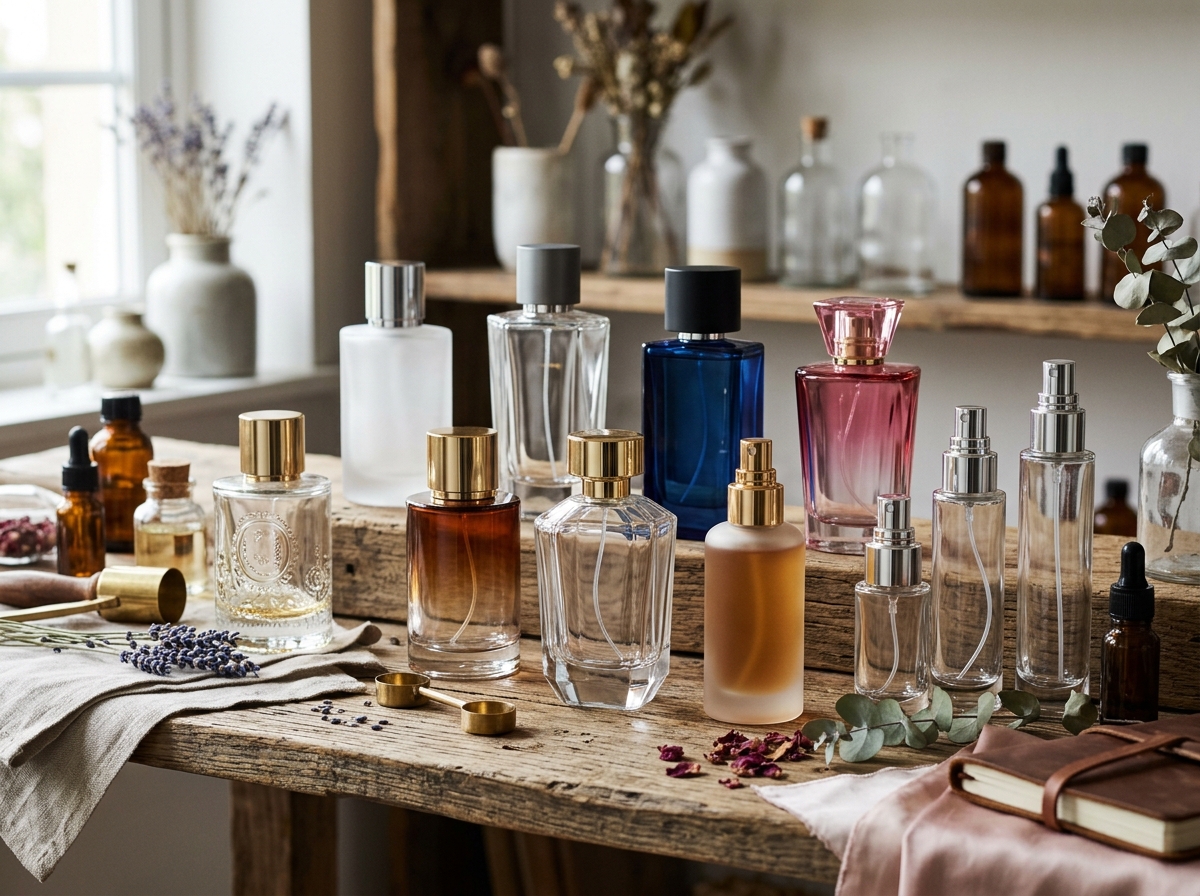
For fragrance, premium glass can communicate weight, clarity, color, and tactility before the consumer uses the product. For skincare, a coordinated bottle or jar family can make a range easier to recognize on a crowded shelf. For facial oils and concentrated treatments, a small bottle with a suitable dropper can support controlled dispensing and a premium presentation.
Beauty Packaging Solutions by Product Scenario
The right packaging format depends on the formula, user experience, product positioning, and filling process rather than on appearance alone.
| Product scenario | Common primary pack | Key technical checks | Brand experience |
|---|---|---|---|
| Fine fragrance | Glass bottle, spray pump, decorative cap | Crimp or screw compatibility, spray pattern, leakage resistance, decoration adhesion | Weight, clarity, tactility, and visual differentiation |
| Serum or facial treatment | Glass bottle with pump or dropper | Viscosity, dose consistency, dip tube reach, formula contact, closure seal | Controlled application and premium precision |
| Air-sensitive skincare | Airless bottle or jar system | Priming, evacuation behavior, actuator performance, refill or replacement strategy | Protection-focused and modern |
| Essential oil or concentrated oil | Small glass bottle with dropper or reducer | Drop control, gasket material, neck finish, chemical compatibility | High-value, concentrated, and specialist |
| Routine skincare collection | Coordinated bottles, jars, pumps, and cartons | Visual consistency, component interchangeability, filling efficiency, packing protection | Strong range architecture and shelf recognition |
Packaging compatibility must be tested with the actual formula, because a visually attractive component can still fail through swelling, discoloration, odor transfer, leakage, dose variation, or poor priming.
Fragrance packaging requires mechanical and visual coordination
Fragrance packaging should be evaluated as a complete dispensing assembly rather than as a decorative glass bottle.
The spray pump influences the perceived quality of a fragrance every time the consumer uses it. Buyers should request information about spray output, actuation feel, crimp dimensions or thread specifications, dip tube length, and closure fit. Decorative options such as flocking, velvet finishes, colored coatings, and metal components can create differentiation, but each added process requires adhesion, abrasion, and appearance checks.
The bottle also needs to work with the filling partner. Neck finish, shoulder geometry, base stability, and line handling can affect filling speed and packaging damage. A supplier should therefore review the intended filling equipment before finalizing a custom mold.
Skincare packaging should balance protection and usability
Skincare packaging must protect the formula while making the daily application simple and consistent.
Pumps are often suitable for lotions, emulsions, and liquid treatments because they can reduce direct contact with the remaining product. Droppers may suit low-viscosity oils and concentrated serums, but the dropper bulb, pipette, and closure should be assessed as one system. Airless packaging may be considered when the formula is sensitive to repeated air exposure, although performance depends on the formulation, fill level, actuator, and internal mechanism.
Multi-piece skincare sets can create a coherent range, but they also increase procurement complexity. The brand should define which components must remain common across the range and which may vary by product. A shared cap or decoration language can improve visual unity without forcing every product into the same bottle shape.
How to Select a Cosmetic Packaging Manufacturer
A cosmetic packaging manufacturer should be judged by process control and communication quality as well as by its product catalog.
The first screening question is whether the supplier can manage a system of compatible components. Ask for technical drawings, material declarations, closure specifications, decoration options, sample procedures, inspection criteria, and packaging details for export. A supplier that only sells individual containers may not be able to coordinate the complete launch package.
The second question is whether the supplier understands the intended market. Regulatory obligations differ between the United States, the European Union, the United Kingdom, and other regions. The FDA guidance on cosmetic facility registration and product listing explains the United States registration and listing framework, including the two-year facility renewal cycle and annual product listing updates. This does not replace the brand’s legal review, but it demonstrates why packaging records must be organized and traceable.
The third question is whether the manufacturer can support a controlled approval path. Samples should be evaluated in stages: visual approval, component fit, formula compatibility, filling trial, transport simulation, and production approval. The exact testing plan should reflect the product risk and destination market.
| Approval item | Recommended evidence | Numerical reference | Why it matters |
|---|---|---|---|
| US facility registration | Registration record and responsible-party coordination | Renew every 2 years | Supports market-specific compliance planning |
| US product listing | Product identity, responsible person, and required listing information | Update annually | Helps maintain current regulatory records |
| Formula compatibility | Written test plan and retained samples | Use the brand’s approved test duration | Reduces risk of leakage, discoloration, or interaction |
| Pre-production approval | Signed sample, approved artwork, and inspection standard | One controlled approval gate | Prevents undocumented changes before mass production |
The numerical references in the first two rows come from the FDA source linked above. The remaining rows are process recommendations, not legal requirements.
OEM Glass Packaging Workflow for Global Launches
A disciplined OEM workflow reduces late-stage changes, which are especially expensive when molds, decoration, cartons, and freight are already involved.
- Define the brief. Document product type, formula behavior, target market, fill volume, dispensing method, desired appearance, budget range, and forecast demand.
- Shortlist compatible formats. Compare bottle geometry, neck finish, pump or dropper fit, cap construction, decoration, and secondary packaging.
- Review technical files. Confirm drawings, tolerances, materials, component interfaces, and filling-line requirements before approving a custom mold.
- Test with the actual formula. Check leakage, color change, odor, dispensing, priming, closure torque, and surface appearance under relevant conditions.
- Approve artwork and samples. Use signed references for color, logo position, decoration coverage, component assembly, and carton copy.
- Plan export protection. Confirm separators, inner cartons, palletization, drop protection, moisture control, labeling, and inspection before shipment.
- Establish repeat-order controls. Keep approved samples, inspection standards, artwork files, and change records for future production.
For international orders, shipping protection should be treated as part of the packaging design instead of as an afterthought. Glass may survive normal handling when properly packed, yet a weak divider, excessive movement, or concentrated pallet load can create avoidable breakage.
 Sustainability and Glass Packaging Decisions
Glass can support a sustainability narrative, but responsible claims require evidence about the whole packaging system.
The United States Environmental Protection Agency explains how common recyclables, including glass containers, are handled through collection, sorting, processing, and remanufacturing in its recycling guidance. That does not mean every decorative or composite package is accepted in every local system. Coatings, bonded components, mixed materials, pumps, caps, and labels may affect sorting or consumer disposal.
A better sustainability review asks four practical questions:
- Can the primary glass container be separated from other components?
- Is the decoration compatible with the target market’s collection and sorting system?
- Can the design reduce unnecessary material without weakening protection?
- Does the supplier have material information and a clear basis for environmental claims?
Plastic accessories such as pumps and caps may be necessary for dispensing performance. The objective is not to remove every non-glass component at any cost, but to design a package that balances protection, usability, material efficiency, and realistic end-of-life conditions.
Common OEM Packaging Mistakes
The most common mistake is approving a component because it looks correct in an empty sample.
Other avoidable errors include selecting a pump before confirming viscosity, testing decoration without abrasion checks, changing the cap after the mold is finalized, overlooking carton dimensions during freight planning, and requesting production before a signed color standard exists.
Another mistake is treating compliance as a supplier-only responsibility. The brand, formula developer, filling partner, importer, and packaging supplier may each hold different information. A clear responsibility matrix helps identify who owns formula compatibility, artwork accuracy, regulatory records, transport testing, and final release.
How a Complete Packaging Partner Supports Brand Growth
A complete packaging partner helps a beauty brand move from concept to repeatable commercial production with fewer disconnected decisions.
The supplier’s role can include fragrance bottles, skincare sets, essential oil bottles, airless systems, cosmetic jars, spray components, caps, decorative finishes, and coordinated packing. The value is not simply having many products; it is the ability to connect the right components into a consistent product family.
For a growing brand, this approach can also support phased launches. A standard bottle and closure may be used for an initial market test, while custom glass, premium decoration, or a broader set architecture can be introduced after demand is validated. This reduces unnecessary design risk without limiting future brand development.
FAQ
What does OEM glass packaging include?
It can include the glass container, pump, dropper, cap, collar, decoration, label area, carton, protective inserts, sampling, and production coordination. The exact scope should be defined in the packaging brief.
Is glass suitable for every cosmetic formula?
No. Glass is compatible with many beauty formulations, but compatibility still depends on the formula, closure materials, decoration, seal, dispensing system, and storage conditions. Testing with the finished formula is essential.
Should a fragrance brand use a custom bottle mold?
A custom mold may be worthwhile when distinctive shape, proportions, or brand ownership are central to the market position. A stock bottle can be more practical for early validation, shorter development cycles, or lower initial complexity.
What should buyers request from a packaging manufacturer?
Request technical drawings, component specifications, material information, decoration samples, compatibility guidance, quality standards, production timelines, packing details, and a clear process for approving changes.
How can brands reduce international shipping damage?
Use tested dividers, restrained movement, suitable inner cartons, stable palletization, and clear handling specifications. The final packing method should be checked with the actual bottle, closure, carton, and freight route.
Can packaging suppliers support a complete skincare collection?
Yes, when they can coordinate matching bottles, jars, pumps, caps, decoration, and secondary packaging. Buyers should confirm which dimensions and components can remain consistent across the range.
What makes a cosmetic packaging manufacturer reliable?
Reliability is demonstrated through accurate technical communication, repeatable samples, documented quality criteria, controlled changes, realistic lead times, export packing knowledge, and responsive issue resolution.
About Lemuel
Lemuel Packaging develops coordinated packaging solutions for fragrance and skincare brands, including perfume bottles, skincare sets, essential oil bottles, airless packaging, cosmetic jars, spray components, caps, and decorative accessories. Its approach combines product selection, customization, visual coordination, and export-oriented communication for international buyers. Explore the company site to review available packaging directions and discuss a project brief with the team.
Post time: Aug-27-2026


