
- Evaluate the supplier as a packaging development partner, not only as a container vendor.
- Check material, closure compatibility, decoration, capacity, filling performance, and transit protection before approving a design.
- Use coordinated packaging families to create consistent fragrance, skincare, essential oil, or body care collections.
- Request samples and written specifications before confirming a private label packaging order.
- Review labeling, sustainability, and export requirements early in the development process.
Custom cosmetic packaging should support the formula, communicate the brand position, and remain practical during filling, shipping, and retail use. The United States Food and Drug Administration explains the core cosmetic labeling requirements in 21 CFR 701.3, including ingredient declaration requirements. This guide shows how private label beauty brands can compare suppliers, select the right packaging architecture, and reduce avoidable launch risks.
What Makes a Cosmetic Packaging Supplier the Best Choice?
The best supplier is the one that can connect design intent with production reality.
Private label brands often begin with a visual concept such as a frosted perfume bottle, a transparent skincare set, or a premium airless dispenser. The difficult work begins afterward. The packaging must fit the formula, accept the chosen closure, survive filling and transport, support the required decoration, and remain consistent across future replenishment orders.
A capable supplier therefore provides more than isolated bottles. It can help coordinate the bottle, pump, cap, jar, accessory, and secondary packaging into a usable product system. This is particularly important when a brand wants a complete fragrance range or a skincare collection with multiple product formats.
Supplier capabilities that matter most
- Product architecture: The supplier can combine primary containers and compatible components rather than selling unrelated stock items.
- Customization: The supplier can discuss custom molds, surface finishes, color, printing, coating, flocking, metal components, and other decoration options.
- Technical communication: The supplier provides clear information about material, capacity, neck finish, closure fit, pump output, and filling requirements.
- Sampling discipline: The supplier confirms artwork, component fit, color approval, and functional testing before mass production.
- Export readiness: The supplier understands protective packing, documentation, lead-time coordination, and communication with overseas buyers.
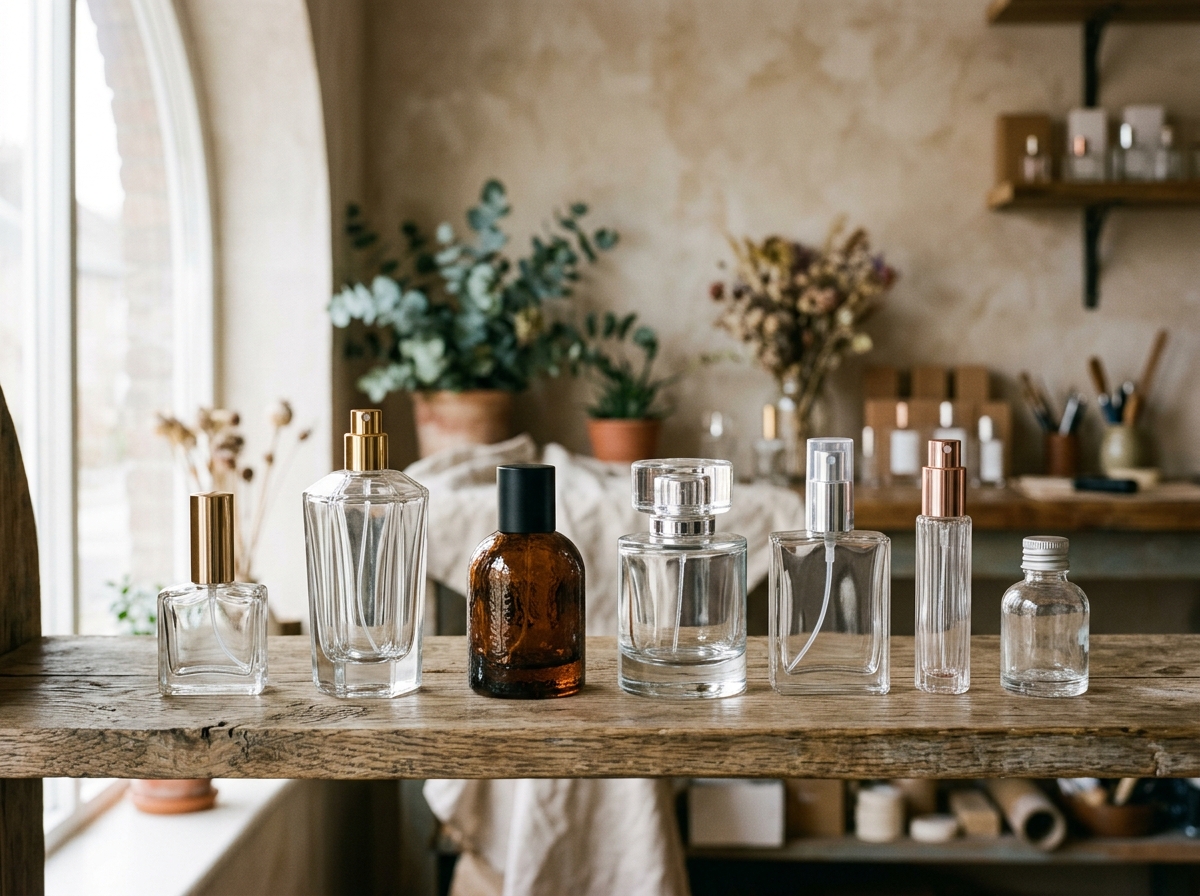 Custom Cosmetic Packaging Selection Criteria
The correct selection process starts with the product specification, not the appearance of an empty container.
| Evaluation area | Buyer question | Priority score | Evidence to request |
|---|---|---|---|
| Formula compatibility | Will the formula interact with the container, pump, liner, or coating? | 5 of 5 | Material declaration, compatibility discussion, and sample testing |
| Closure performance | Does the pump, sprayer, dropper, or cap seal and dispense correctly? | 5 of 5 | Component drawings, fit samples, and functional test notes |
| Brand appearance | Can the supplier reproduce the intended finish and color? | 4 of 5 | Decorated sample, color reference, and approval record |
| Production scalability | Can the same packaging family support future products? | 4 of 5 | Available formats, component options, and replenishment plan |
| Logistics protection | How will finished units be protected during international shipment? | 4 of 5 | Carton structure, internal protection, and packing photos |
The priority scores above are a practical buyer framework, not an industry statistic. They help a purchasing team identify non-negotiable requirements before comparing quotations.
Choosing Packaging by Beauty Product Category
Perfume and fragrance packaging
Fragrance packaging must balance visual distinction with reliable atomizer performance.
Perfume brands commonly compare glass shape, transparency, weight, collar design, spray performance, cap construction, and decoration. A custom perfume bottle can create a strong shelf identity, while a stock bottle with a distinctive cap or surface finish may offer a faster route to market. Flocking, velvet effects, zinc alloy components, and metallic finishes can create a more tactile luxury impression, but each additional finish should be evaluated for repeatability and transit protection.
The supplier should confirm whether the selected sprayer and neck finish are compatible with the bottle. A beautiful bottle is not commercially useful if the atomizer leaks, the cap fits loosely, or the decoration is damaged during packing.
Skincare bottles, jars, and sets
Skincare packaging works best when the full collection looks unified across different product types.
Transparent glass bottles can emphasize the color and texture of the product, while cream jars provide a wider opening for thicker formulas. Pumps are often selected for lotions, serums, and emulsions because they can make dosing more convenient and reduce repeated contact with the remaining product. For a product line, the bottle, jar, cap, and label area should share a recognizable design language.
Multi-piece skincare sets can be useful for brands launching a complete routine. A coordinated set may include different container types while retaining consistent color, closure style, and decoration. The buyer should confirm the dimensions of every item together, especially when the products will be sold in one carton or gift box.
Airless packaging for sensitive formulas
Airless packaging is selected when controlled dispensing and reduced exposure to air are important parts of the product brief.
An airless pump uses a sealed container and a moving internal mechanism to dispense product. It can be considered for creams, serums, and other formulas where the brand wants a premium dispensing experience or improved control over product access. It is not a universal solution: the formula viscosity, filling method, actuator, piston, and internal components all need to be evaluated together.
Ask for a compatibility sample filled with the actual formula or a representative laboratory batch. Test priming, dispensing consistency, residual product, leakage, and user handling before approving the production specification.
Essential oil and dropper bottles
Essential oil and concentrated treatment products require careful attention to small-volume dispensing and closure sealing.
Dropper bottles are suitable for products that require controlled application, such as facial oils, aromatherapy blends, and concentrated serums. The buyer should compare pipette length, bulb material, dropper fit, bottle color, label area, and resistance to the formula. Dark or colored glass may be considered when the product brief calls for additional light protection, but the final choice should be based on formula and stability requirements rather than appearance alone.
Private Label Packaging Workflow
A documented workflow reduces the risk of discovering technical problems after artwork or production has already been approved.
- Define the product brief: Record formula type, viscosity, target market, dispensing method, desired appearance, capacity, decoration, and expected order pattern.
- Shortlist compatible formats: Compare bottles, jars, pumps, sprayers, droppers, caps, and secondary packaging as a coordinated system.
- Request technical information: Ask for material, dimensions, neck finish, component compatibility, packing method, and available decoration processes.
- Review samples: Inspect appearance, fit, seal integrity, dispensing, label placement, and ease of use.
- Test with the formula: Observe leakage, discoloration, odor transfer, dispensing behavior, and product interaction during an appropriate evaluation period.
- Approve a controlled specification: Keep signed artwork, color references, component drawings, sample records, and packing requirements together.
- Plan replenishment: Confirm how approved components and decoration standards will be maintained for later purchase orders.
The most reliable purchasing decision is based on documented samples and specifications rather than catalog photographs alone.
Material, Sustainability, and Compliance Questions
Material selection should be discussed in relation to formula protection, user experience, recycling infrastructure, and the market where the product will be sold.
Glass can support a premium appearance and product visibility, while PET and PE can offer different weight, durability, and design possibilities. The best material depends on the product, distribution route, required decoration, and sustainability claims the brand can substantiate. A supplier should explain what is actually recyclable, what components are mixed materials, and whether pumps, coatings, elastomers, or metal parts complicate recovery.
For European-market projects, buyers should review the European Commission overview of packaging waste policy before making environmental claims. For United States projects, the Federal Trade Commission Green Guides provide guidance for environmental marketing claims. These sources do not replace market-specific legal review, but they show why terms such as recyclable, recycled content, and environmentally friendly should not be used casually.
| Packaging objective | Possible direction | Primary benefit to evaluate | Potential review point |
|---|---|---|---|
| Premium fragrance identity | Glass bottle with decorated cap | Visual and tactile differentiation | Weight, breakage risk, and finish consistency |
| Visible skincare collection | Transparent bottle and coordinated jar | Unified shelf presentation | Formula light sensitivity and label area |
| Controlled serum dispensing | Airless bottle or pump bottle | Convenient, measured dispensing | Viscosity, priming, and residual product |
| Concentrated oil application | Small glass bottle with dropper | Controlled application and premium feel | Seal, pipette compatibility, and formula interaction |
| Lightweight product format | PET or PE container | Lower handling weight and design flexibility | Barrier needs, decoration, and claim substantiation |
How to Compare Cosmetic Packaging Suppliers
A quotation should be compared by total project risk, not by unit price alone.
Ask whether the quoted price includes the selected closure, decoration, assembly, inner protection, carton configuration, sampling, and quality checks. Clarify which items are standard and which require a new mold or special process. A low initial price can become expensive when the brand later needs separate component sourcing, additional sampling, rework, or replacement packaging.
For an international buyer, communication speed and document accuracy are also operational factors. Confirm who manages artwork questions, sample revisions, production updates, inspection findings, and shipping documents. A supplier located in Ningbo may be positioned to coordinate export logistics through nearby port infrastructure, but the buyer should still request a realistic production and shipping schedule rather than relying on a location assumption.
Lemuel Packaging presents itself as a supplier focused on cosmetic and fragrance packaging systems, including perfume bottles, skincare sets, essential oil bottles, airless bottles, jars, spray components, and related accessories. Buyers can review the available range on the cosmetic packaging supplier website and use the product structure to identify formats for a complete brand collection.
Common Mistakes in Private Label Packaging
- Choosing a bottle before confirming the formula and closure compatibility.
- Approving a digital rendering without reviewing a decorated physical sample.
- Testing the container but not the complete pump, cap, liner, and actuator assembly.
- Ignoring carton protection until the first shipment is prepared.
- Using sustainability language that cannot be supported for the complete assembled package.
- Failing to document color, finish, dimensions, and acceptable production tolerances.
- Selecting different suppliers for every component without assigning responsibility for final fit and assembly.
FAQ
What is custom cosmetic packaging?
Custom cosmetic packaging is packaging developed or adapted to match a brand’s product, visual identity, dispensing needs, and market requirements. It may involve a custom bottle shape, special decoration, coordinated components, or a selected stock package with customized finishing.
What should I send to a cosmetic packaging supplier?
Send the formula type, product viscosity, desired capacity, dispensing method, target market, decoration references, estimated order pattern, and any known compatibility requirements. Clear product information allows the supplier to recommend more suitable formats.
Is stock packaging better than a custom mold?
Stock packaging can support a faster and less complex launch, while a custom mold can create stronger visual differentiation. The right choice depends on launch timing, budget, forecast demand, design requirements, and the need for future product extensions.
How do I test private label packaging?
Test the complete filled package, including the container, closure, pump, sprayer, dropper, label, and carton. Review leakage, dispensing, seal integrity, decoration durability, user handling, and transit protection before production approval.
What packaging works well for skincare sets?
Coordinated bottles, jars, pumps, and caps work well when they share compatible colors, finishes, proportions, and label areas. The set should be reviewed as a complete collection so that every product looks related on a shelf or ecommerce page.
When should I choose an airless bottle?
Consider an airless bottle when controlled dispensing, reduced product exposure, or a premium user experience is important. Confirm formula viscosity, filling method, priming behavior, and compatibility through testing before selecting it as the final format.
How can I reduce packaging problems during export?
Approve a documented packing specification, request protective carton details, review sample shipment handling, and clarify responsibility for inspection and shipping communication. Packaging should be evaluated as a finished transport unit, not only as an empty container.
About the Supplier
Lemuel Packaging focuses on cosmetic and fragrance packaging systems for private label and wholesale buyers. Its range includes perfume bottles, skincare sets, essential oil bottles, airless containers, jars, spray components, pumps, caps, and related accessories. The company emphasizes design coordination, material options, surface finishes, and export-oriented communication from Ningbo. Brands can review the product range and contact the supplier through the verified website to discuss samples, specifications, and a packaging brief.
Post time: Sep-01-2026


