
- China custom glass packaging works best when the supplier can integrate bottle, closure, and decoration into one brand-ready system.
- Beauty buyers should judge a glass packaging factory by compatibility, finish consistency, sampling speed, and export packaging discipline.
- For fragrance and skincare, the right cosmetic packaging supplier helps reduce mismatch risk, improve shelf presentation, and simplify launch execution.
- Technical due diligence should include capacity, neck finish fit, surface treatment options, and transport testing references.
- International buyers should prioritize suppliers that can support custom development, not just stock container sales.
China custom glass packaging has become a strategic sourcing option for beauty brands because it combines scale, decoration flexibility, and export experience, especially for fragrance, skincare, and oil-based formulas. In glass packaging, small differences matter: neck finish, closure torque, coating adhesion, and transit protection can determine whether a product ships safely or fails in retail. For buyers, the decision is not only about aesthetics. It is also about compliance, repeatability, and whether the cosmetic packaging supplier can support a complete launch cycle from concept to carton. Standards and test methods such as ISO 8317, ASTM D4169, and NIST provide useful reference points when evaluating packaging safety, performance, and measurement discipline.
What China Custom Glass Packaging Means for Beauty Product Buyers
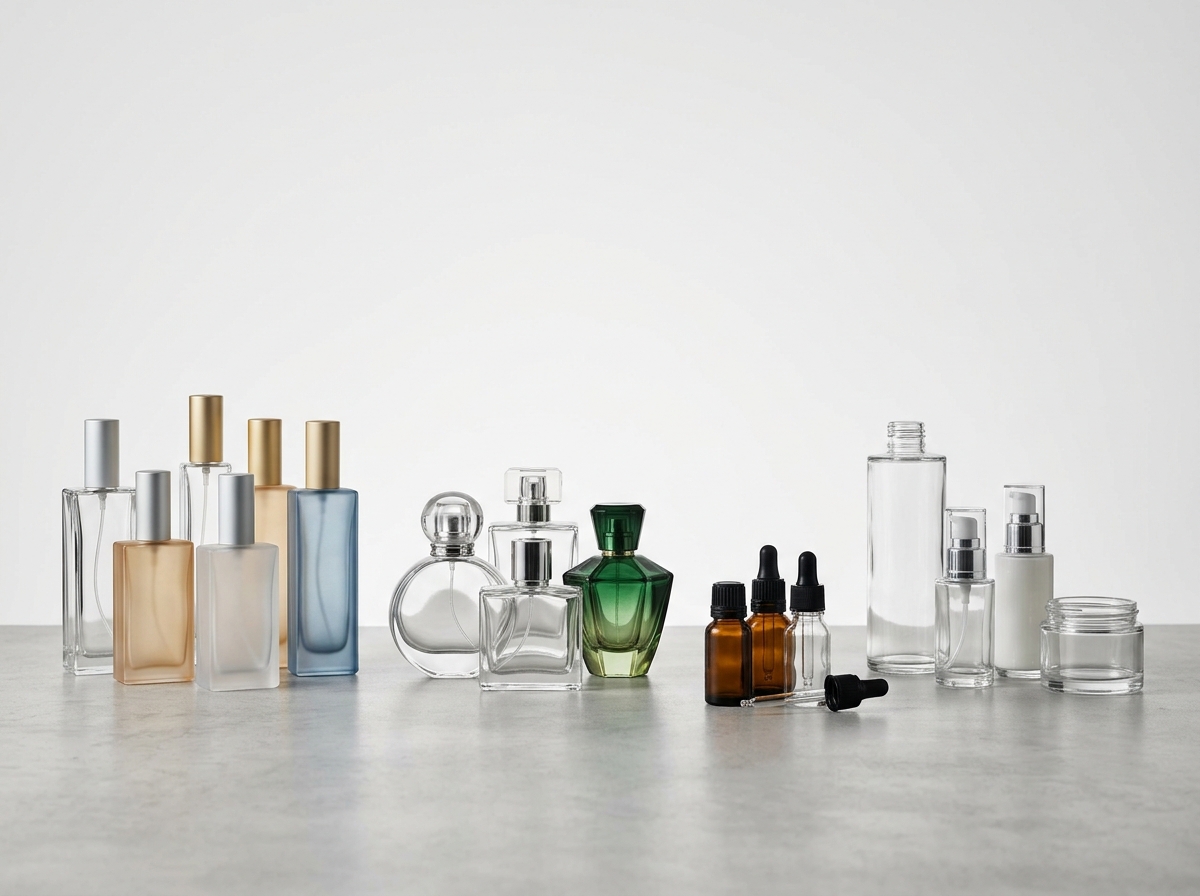
China custom glass packaging means the supplier develops glass containers and related components around a brand’s formula, format, and visual identity. For beauty buyers, this usually includes the bottle or jar, a compatible closure system, decoration methods, and export packaging. It is different from buying a generic container off the shelf.
That difference matters because beauty packaging is a system, not a single item. A perfume bottle may need a tight spray fit and premium surface treatment. A skincare jar may need a liner, a cap that seals properly, and a finish that matches the brand series. A dropper bottle may need precise glass thickness and dosage consistency. The right factory can manage those details at scale.
Buyers who search for a glass packaging factory usually want more than production capacity. They want design coordination, sampling control, and lower risk during mass production. That is especially true for export orders, where packaging failures become expensive fast.
How to Evaluate a Glass Packaging Factory for Cosmetics and Fragrance
The best cosmetic packaging supplier is the one that can prove repeatability, not just show attractive product photos. In procurement, repeatability is what protects your launch schedule and reduces rejected goods. For beauty brands, this means evaluating dimensions, surface finish, closure fit, and packing protection together.
| Evaluation Area | What to Check | Why It Matters | Typical Buyer Risk |
|---|---|---|---|
| Dimensional fit | Neck finish, bottle mouth, closure interface | Prevents leakage and assembly issues | Cap mismatch, spray failure |
| Surface finish | Coating, frosting, flocking, metal trim | Affects shelf appeal and brand tiering | Color variation, poor adhesion |
| Sampling process | Prototype lead time, revision control | Reduces launch delays | Wrong approval cycle |
| Export packaging | Drop test readiness, inner packing, carton strength | Protects goods during transit | Breakage, claims, returns |
For transport verification, many buyers use ASTM D4169 as a framework for distribution testing, while ASTM D999 covers vibration testing of shipping containers. These are not beauty-specific rules, but they are useful when a glass packaging factory must demonstrate that cartons and inserts can survive the real logistics chain.
In practice, a reliable factory should explain how it handles breakage reduction, secondary packaging, and bulk palletization. If a supplier cannot describe those steps clearly, the buyer should treat that as a warning sign.
Core Product Categories in China Custom Glass Packaging
Most beauty packaging programs start with a few essential categories, but high-performing suppliers usually offer a broader system. That is important because brands often expand from a single SKU to a full line within one year.
| Product Category | Common Use | Typical Capacity Range | Buyer Priority |
|---|---|---|---|
| Perfume bottles | Fragrance, body mist | 10 ml to 100 ml | Visual identity, spray quality |
| Skincare jars | Cream, balm, mask | 15 g to 200 g | Seal integrity, series look |
| Essential oil bottles | Aromatherapy, oils, serums | 5 ml to 30 ml | Drop control, chemical compatibility |
| Airless bottles | Emulsions, actives, premium skincare | 15 ml to 100 ml | Oxidation protection, pump stability |
China custom glass packaging for beauty products often extends beyond the bottle itself. Closures, pumps, droppers, collars, and decorative finishes are part of the final product experience. That is why buyers should review a supplier’s full system, not only its glass body catalog.
For example, a fragrance brand may need a glass bottle, a spray pump, a metal cap, and a decorative finish that stays consistent across the collection. A skincare brand may need a jar, an inner lid, and an outer cap that supports both shelf appeal and product protection. In other words, the supplier must think like a packaging partner, not a parts seller.
For buyers comparing formats, the following checklist helps narrow the search quickly:
- Does the product need oxygen protection or only visual presentation?
- Is the formula watery, oily, viscous, or volatile?
- Will the package be filled manually or on an automated line?
- Does the brand need one hero SKU or a full series?
- Will the product ship by air, sea, or mixed logistics?
Materials, Compatibility, and Performance in Cosmetic Glass Packaging
Material choice is a functional decision, not just a sustainability talking point. For beauty packaging, glass is often selected because it provides chemical resistance, premium perception, and high clarity. Yet the right system still depends on the formula and the closure design.
For skincare and fragrance, compatibility checks are essential. Alcohol-heavy fragrance fills, oil-based blends, and active skincare formulas can all interact differently with coatings, liners, and pump parts. A cosmetic packaging supplier should confirm whether the selected packaging is suitable for the intended formula, especially when decorative layers or coated surfaces are involved.
In technical procurement, buyers often ask for thickness, weight, and drop resistance information. Those values are application-specific, but the testing logic should be clear. Measurement discipline matters, and reference methods from ISO 15223-1 and NIST remind buyers that labeling, traceability, and measurement reliability are part of a trustworthy supply chain.
When a factory claims premium quality, the question is simple: can it keep the same finish, same fit, and same packing quality across multiple production batches? That is the real test of a glass packaging factory.
Why Surface Decoration Drives Value in China Custom Glass Packaging
Surface decoration is often the difference between a commodity container and a brand asset. In beauty packaging, decoration turns glass into a signal of price tier, product purpose, and shelf identity. That is why custom packaging projects frequently include frosting, spraying, silk-screen printing, hot stamping, metallization, flocking, or velvet-like finishes.
For fragrance buyers, these finishes can help create a tactile luxury effect. For skincare buyers, a clean transparent bottle may be more effective if the brand wants to communicate purity, ingredient visibility, or scientific positioning. The right decoration depends on the launch story.
| Decoration Method | Brand Effect | Best Use Case | Common Risk |
|---|---|---|---|
| Frosting | Soft premium look | Serum, perfume, skincare lines | Uneven opacity |
| Spray coating | Color differentiation | Hero SKU, seasonal editions | Color drift |
| Silk-screen printing | Logo clarity | Minimalist branding | Print wear |
| Hot stamping | Luxury accent | Fragrance and gift sets | Foil adhesion |
Decorative consistency is especially important when a brand sells a family of products. A five-piece skincare set with mismatched coating tones looks fragmented on shelf. A stable cosmetic packaging supplier should therefore discuss color tolerance, cure process, and sample approval steps before mass production begins.
 MOQ, Sampling, and Export Logistics for a Glass Packaging Factory
The ordering process is where many international buyers either save time or lose it. A good factory will define sample stages, approval points, and bulk production rules early. That reduces revision loops and gives the brand a realistic timeline.
- Confirm product format, capacity, and formula type.
- Choose the bottle or jar structure and compatible closure.
- Review decoration options and color references.
- Approve samples for fit, finish, and packaging.
- Test transit protection before bulk release.
Ningbo-based suppliers have an export advantage because port access can shorten shipping workflows and improve container planning. That does not remove due diligence, but it does help when brands need repeat shipments and schedule stability.
Buyers should also ask how the factory handles pallet loading, carton stacking, and breakage claims. These questions sound operational, but they directly affect landed cost and delivery reliability.
Internal Sourcing Questions Buyers Should Ask Before Placing an Order
The right supplier conversation should feel like a technical review, not a sales pitch. If a glass packaging factory can answer the following questions clearly, the sourcing risk drops significantly.
- Which bottle neck finishes are available for the intended pump or cap?
- What decoration methods are compatible with the chosen glass surface?
- Can the supplier support both sample development and bulk repeatability?
- How is packaging protected for sea freight and mixed shipping routes?
- What is the revision process if the first sample is not accepted?
For larger buyers, it is also worth asking whether the supplier can support a multi-SKU series. Beauty brands increasingly launch collections rather than single items, and series consistency is often more valuable than one visually strong bottle.
How to Compare a Cosmetic Packaging Supplier Across Cost and Risk
The cheapest quotation is rarely the lowest-risk option. In custom glass packaging, hidden costs often appear later in decoration defects, leakage, freight damage, or rework. That is why buyers should evaluate total landed value rather than unit price alone.
| Cost Factor | Low-Cost Risk | Better Practice | Buyer Outcome |
|---|---|---|---|
| Sample control | Weak revision discipline | Documented approval flow | Fewer launch delays |
| Decoration quality | Uneven finish, poor adhesion | Process-controlled finishing | More stable shelf presentation |
| Transit packaging | Higher breakage risk | Drop-test-informed packing | Lower claims rate |
| System compatibility | Cap and pump mismatch | Matched closure set | Safer filling and use |
Industry packaging testing standards are useful here because they shift the conversation from vague quality claims to measurable performance. For example, ASTM D4169 gives buyers a structured way to think about distribution hazards, while ISO-aligned packaging quality routines help ensure the final order matches approved samples.
For brands, that means one practical rule: do not compare factories only by catalog aesthetics. Compare them by how they reduce risk from sample to shipment.
Why Beauty Brands Choose China Custom Glass Packaging for Launches
Beauty brands choose China custom glass packaging because they need speed, design flexibility, and the ability to scale a concept into a real shelf product. The strongest suppliers support that entire chain. They do not just quote a bottle; they help define the packaging system.
This is especially valuable for fragrance and skincare buyers. Fragrance needs visual identity and premium touch. Skincare needs line consistency and functional fit. Essential oils need small-format accuracy and secure closures. Airless packaging needs stable pump performance and formula protection. The supplier must understand those differences.
That is why a modern cosmetic packaging supplier is closer to a development partner than a commodity vendor. The strongest buying decisions usually come from suppliers that can explain material behavior, decoration constraints, and logistics protection in plain English.
FAQ on China Custom Glass Packaging for Beauty Product Buyers
What is the main advantage of a China custom glass packaging supplier?
The main advantage is the ability to develop a complete packaging system with glass, closures, decoration, and export protection under one workflow.
How do I choose a reliable glass packaging factory?
Choose a factory that can prove sample control, closure compatibility, decoration consistency, and shipping protection, not just low pricing.
Is glass packaging better than plastic for cosmetics?
Glass is often preferred for premium fragrance, skincare, and oil-based products because of its visual quality and chemical resistance, but the best choice depends on formula and logistics.
What should I check before approving a sample?
Check fit, appearance, decoration quality, closure compatibility, and how the package behaves during handling and transport.
Why are airless bottles important in skincare packaging?
Airless bottles help protect sensitive formulas from exposure and support a more premium user experience for active skincare products.
How important is packaging testing for export orders?
Very important, because transport vibration, drops, and stacking can damage glass if the packing structure is not validated.
Can one supplier handle fragrance and skincare packaging together?
Yes, but only if the supplier offers multiple categories such as perfume bottles, jars, pumps, and airless systems with consistent development support.
Post time: Aug-17-2026


