
- Choose a supplier that can coordinate bottles, pumps, caps, and secondary packaging as one system.
- Confirm material, dimensions, closure compatibility, decoration, and fragrance resistance before approving a sample.
- Use a documented process for artwork, color approval, testing, production inspection, and export packing.
- Assess sustainability claims through material records and applicable market requirements rather than marketing language alone.
- Compare total project risk and landed cost, not only the unit price of the bottle.
For global buyers, selecting a China perfume bottle supplier is a packaging engineering and supply-chain decision, not simply a search for an attractive container. Regulation (EU) 2025/40 entered into force in 2025 and applies from 12 August 2026, making packaging design, material information, and market readiness increasingly important for brands selling in Europe. This guide explains how to evaluate a custom perfume bottle project from concept through delivery.
What a China Perfume Bottle Supplier Should Actually Deliver
The right supplier delivers a coordinated fragrance packaging solution rather than an isolated glass vessel. A perfume pack normally includes the bottle, neck finish, crimp or screw system, pump, actuator, cap, decoration, and shipping configuration. If these parts are sourced or controlled separately without a clear interface specification, small dimensional differences can create leakage, poor spray performance, cap looseness, or visible alignment problems.
A complete supplier should be able to translate a brand brief into technical decisions. These decisions include bottle geometry, glass color, nominal fill volume, neck dimensions, pump type, cap material, surface finish, logo application, carton requirements, and production quantities. The supplier does not need to manufacture every part internally, but it should take responsibility for compatibility and project coordination.
For an overseas buyer, the supplier’s communication system is part of the product. Clear drawings, sample references, approval records, inspection photographs, and packing specifications reduce the risk created by distance and time-zone differences.
How to Evaluate a Custom Perfume Bottle
The most important evaluation principle is to separate visual appeal from functional suitability. A bottle may look premium in a presentation but still be unsuitable if the pump, fragrance formula, decoration, or logistics conditions have not been assessed.
| Buyer checklist ID | Evaluation area | Questions to document | Evidence to request |
|---|---|---|---|
| 1 | Glass body | Is the shape suitable for the intended brand identity and filling line? | Technical drawing, sample, material description, inspection method |
| 2 | Closure system | Does the pump match the neck finish and required spray experience? | Component drawing, assembled sample, compatibility confirmation |
| 3 | Decoration | Can the supplier reproduce the required color, logo, coating, frosting, or flocking? | Artwork file, color reference, decorated approval sample |
| 4 | Formula contact | Has the selected packaging been assessed with the intended fragrance base? | Compatibility plan, test records, buyer-approved test samples |
| 5 | Export packing | How will glass, caps, and decorated surfaces be protected during transport? | Packing drawing, carton specification, loading photographs |
Material selection should follow the formula and positioning of the product. Glass is often selected for fragrance because it provides a rigid, premium-feeling container and allows strong visual presentation. However, the bottle is only one part of the system. The pump’s internal materials, gasket, dip tube, crimp or screw interface, and actuator can affect dispensing and product contact.
Surface treatment should be specified in production language rather than subjective terms. Instead of requesting a vague “luxury finish,” define whether the project requires transparent color, opaque coating, frosting, metallization, silk screening, hot stamping, embossing, or flocking. Each treatment creates different requirements for adhesion, abrasion resistance, color approval, and handling.
Fragrance Packaging Compatibility and Testing
Compatibility testing is essential because fragrance formulas can interact with packaging components over time. Alcohol, essential oils, colorants, and other formula ingredients may affect coatings, adhesives, elastomers, plastics, or decorative layers. A responsible project therefore tests the assembled pack with the actual formula or a representative formulation before mass production.
The practical test should examine more than whether the liquid remains inside the bottle. Buyers should review leakage, spray pattern, actuation feel, odor transfer, discoloration, coating adhesion, cap fit, and changes after storage under agreed conditions. The exact test plan depends on the formula, pack construction, market, and filling process.
Fragrance safety documentation also belongs in the wider launch plan. The International Fragrance Association explains its fragrance Standards, which are relevant to fragrance ingredient use and should be considered alongside local cosmetic and product-safety obligations. Packaging approval does not replace formula compliance, but the two workstreams should be managed together.
Comparing Bottle Styles, Components, and Finishes
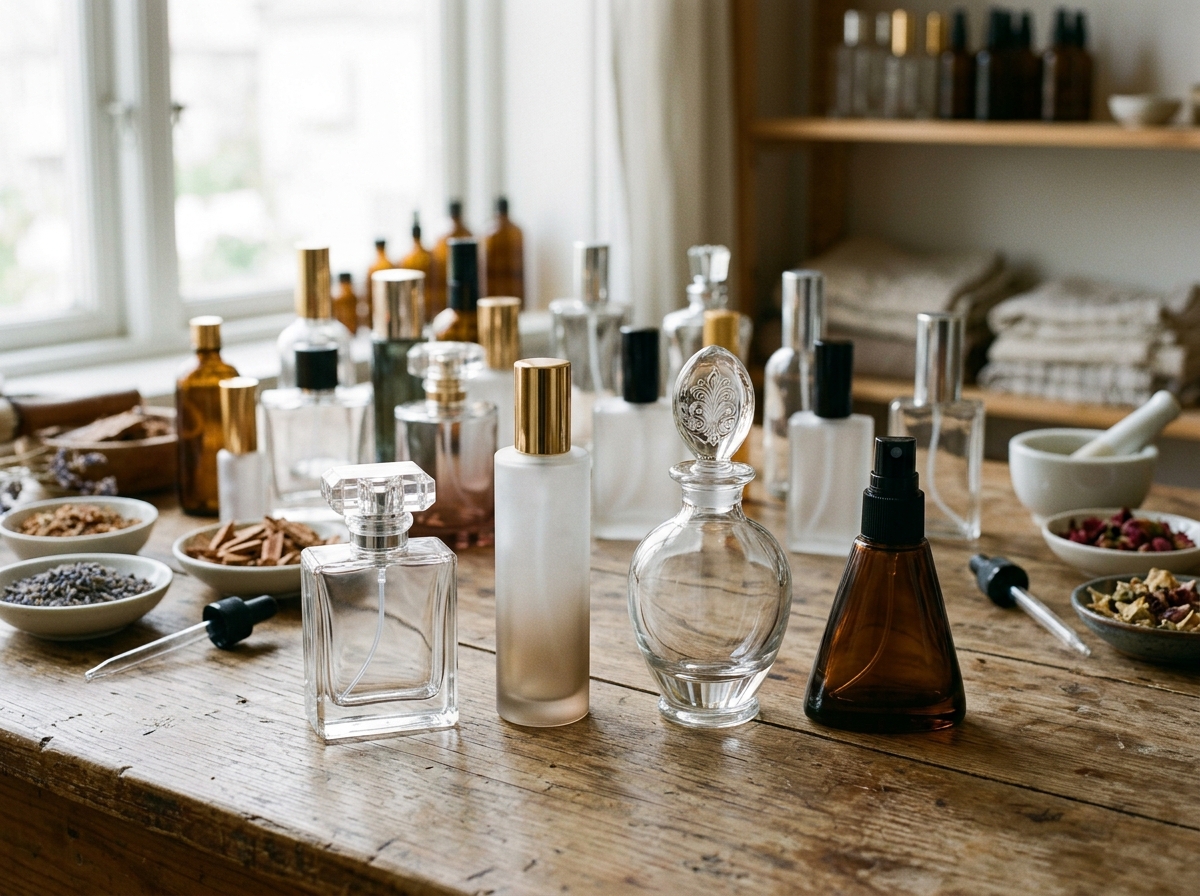
The best style depends on the brand story, production method, and required user experience. A clear glass bottle emphasizes the liquid and can support a clean, modern identity. A colored or coated bottle can create stronger shelf differentiation but requires tighter decoration control. A velvet or flocked surface adds tactile contrast, while a metal cap can increase perceived weight and visual presence.
| Packaging direction | Primary visual effect | Key technical review | Typical buyer concern |
|---|---|---|---|
| Clear glass | Formula visibility and transparency | Glass clarity, wall consistency, label or print placement | Variation in appearance between production lots |
| Colored or coated glass | Strong block color and shelf presence | Color approval, coating adhesion, abrasion resistance | Mismatch between approved sample and production |
| Frosted finish | Soft diffusion and muted premium appearance | Uniformity, touch marks, resistance to handling | Uneven texture or visible handling damage |
| Flocked or velvet finish | Tactile differentiation and gift positioning | Fiber coverage, edge treatment, cleaning, packing protection | Surface contamination during transit |
| Metal cap | Weight, contrast, and decorative emphasis | Material, plating, fit, corrosion resistance, scratch protection | Cap looseness or surface scratches |
Component architecture should be approved as an assembled unit. A pump that fits a bottle neck may still produce an unsatisfactory spray if the dip tube length, actuator design, or formula viscosity is unsuitable. A cap that looks correct may fail the user experience if it does not seat securely or creates excessive friction.
For a fragrance brand planning a collection, visual consistency can matter more than choosing the lowest-cost individual bottle. Related shapes, finishes, cap treatments, and decoration rules help create a recognizable packaging family across different scents or sizes. The supplier should explain which elements can remain consistent and which require new tooling or separate decoration setup.
 Supplier Due Diligence for International Buyers
Supplier due diligence should test operational reliability before the buyer commits to a large production run. Ask for the legal company name, factory or production-partner structure, product drawings, decoration samples, quality procedures, export experience, and escalation contact. A polished website is useful for discovering product capability, but it is not a substitute for technical evidence.
Location can support logistics, but proximity to a port does not automatically guarantee delivery performance. Buyers should confirm carton dimensions, palletization, container-loading plans, shipping documents, export terms, and responsibility for damage claims. Wood packaging used in international trade may also fall under the International Plant Protection Convention’s ISPM 15 framework, so the shipping configuration should be reviewed with the freight provider.
- Request a drawing and an assembled reference sample before approving decoration.
- Confirm whether the quotation includes bottle, pump, cap, decoration, inner protection, carton, and export packing.
- Ask how color standards, print registration, surface defects, and component fit will be inspected.
- Define who owns tooling, artwork revisions, samples, approvals, and corrective actions.
- Agree on the inspection point before shipment and the evidence supplied after inspection.
A practical buyer scenario illustrates the difference between catalogue buying and solution buying. Imagine a niche fragrance brand that wants a heavy-looking bottle with a soft-touch surface and a contrasting cap. The project team should first approve the bottle and closure interface, then test the assembled pack with the fragrance, then approve the decorated surface, and only afterward finalize shipping protection. This sequence prevents the common mistake of approving the appearance before confirming the complete pack.
Customization, Tooling, and Cost Control
Customization should be divided into adjustable features and tooling-dependent features. Adjustable features may include decoration, color, labels, caps, and selected stock components. Tooling-dependent features include a new bottle silhouette, unusual shoulder geometry, proprietary embossing, or a custom neck design. The distinction affects development time, minimum order discussions, sample planning, and future replacement risk.
The lowest unit quotation is not always the lowest project cost. Buyers should compare tooling, decoration setup, component sourcing, sample freight, inspection, protective packaging, rejected units, and potential rework. A supplier that offers a slightly higher price but clearer technical control may reduce the total risk of a launch.
For sustainability claims, request specific material and packaging information. The European Commission’s packaging waste policy information explains the direction of European packaging regulation and resource efficiency. Regulation (EU) 2025/40 is especially relevant to brands preparing packaging for the European market. Buyers should ask whether claims such as recyclable, recycled content, or reduced material use are supported by documented composition and applicable local rules.
Questions to Ask Before Placing a Purchase Order
Before issuing a purchase order, convert the project into an approval record. The record should identify the exact bottle reference, component references, decoration artwork, color standard, approved samples, packing method, inspection requirements, delivery term, and responsibility for changes. Any change after approval should require written confirmation because a small component substitution can change fit, appearance, or compatibility.
Buyers should also distinguish between a stock bottle with customization and a fully custom mold. Stock-based development can simplify early testing, while a new mold may provide stronger differentiation. Neither route is universally better; the correct choice depends on the brand’s design importance, forecast confidence, launch schedule, and willingness to manage tooling.
FAQ
What should I look for in a China perfume bottle supplier?
Look for verified product capability, clear technical drawings, compatible pumps and caps, controlled decoration, documented samples, export packing experience, and responsive project communication. The supplier should be able to discuss the assembled packaging system rather than only the glass bottle.
Can a supplier provide a fully custom perfume bottle?
Many packaging suppliers can support custom development, but the exact scope varies. Ask whether the supplier handles mold development, decoration, component sourcing, sampling, and production coordination. Confirm tooling ownership and approval responsibilities before development begins.
How do I choose between clear, frosted, coated, and flocked glass?
Choose according to brand positioning, formula visibility, tactile goals, decoration durability, and transport protection. Clear glass emphasizes the liquid, while frosted, coated, and flocked finishes create stronger visual or tactile differentiation and require additional approval controls.
How can I confirm that the pump fits the bottle?
Request the bottle neck drawing, pump specification, assembled samples, and closure compatibility confirmation. Test the complete assembly with the intended fragrance and review leakage, actuation, spray behavior, cap seating, and appearance before mass production.
What information should be included in a fragrance packaging quotation?
The quotation should identify the bottle reference, material, components, decoration, packaging method, tooling, sampling, order quantity, delivery term, lead-time assumptions, inspection scope, and excluded costs. A detailed quotation is easier to compare than a unit price alone.
How should glass perfume bottles be protected during export?
Protection should address impact, movement, surface scratching, cap separation, moisture, and carton compression. Request the inner-tray design, carton specification, palletization plan, loading photographs, and process for handling transit damage.
What is the best way to start a custom perfume bottle project?
Send a structured brief covering target market, fragrance formula, desired appearance, component preferences, estimated order plan, artwork, filling method, and delivery destination. Begin with a technical discussion and sample review before requesting final production pricing.
About the Company
Lemuel Packaging develops cosmetic and fragrance packaging solutions for international buyers. Its product range covers perfume bottles, spray components, essential-oil containers, airless packaging, skincare sets, jars, and related accessories. The company focuses on combining bottle design, closures, decoration, and practical supply coordination so brands can move from packaging concept to launch with fewer disconnected suppliers. Buyers can request product information and discuss a project brief directly with the team.
Post time: Sep-28-2026


