
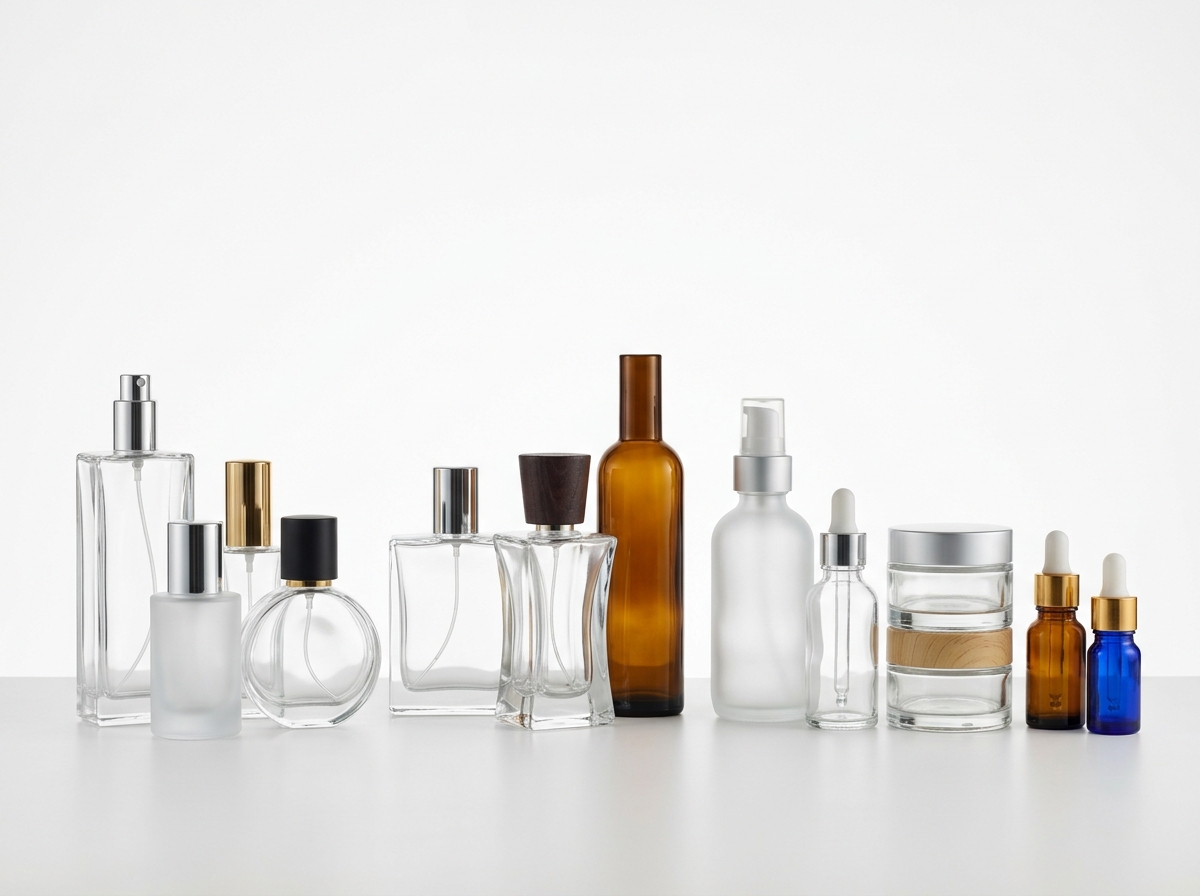
- Glass cosmetic packaging supports premium positioning, better product presentation, and strong compatibility with spa and wellness formulas.
- For dispensing accuracy and user experience, closure selection matters as much as bottle shape.
- Standard-driven packaging decisions reduce leakage, oxidation risk, and rework during filling and logistics.
- Series consistency across bottles, jars, and accessories helps spa brands look more credible at retail and online.
Choosing glass cosmetic packaging for spa products packaging is a technical and brand decision at the same time, because a packaging system has to protect the formula, support filling lines, and communicate premium quality in one move. For context, ISO 8317 covers child-resistant reclosable packages, while ASTM D4169 is widely used for distribution testing of shipping containers; both matter when spa and wellness products travel through fragile cross-border supply chains. If your brand also needs coordinated bottles, jars, and closures, review the range of cosmetic jars, airless bottles, and perfume bottles to see how a complete packaging line can stay visually consistent.
Why glass cosmetic packaging fits spa wellness products
Glass is often the preferred substrate for spa wellness products because it supports a premium tactile feel, strong chemical resistance, and clean shelf presentation.
In wellness, packaging is not only a container; it is part of the consumer’s trust signal. A heavy glass jar, a clear treatment bottle, or a refined dropper bottle can make a formula feel more therapeutic before the product is even opened. That matters in spa retail, where the customer is buying both performance and ritual.
Glass also helps brands avoid the visual downgrade that can happen when a formula is packed in lower-grade plastics. For fragrance-forward body oils, massage serums, facial essences, and bath concentrates, transparency and clarity can show color, texture, and purity in a way that reinforces premium value.
| Packaging choice | Best use case | Typical capacity | Key benefit |
|---|---|---|---|
| Glass dropper bottle | Serums, facial oils, aroma blends | 15 ml to 50 ml | Precise dosing and premium look |
| Glass cream jar | Body balms, face creams, masks | 30 g to 200 g | Wide-mouth access and strong shelf presence |
| Glass spray bottle | Room mist, facial mist, linen spray | 30 ml to 120 ml | Fine distribution and ritual experience |
| Airless bottle with glass-like styling | Sensitive skincare emulsions | 15 ml to 50 ml | Lower air exposure and controlled dispensing |
For spa brands, the best choice is rarely the cheapest unit cost. The better metric is the cost of the full packaging system, including breakage, filling compatibility, and visual alignment across the product line.
Glass cosmetic packaging and formula compatibility
Formula compatibility is the first technical filter when selecting wellness packaging bottles.
Not every closure, liner, or pump works equally well with every formula. Oils, high-alcohol blends, emulsions, and water-based mists each behave differently under temperature changes, transport vibration, and repeated consumer use. That is why packaging selection should start with the formula, not the decoration.
For example, essential-oil-rich products need closures and liners that resist swelling or degradation. Water-based facial mists need spray systems that deliver consistent droplet size and avoid clogging. Thick creams need jars or pumps that preserve texture and avoid contamination from repeated dipping.
| Formula type | Recommended package | Common risk | Technical focus |
|---|---|---|---|
| Essential oils | Amber or frosted glass dropper bottle | Oxidation and evaporation | Seal integrity and light protection |
| Facial mist | Glass spray bottle | Pump clogging or uneven spray | Actuator quality and viscosity match |
| Body cream | Glass cream jar | Cross-contamination | Lid torque and inner seal design |
| Serum | Glass dropper bottle or airless system | Air exposure during use | Closure fit and dosage control |
In practice, a spa brand should test packaging with the actual formula, not just with water. A closure that passes on a bench can still fail once oils, fragrance load, or surfactants are introduced.
How closure systems affect spa products packaging performance
The closure is often the hidden weak point in spa products packaging.
A bottle can look perfect on a product page, but if the pump leaks, the dropper drips, or the cap loosens during shipment, the entire packaging system fails. This is why closure compatibility should be evaluated with torque, fit, liner chemistry, and dispensing behavior in mind.
For spa wellness products, common closure categories include pumps, fine mist sprayers, droppers, screw caps, and decorative caps. The choice depends on product viscosity, customer experience, and the brand’s desired positioning. A luxurious body serum may need a gold-tone dropper and a thick-walled bottle, while a calming mist may need a matte sprayer with a smooth actuation curve.
- Match the closure to the formula viscosity before selecting decoration.
- Test leakage after thermal cycling and vibration.
- Verify that the consumer can open, dispense, and reseal the package comfortably.
- Check whether the closure supports line-speed filling without excessive reject rates.
For brands exploring premium accessory combinations, a coordinated closure system can be paired with pumps and sprayers or matched with full sets from skincare packaging sets to improve visual continuity and reduce the risk of mismatched components.
 Glass thickness, fill weight, and shipping protection
Glass thickness and secondary packaging are essential for reducing transit losses in wellness packaging.
Glass is premium, but it is also fragile. That means the packaging system must account for breakage risk from filling to final delivery. A spa brand shipping internationally should evaluate wall thickness, carton design, dividers, and outer-box strength together rather than separately.
Distribution testing is important because shipping failures rarely come from one dramatic event. They usually come from cumulative vibration, corner drops, compression, and temperature changes. ASTM D4169 provides a structured way to simulate the distribution environment for transport packages, while ISO 13355 is used to assess vertical random vibration on packaging systems.
According to ASTM D4169, distribution cycles are selected based on the specific shipment environment, which is why export-oriented spa brands should not assume domestic packaging will survive international freight unchanged. For fragile glass cosmetic packaging, better carton design often protects margin more effectively than increasing product weight alone.
| Protection element | Purpose | Typical decision factor | Risk reduced |
|---|---|---|---|
| Wall thickness | Structural strength | Product weight and form factor | Cracking and chipping |
| Inner divider | Container separation | Case pack count | Rubbing and impact damage |
| Outer carton | Compression resistance | Shipping lane severity | Box collapse |
| Closure seal | Leak prevention | Formula volatility | Spillage and contamination |
When a brand sells spa products packaging internationally, the cost of breakage can be more damaging than the cost of a better carton. That is why packaging engineering should be treated as part of product profitability.
Design language for wellness packaging bottles
Design consistency is one of the strongest reasons spa brands choose glass packaging.
Spa and wellness customers respond to visual order, calm color palettes, and tactile quality. A well-designed bottle communicates cleanliness, calm, and control. A disjointed packaging family does the opposite, even when the formula is excellent.
Successful wellness packaging bottles usually share a common design system: similar shoulder lines, coordinated cap finishes, repeatable decoration methods, and a coherent material story. Frosted glass, amber glass, heavy base design, and matte closures are often used to signal comfort and sophistication.
For a brand launching a multi-SKU spa collection, the best strategy is to standardize the bottle family and vary only the capacity, label, or accessory. That approach lowers tooling complexity while preserving a premium look across cleanser, serum, mist, and cream lines.
- Use one visual family across multiple products to increase shelf recognition.
- Keep cap color and neck finish consistent where possible.
- Choose decoration methods that survive handling and cleaning.
- Design for both e-commerce photography and retail display.
Material and regulatory checks for spa products packaging
Material selection should be tied to compliance, recyclability, and real-world product handling.
Many spa and wellness brands now ask whether packaging can support sustainability claims without sacrificing performance. Glass is often attractive here because it is widely recyclable and can support premium reuse narratives, but claims still need to be accurate and market-specific.
For procurement teams, a useful starting point is to confirm whether the bottle, pump, cap, and liner are all compatible with the intended market and formula. If a product is sold in the United States or Europe, the supply chain may also need documentation for packaging safety, material compliance, and transport testing.
Useful external references include the ISO 8317 child-resistant packaging standard, ASTM D4169, the NIST SI units reference for volume, and the U.S. EPA recycling guidance. These are not cosmetic-specific product catalogs, but they are valuable for packaging decision-making, measurement discipline, and sustainability positioning.
From a sourcing perspective, the right partner should be able to explain how the materials, closures, and finish options fit the formula and the market rather than simply quoting a container price.
How to choose the right glass cosmetic packaging supplier
The best supplier is the one that can reduce packaging risk, not just sell more units.
For spa wellness products, supplier selection should include sample quality, communication speed, customization depth, and consistency across repeat orders. A supplier that understands full packaging systems can help you avoid mismatched closures, poor decoration choices, and last-minute changes during launch.
One practical way to evaluate suppliers is to request a sample set that includes the bottle, closure, and secondary packaging together. This reveals whether the system feels balanced in hand, photographs well, and survives normal opening and closing behavior.
- Ask for full-system samples, not only empty bottles.
- Confirm lead times for repeat orders and custom finishes.
- Request compatibility notes for oils, mists, or emulsions.
- Check whether packaging artwork and decoration can be scaled across SKUs.
Because spa brands often launch complete sets, suppliers with experience in perfume bottles, essential oil bottles, and skincare packaging sets can usually support broader product architecture more effectively than vendors focused on one container type alone.
Common mistakes in spa products packaging selection
Most packaging failures happen because teams optimize for appearance before function.
The most common mistake is choosing a beautiful bottle that cannot support the formula, filling line, or shipping route. Another frequent issue is selecting a closure that looks premium but performs poorly in repeated consumer use. A third problem is ignoring line architecture, which leads to mixed visual cues across the brand range.
Teams also sometimes underestimate the importance of practical testing. A package can look great in a rendering and still fail when exposed to vibration, light, or temperature shifts. For wellness products, that can mean discoloration, leakage, or customer complaints that are expensive to fix after launch.
- Do not choose packaging without formula testing.
- Do not assume decorative finishes are chemically stable in all markets.
- Do not ignore the fit between pump output and product viscosity.
- Do not ship glass packaging without distribution testing.
FAQ about glass cosmetic packaging for spa wellness products
What is the best glass cosmetic packaging for spa brands?
The best choice depends on the formula, but dropper bottles, cream jars, and spray bottles are the most common starting points for spa wellness products.
Is glass better than plastic for spa products packaging?
Glass is often better when premium presentation, chemical resistance, and product visibility matter more than low weight.
How do I choose between a jar and a bottle?
Choose a jar for thick, scoopable products and a bottle for liquid or low-viscosity formulas that need controlled dispensing.
What should I test before placing a large order?
Test formula compatibility, leakage, closure torque, drop performance, and shipping durability before scale-up.
Can wellness packaging bottles be used for multiple product lines?
Yes, a consistent bottle family can support serums, mists, creams, and oils if the closure and capacity are matched correctly.
How important is secondary packaging for glass containers?
It is critical, because dividers, cartons, and outer cases often determine whether fragile glass survives transport.
What is the most overlooked factor in glass cosmetic packaging?
Closure performance is often overlooked, even though it directly affects leakage, user experience, and return rates.
Post time: Aug-13-2026


