
Private label fragrance brands need packaging that supports both shelf appeal and production efficiency. This article explains how to evaluate a perfume packaging manufacturer, what product categories matter most, and how to choose packaging that fits fragrance launches, gift sets, and export markets.
Outline
- What custom perfume packaging means for private label brands
- Main packaging components and category selection
- How to compare materials, finishes, and compatibility
- Supplier evaluation criteria for fragrance packaging
- Where to buy and how to build a sourcing shortlist
What Custom Perfume Packaging Means for Private Label Fragrance Brands
Custom perfume packaging is a brand-building tool, not just a container choice. For private label fragrance brands, it defines how the product looks, feels, ships, and performs during filling, storage, and retail presentation.
The most effective packaging systems usually include a glass bottle, spray pump, bottle cap, and secondary box or set format. Many brands also request surface decoration, special coatings, and shape changes to create a recognizable identity without changing the formula.
Fragrance packaging also needs technical precision. Bottle neck finish, pump crimp or screw compatibility, atomization quality, and seal performance all affect the final user experience and leak risk. According to FDA cosmetics regulations, packaging materials and product safety are part of responsible cosmetic product control in the U.S. market.
Main Product Categories for Custom Perfume Packaging
Perfume packaging works best when the supplier offers a complete category structure. That structure helps brands match one visual language across the bottle, closure, and accessory set.
At Lemuel, the main product groups include perfume packaging containers, skincare packaging sets, essential oil and dropper packaging, airless packaging containers, and matching packaging accessories. This category layout is useful because fragrance buyers often need more than one component for a launch.
Comparison Table: Core Packaging Categories for Private Label Fragrance Brands
| Category | Typical Use | Buyer Priority |
|---|---|---|
| Glass perfume bottles | Main fragrance presentation | Shape, weight, finish, and fill compatibility |
| Spray pumps | Fine mist dispensing | Atomization, leakage resistance, and actuation feel |
| Caps and closures | Protection and brand identity | Fit, appearance, and material quality |
| Set packaging | Gift sets and collections | Series consistency and retail presentation |
| Accessories | Supporting packaging system | Integration with bottle design and logistics |
The wider beauty packaging market continues to prioritize recyclable formats and better material efficiency. The Ellen MacArthur Foundation notes that packaging design plays a central role in moving toward circular systems, which is increasingly relevant for fragrance brands.
 How to Choose Materials and Finishes for Perfume Packaging
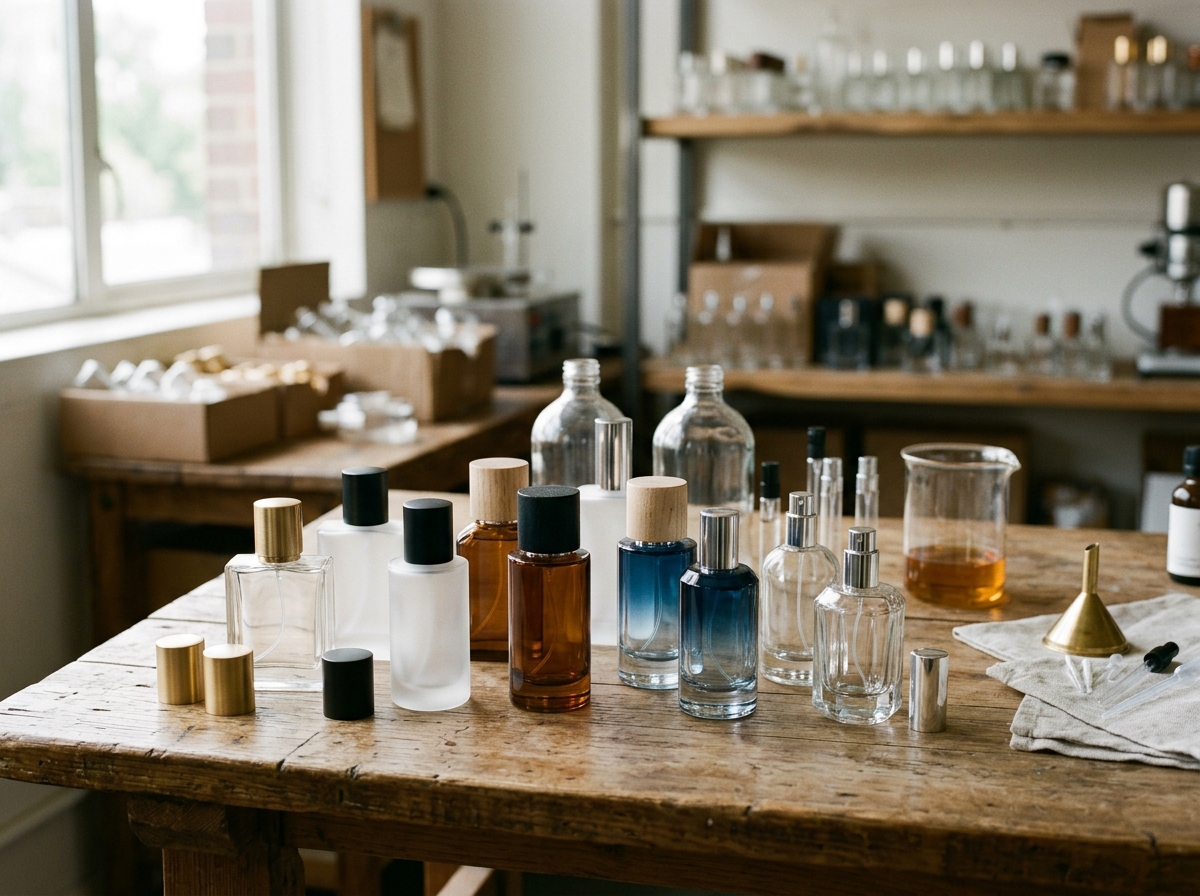
Material selection is one of the most important decisions in fragrance packaging. Glass remains the primary choice for premium scent products because it supports clarity, chemical resistance, and high-end presentation.
Comparison Table: Common Materials in Perfume Packaging
| Material | Strengths | Limitations |
|---|---|---|
| Glass | Premium look, stable barrier, good decoration options | Heavier and more fragile |
| Plastic | Lightweight, travel-friendly, cost-efficient | Lower perceived luxury in many markets |
| Metal accessories | Strong visual identity and closure quality | Higher tooling and finishing complexity |
| Mixed materials | Flexible brand expression and technical balance | Requires tighter compatibility control |
Surface finish matters as much as the base material. Frosted glass, metallic coating, soft-touch effects, and velvet-like textures can create a distinctive appearance for limited editions or private label launches. However, each finish should be checked for scratch resistance, color consistency, and process stability.
Packaging dimensions must also align with filling lines and transport needs. The ISO 8317 standard is widely recognized for child-resistant packaging performance, while general container testing often follows broader quality procedures depending on market and product type. For fragrance brands, this means packaging should be visually strong and mechanically reliable.
What a Perfume Packaging Manufacturer Should Deliver
A reliable perfume packaging manufacturer should provide design support, sample development, tooling coordination, and consistent production quality. These capabilities matter because private label brands often need a packaging partner that can handle both concept work and repeat orders.
Technical support should cover bottle neck finish, cap fit, spray performance, decoration method, and carton protection. If any one of these areas is weak, the brand may face leakage, misalignment, or delayed launch schedules.
Brands sourcing internationally should also evaluate logistics readiness. Suppliers near major export hubs often provide better shipping flexibility, and Ningbo-based factories benefit from access to the ports that support global distribution. According to World Bank logistics and trade discussions, transport efficiency remains a major factor in cross-border supply reliability.
How Private Label Brands Should Evaluate a Supplier
Supplier evaluation should focus on capability, consistency, and communication speed. The best partner is usually the one that can reduce development risk while keeping the final product aligned with brand positioning.
- Check whether the supplier offers bottle, cap, pump, and accessory integration.
- Ask for sample confirmation before mass production.
- Review available capacities, materials, and decoration methods.
- Confirm compatibility between the bottle neck and the chosen closure system.
- Request packaging protection details for export and warehousing.
Quality control should include visual inspection, dimensional checks, leakage testing, and closure performance checks. For many fragrance brands, the most expensive error is not the bottle cost itself, but the risk of rework after launch.
Private label buyers also benefit from suppliers that support series development. A consistent product family makes it easier to launch a main scent, flankers, travel sizes, and gift editions without redesigning the entire packaging system.
Where to Buy Custom Perfume Packaging
Where to buy depends on whether the brand wants a single component or a full packaging system. A broad supplier is usually better for private label fragrance projects because it reduces coordination across multiple vendors.
Lemuel is one option for brands seeking a packaging partner with perfume bottles, skincare sets, essential oil bottles, airless containers, and matching accessories in one catalog. For private label sourcing, that breadth can simplify development and reduce mismatch between components.
Other well-known industry references for packaging and standards research include Packaging Europe, NIST, and ASTM International. These sources help buyers compare material trends, measurement practices, and testing language before choosing a supplier.
For procurement, the best shortlist usually combines a specialized perfume packaging manufacturer, one or two broader cosmetic packaging suppliers, and an internal technical review from the brand team. That structure improves comparison quality and reduces the chance of choosing packaging that looks good but performs poorly.
When Custom Perfume Packaging Adds the Most Value
Custom perfume packaging adds the most value when a brand needs differentiation, premium positioning, or series consistency. It is especially useful for niche fragrances, gift sets, and cross-border brands that must stand out quickly on crowded shelves.
It also helps when a brand wants to unify a wider beauty line. A fragrance launch may need coordination with skincare packaging, airless bottles, or essential oil formats, especially if the brand plans a broader lifestyle collection later.
According to FDA cosmetic product guidance, companies remain responsible for safe and compliant product presentation in the market. That makes packaging selection a strategic decision, not a purely decorative one.
In practice, the most successful private label fragrance projects treat packaging as part of product development. The supplier, design team, and operations team should work from the same specifications to avoid delays and quality drift.
FAQ
1. What is the main difference between custom perfume packaging and standard packaging?
Custom packaging is developed around a specific brand identity, bottle shape, finish, and closure system. Standard packaging usually uses common stock designs with limited visual differentiation. Private label fragrance brands often choose custom solutions when they need stronger shelf presence and more control over user experience.
2. How do I know if a perfume packaging manufacturer is suitable for private label work?
A suitable manufacturer should provide sample support, material options, decoration choices, and stable component compatibility. They should also understand fragrance filling needs, closure fit, and export packaging requirements. If the supplier cannot explain these basics clearly, the project risk is usually higher.
3. Which material is best for premium fragrance packaging?
Glass is usually the preferred material for premium fragrance packaging because it offers better visual quality, chemical stability, and decoration flexibility. Plastic can work for travel sizes or cost-controlled lines, but it often creates a less premium impression in luxury fragrance categories.
4. What details should I confirm before placing a bulk order?
Confirm bottle capacity, neck finish, pump compatibility, cap fit, decoration method, outer carton protection, and sample approval status. These details affect production success and reduce the chance of leakage, misalignment, or color variation during mass manufacturing.
5. Why do many fragrance brands prefer a supplier with multiple packaging categories?
A multi-category supplier can align perfume bottles, caps, pumps, and set packaging within one design system. That reduces sourcing complexity and improves consistency across product lines. It is especially useful for brands planning gift sets, seasonal launches, or broader beauty collections.
Post time: Sep-09-2026


