
- Luxury fragrance packaging is a system, not a single bottle.
- Decoration, pump fit, and closure compatibility affect both brand perception and failure rates.
- Global buyers should validate standards, sample approval, and export-ready packing before mass production.
- Stable lead time and repeatable quality matter as much as visual design.
For a custom perfume bottle project, the most important decision is not the bottle alone, but how the full pack performs as a branded product: glass quality, spray atomization, seal integrity, decoration durability, and unboxing experience all shape the final result. The fragrance sector also depends on measurable quality targets, because packaging failures can cause leakage, label damage, and rejected shipments. For example, glass manufacturing and testing commonly reference standards such as ISO 719 for hydrolytic resistance, while precision process control in packaging lines is often assessed with methods aligned to NIST measurement guidance. For luxury perfume packaging, the details are commercial details.
What a custom perfume bottle manufacturer actually delivers
A custom perfume bottle manufacturer should deliver a complete packaging solution, not a loose mix of parts.
In fragrance sourcing, buyers often start with a bottle request but eventually need a coordinated system: bottle, pump, collar, cap, decoration, and shipping-safe secondary packaging. That is especially true for luxury perfume packaging, where the bottle silhouette must match the brand story and the closure system must still work after long-distance transport. Lemuel Packaging’s product structure reflects that reality, with perfume bottles, pumps, caps, cosmetic jars, and related packaging components built around one procurement flow.
For a global brand, that matters because a bottle that looks premium but leaks in transit is not a premium solution. A good supplier should be able to explain glass type, capacity tolerance, decoration options, and compatibility between the neck finish and the spray pump. If you need to review bottle families before requesting a quote, compare perfume bottles, perfume pumps, and perfume caps as separate but connected decisions.
| Packaging element | Why it matters | Typical decision point | Risk if ignored |
|---|---|---|---|
| Bottle | Brand identity and shelf presence | Shape, volume, wall thickness | Weak visual impact, breakage risk |
| Pump | Spray performance and user feel | Atomization, output per stroke | Leakage, poor mist quality |
| Cap | Luxury perception and protection | Material, finish, fit | Loose closure, inconsistent appearance |
| Carton | Retail and shipping protection | Insert structure, print quality | Transit damage, weak unboxing |
Luxury perfume packaging starts with technical fit, not decoration
Luxury perfume packaging succeeds when the technical stack is correct before the visual finish is added.
Many first-time buyers overfocus on color, surface treatment, or shape rendering. In production, the more important question is whether the entire assembly functions as a stable package. The bottle neck finish must match the pump, the spray system must deliver a fine and repeatable mist, and the cap must hold securely through repeated handling. In practical sourcing terms, this means sampling should verify fit and function before a decoration commitment is approved.
Fragrance packaging also benefits from measurable quality criteria. For instance, hydrolytic resistance is one way to evaluate glass durability, and hydrolytic class requirements are defined in standardized test methods such as ISO 719. For buyers shipping internationally, this kind of standard-based thinking reduces returns and protects brand reputation. It is one reason experienced teams ask a perfume bottle manufacturer for both visual samples and functional samples.
| Test or check | Purpose | Why it matters for fragrance packaging |
|---|---|---|
| Neck finish compatibility | Confirms pump fit | Prevents leaks and assembly issues |
| Spray output check | Verifies mist consistency | Improves user experience |
| Drop and vibration review | Simulates transport stress | Reduces transit failures |
| Decoration adhesion review | Checks finish durability | Protects premium appearance |
For buyers building a broader portfolio, it is also useful to review related packaging families such as airless bottles and cosmetic jars, because the same supplier often supports the complete launch system across skincare and fragrance.
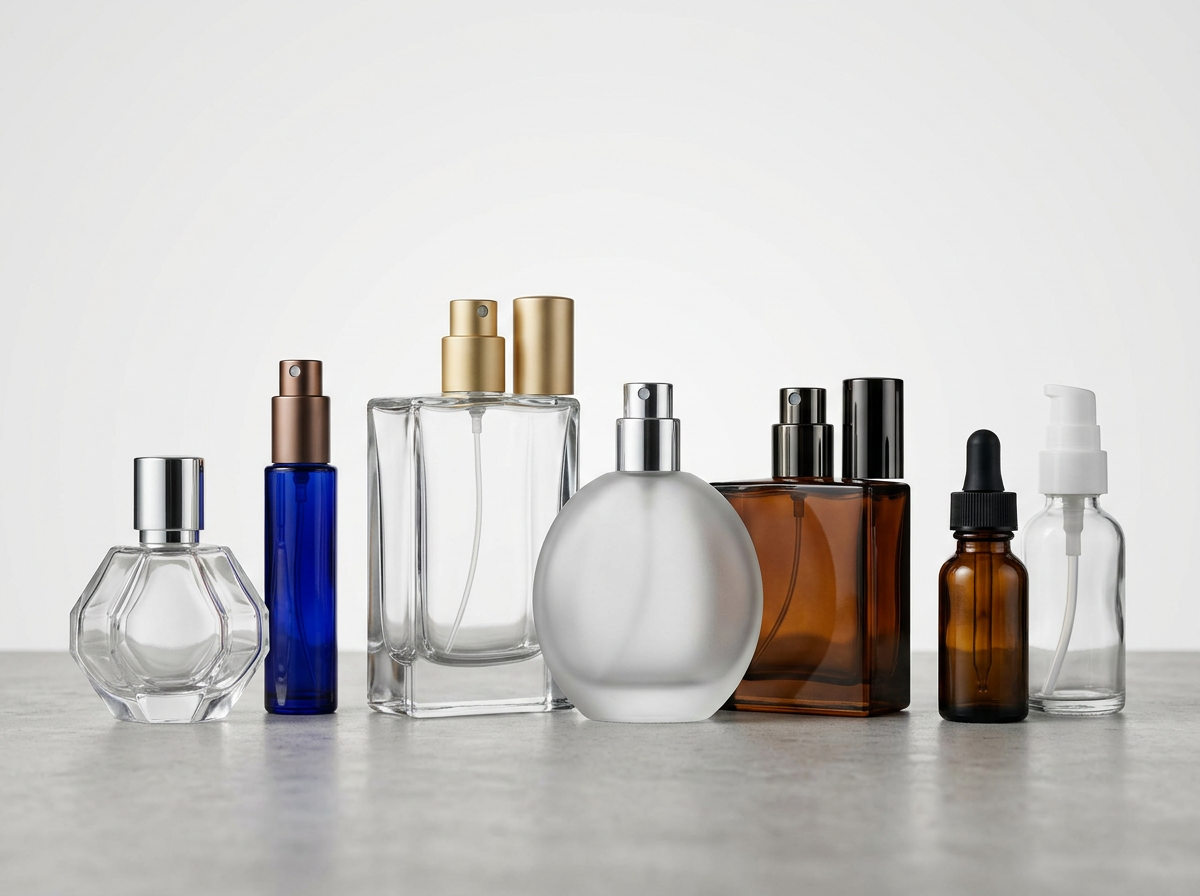
How to evaluate a perfume bottle manufacturer for global projects
The best perfume bottle manufacturer is the one that can repeat quality at scale.
Global fragrance brands do not buy packaging once; they buy it repeatedly across launches, seasons, and markets. That means the real question is whether the supplier can maintain consistency from sample approval to mass production. A supplier with strong engineering discipline should be able to manage batch consistency, lead-time control, and export packing without creating hidden variation between runs.
For international buyers, three checks matter most. First, confirm whether the supplier can handle custom perfume bottle development across different capacities and neck finishes. Second, verify whether the supplier can integrate pumps, caps, and cartons into one coordinated shipment. Third, request clarity on minimum order quantity, sampling lead time, and replacement policy if a component fails inspection. These checks are more useful than vague promises about luxury quality.
- Request a dimensional drawing before sampling.
- Approve both visual sample and functional sample.
- Confirm closure compatibility with the exact pump model.
- Review outer carton and inner protection for export shipping.
- Document decoration standard, color tolerance, and re-order reference.
Because Lemuel Packaging is positioned around packaging systems rather than isolated containers, its value is strongest when a fragrance project also needs coordinated accessories and packaging formats. That is especially relevant for brands that want repeatable luxury perfume packaging across markets.
Material choices in custom perfume bottle projects
Material selection determines how a custom perfume bottle feels, performs, and ships.
For luxury fragrance brands, glass remains the core material because it communicates clarity, weight, and permanence. Yet the exact package system may also include metalized caps, alloy collars, flocked surfaces, or decorative coatings. In the product notes supplied for this site, materials such as recyclable PE and PET are also part of the broader packaging story, which gives brands options for secondary components and adjacent cosmetic lines.
Material selection should be driven by end use. A high-end perfume bottle may prioritize heavy glass and a polished cap. A travel spray may prioritize lighter components and leak resistance. A skincare line may need transparency for product visibility, while a function-first formula may need airless protection. The same supplier can support different outcomes if it understands those use cases.
| Material or finish | Typical use | Brand effect | Practical note |
|---|---|---|---|
| Glass | Fragrance bottles | Premium, stable, tactile | Needs breakage control |
| Zinc alloy | Caps and decorative parts | Heavy, upscale feel | Supports metallic finishes |
| Velvet or flocking | Surface decoration | Soft-touch luxury cue | Requires careful abrasion control |
| PET or PE | Secondary packaging parts | Lightweight, practical | Useful for recyclable positioning |
If your product line includes adjacent beauty packaging, you can review serum bottles and essential oil bottles to compare how material and closure logic change by formula type.
Decoration methods that raise perceived value
Decoration is what turns a bottle into a brand asset.
In luxury perfume packaging, surface treatment often carries as much value as the container itself. Common methods include frosting, color coating, silk printing, hot stamping, flocking, and metal accents. Each method creates a different balance between cost, visual depth, and durability. The best choice depends on whether the brand wants a minimalist niche look, a glamorous giftable look, or a highly distinctive collector-style presentation.
Decoration should also be chosen for operational reasons. Deep coatings can hide minor glass variation but may be more sensitive to scratches. Metallic caps can elevate a perfume line but may increase weight and transport care. Flocking creates a strong tactile identity but requires process discipline to remain consistent across batches. For a perfume bottle manufacturer, the real test is not whether the finish looks good in a studio photo, but whether it stays consistent after production and shipping.
- Use frosted glass for understated luxury and diffused visual depth.
- Use hot stamping for premium branding accents and logo emphasis.
- Use flocking when tactile identity is part of the brand story.
- Use alloy caps when weight and closure presence are part of the positioning.
Why export buyers care about packaging workflow
Export buyers care about workflow because packaging delays become launch delays.
A fragrance launch rarely fails because of one small defect alone; it fails when sample approval, communication, and packing discipline are not aligned. Overseas buyers need clear proof that the supplier can manage drawing confirmation, sample sign-off, production scheduling, and loading protection. Ningbo’s port access also matters commercially, because shipping efficiency can influence replenishment timing and container planning.
For global projects, the most useful supplier behavior is transparency. Buyers should receive one consistent point of contact, a clear re-order reference system, and confirmation of which components are in stock and which require custom tooling or decoration lead time. This is especially important when coordinating perfume bottles with pumps, caps, and cartons. Brands that sell in multiple regions cannot afford a packaging supplier that treats each component as an isolated order.
If your procurement team is comparing full systems, it may help to review product packaging and about to understand how the supplier structures its broader packaging capability.
Quality control checkpoints for fragrance packaging
Quality control in fragrance packaging should be based on repeatable checkpoints, not last-minute visual approval.
A useful QC plan starts with incoming material review, continues through dimensional inspection, and ends with assembly and transport testing. For glass and closure systems, the most important checks are fit, finish, leak resistance, spray performance, and appearance consistency. These controls are especially important for luxury perfume packaging because small defects are highly visible and immediately associated with the brand.
Where relevant, suppliers can align testing discipline with standardized methods from bodies such as ASTM D3919 for glass container considerations and ISO 9001:2015 for quality management systems. While not every packaging buyer needs to audit the full factory system, asking for standard-based process language is a practical way to filter serious suppliers from opportunistic traders.
| QC checkpoint | What to verify | Typical failure | Buyer action |
|---|---|---|---|
| Dimensional check | Neck, height, closure fit | Assembly mismatch | Request drawing-based inspection |
| Leak test | Seal performance | Product loss in transit | Approve functional sample |
| Decoration check | Color and finish consistency | Visual mismatch | Set reference sample standard |
| Carton review | Protection and print quality | Shipping damage | Test inner packing structure |
Choosing the right packaging partner for luxury fragrance brands
The right partner is the one that helps the brand launch, not just the one that can quote a bottle.
Luxury fragrance teams usually need more than a container supplier. They need a packaging partner who can interpret the brand brief, recommend workable materials, and coordinate the bottle, pump, cap, and secondary packaging into a single commercial outcome. That is why suppliers with a system approach are often better suited to premium perfume projects than sellers focused on one isolated SKU category.
A practical selection framework is simple. If the supplier can explain the difference between a custom perfume bottle for niche fragrance, a mass-market spray bottle, and a gift-oriented luxury set, then the supplier probably understands the market. If the supplier can also support adjacent categories like skincare sets, it usually indicates stronger packaging integration capability across categories.
- Choose a partner that understands fragrance positioning.
- Verify technical fit before decorative approval.
- Use standard-based QC language in your brief.
- Ask for export-ready packaging details early.
- Keep a re-order record for future launches.
FAQ
What is the most important factor when selecting a custom perfume bottle manufacturer?
The most important factor is the supplier’s ability to deliver a complete, repeatable packaging system. Bottle design matters, but pump compatibility, closure fit, decoration durability, and export packing are what protect the launch.
How do I know if a perfume bottle is suitable for luxury perfume packaging?
Luxury perfume packaging should feel visually distinctive and technically stable. Look for consistent glass quality, secure cap fit, clean decoration, and a spray system that produces a fine, reliable mist.
Should I approve the bottle before choosing the cap and pump?
No. The bottle, pump, and cap should be reviewed together because neck finish compatibility and assembly behavior can change the final result. A coordinated sample process reduces leakage and rework.
What packaging tests are most useful before mass production?
Dimension checks, leak tests, spray tests, and transport simulation are the most useful early-stage checks. They reveal fit and function issues before production-scale risk is created.
Why do global fragrance brands care so much about secondary packaging?
Secondary packaging affects shipping protection, retail presentation, and unboxing experience. For luxury launches, the outer structure can be as important as the bottle itself.
Are recyclable materials compatible with premium fragrance branding?
Yes. Recyclable PE and PET components can support premium positioning when the design, finish, and assembly quality remain consistent with the brand standard.
How should I compare two perfume bottle manufacturers?
Compare technical drawings, sample quality, lead time, decoration options, packing method, and re-order consistency. The best supplier is the one that can repeat your approved result at scale.
Post time: Aug-11-2026


