
Boutique fragrance brands usually start with packaging, not fragrance alone, because the bottle shapes first consumer perception. A strong container choice supports positioning, improves merchandising, and reduces mismatch between scent concept and retail execution.
How Boutique Fragrance Brands Choose Luxury Bottle Packaging
The selection process is a brand strategy decision, not a simple procurement task. Teams compare bottle geometry, glass clarity, decoration methods, closure compatibility, and transport safety before approving a final format.
For a practical reference point, many teams review luxury bottle packaging options alongside filling requirements and launch timing. They also examine whether the supplier can support full packaging systems, including caps, sprayers, and coordinated accessories.
Outline of the selection process
- Define the fragrance position and target retail channel.
- Choose a bottle material and volume range.
- Confirm spray pump, neck finish, and cap compatibility.
- Evaluate decoration, color, and surface texture.
- Test leakage, stability, and shipping performance.
- Review sustainability requirements and recycling targets.
Core Factors Behind Luxury Bottle Packaging Decisions
Brand identity is the first filter because the bottle must express price level and scent personality. A niche fragrance often needs a more distinctive silhouette, while a classic line may need restrained elegance.
Material selection is the second filter because glass remains the standard for premium positioning. According to the U.S. EPA glass materials guidance, glass is widely recyclable and supports circular packaging strategies when collection systems are available. That makes it attractive for brands with sustainability claims.
Closure performance is the third filter because fragrance loss and leakage damage customer trust. Suppliers must verify spray output, crimp fit, and cap alignment, especially for high-alcohol formulas and travel retail units.
Comparison Table: Main Packaging Considerations for Boutique Fragrance Brands
| Decision Factor | What Brands Evaluate | Why It Matters |
|---|---|---|
| Material | Glass, coated glass, or specialty finishes | Affects premium feel, weight, and recyclability |
| Shape | Rounded, square, faceted, or custom silhouette | Shapes brand recognition and shelf impact |
| Closure | Sprayer, cap, collar, and neck fit | Controls sealing and user experience |
| Decoration | Printing, frosting, plating, or coating | Creates visual differentiation |
| Logistics | Carton strength and drop resistance | Protects fragile bottles during transport |
Decoration systems are also decisive because they translate concept into retail visibility. Frosting, metallic coating, screen printing, and velvet-like textures can shift perception from ordinary to collectible.
Packaging performance should be tested early because failure is expensive after production starts. For handling and shipping risk, many teams use ISO 2206 packaging test guidance and related transport validation methods to reduce breakage and closure failure.
What Makes Perfume Containers Suitable for Boutique Brands
Perfume containers work best when form and function stay aligned. The bottle must look refined, but it also must fill cleanly, seal reliably, and remain stable on automated lines.
Capacity planning matters because different retail channels need different volumes. According to fragrance market overviews from Statista, premium and niche fragrance demand continues to support smaller, higher-value formats, which explains why 30 ml, 50 ml, and 100 ml sizes remain common in boutique assortments.
Neck finish compatibility is a technical point that many early-stage brands overlook. A mismatch between the bottle neck, pump, and collar can cause leakage, inconsistent spray performance, or slow filling lines.
Comparison Table: Common Perfume Container Formats
| Format | Best Use | Key Advantage |
|---|---|---|
| Standard glass spray bottle | Mainstream boutique fragrance launches | Reliable filling and strong shelf appeal |
| Custom-shaped bottle | Niche or signature scent lines | Higher brand distinctiveness |
| Frosted or flocked bottle | Gift sets and limited editions | Strong tactile and visual premium effect |
| Miniature travel bottle | Discovery sets and e-commerce bundles | Convenient for sampling and shipping |
Glass weight is part of the premium signal, but it should not be excessive. A balanced design feels substantial while still allowing safe distribution and reasonable freight cost.
 Why Full Packaging Systems Matter More Than Single Components
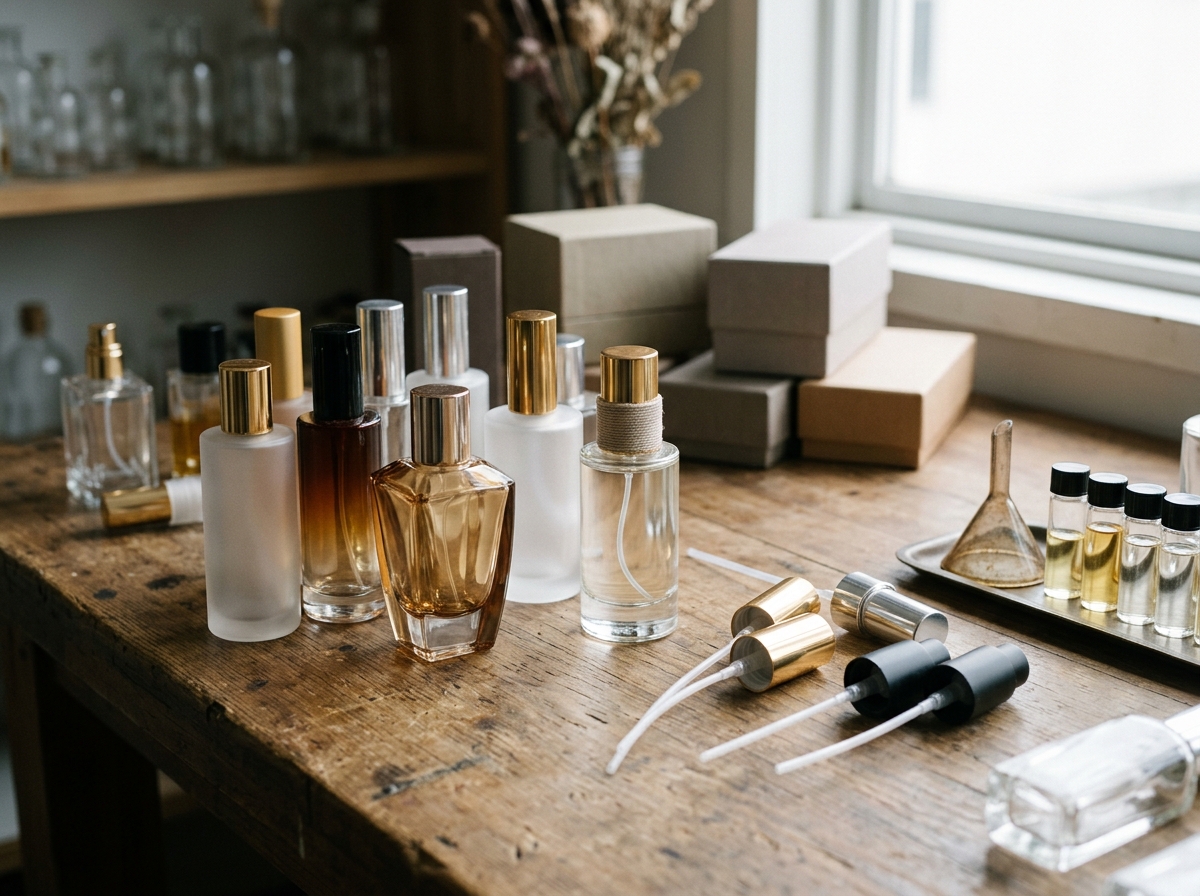
Full packaging systems reduce compatibility risk because the bottle, pump, and cap are designed together. Boutique fragrance brands often prefer this approach when they need fewer production variables and a more unified visual outcome.
That is why many procurement teams explore related product families such as perfume bottle caps, spray pump heads, and matched bottle bodies from the same packaging supplier. The main benefit is better coordination across appearance, sealing, and assembly.
The same logic applies when a brand expands from perfume into skincare or body care. Coordinated packaging lines help maintain a consistent shelf identity across multiple SKUs and fragrance families.
Disclosure: The author is affiliated with Ningbo Lemuel Packaging Co., Ltd., and this article reflects an objective analysis based on publicly available data and industry standards.
How Sustainability Influences Luxury Bottle Packaging
Sustainability now affects luxury packaging decisions because brand buyers and consumers both expect lower-impact materials. Recyclable glass, reduced-plastic components, and refill-compatible designs are increasingly used to support ESG goals.
The Ellen MacArthur Foundation continues to emphasize circular design principles for packaging systems, especially where reuse and recyclability can be improved. Boutique fragrance brands often apply that logic through lighter glass, separable parts, and simplified decoration.
Environmental claims should remain factual because greenwashing can damage premium credibility. Brands should align claims with actual material structure, local recycling access, and supplier documentation.
Where Boutique Fragrance Brands Source Packaging
Supplier selection should prioritize technical capability, not only price. A reliable partner must support mold development, decoration sampling, quality checks, and export packaging for fragile items.
For brands that need a broader product system, the homepage product categories include fragrance containers, skincare sets, essential oil packaging, airless bottles, and matching accessories. That structure is useful for companies that want one sourcing channel for multiple launch lines.
Well-known industry sourcing references also include suppliers that specialize in glass beauty packaging, decorative closures, and OEM filling components. Brands should compare minimum order quantities, lead times, sample approval flow, and export documentation before choosing one partner.
Practical Checklist for Packaging Approval
Packaging approval should follow a controlled checklist because visual preference alone is not enough. Teams should confirm technical, regulatory, and commercial readiness before mass production.
- Confirm bottle volume, neck finish, and fill tolerance.
- Test pump output, leak resistance, and cap fit.
- Review artwork placement, coating durability, and color consistency.
- Validate carton protection and transit testing.
- Check whether replacement parts are available for future batches.
Working through this list helps reduce launch risk and avoids costly redesigns after tooling is complete. It also shortens the feedback cycle between brand, designer, and packaging supplier.
FAQ
1. What is the most important factor when selecting luxury bottle packaging?
The most important factor is alignment with brand positioning. A bottle should match the fragrance price point, audience, and retail channel. If the design is too simple, the product may look underpriced; if it is too ornate, it may feel inconsistent with the scent concept.
2. Why do boutique fragrance brands prefer glass perfume containers?
Glass is preferred because it supports a premium appearance, stable chemical compatibility, and strong recycling potential. It also provides the weight and clarity many consumers associate with luxury fragrance. For many brands, glass remains the most credible material for a high-end launch.
3. How do brands test whether a spray pump is suitable?
Brands typically test spray pattern, output consistency, leakage, and fit with the bottle neck and cap. They may also evaluate actuation force and user comfort. These checks are important because poor atomization or loose sealing can affect both product performance and customer satisfaction.
4. Can a single packaging supplier support both perfume and skincare lines?
Yes, if the supplier offers a full range of bottles, pumps, caps, and set packaging. This is useful for brands that want consistent visual identity across fragrance and skincare collections. It also simplifies sourcing, sample coordination, and future line extensions.
5. What sustainability features should boutique fragrance brands ask for?
Brands should ask for recyclable materials, reduced component complexity, and design choices that support easy separation during recycling. They may also request documentation on material types and packaging structure. These details make environmental claims more defensible and more useful for export markets.
Post time: Sep-22-2026


