
- Evaluate the supplier as a packaging development partner, not only as a bottle vendor.
- Confirm glass, pump, cap, decoration, and carton compatibility before approving production.
- Use samples and documented specifications to reduce leakage, color, fit, and transit risks.
- Review regulatory, labeling, sustainability, and export requirements early in the project.
- Choose a supplier that can support future bottle sizes and coordinated product collections.
Boutique perfume packaging succeeds when visual identity, technical compatibility, and supply reliability are managed together. The European Union requires cosmetic products to meet specific safety and labeling obligations under Regulation (EC) No 1223/2009, while the U.S. Food and Drug Administration explains that cosmetic packaging and labeling remain part of the manufacturer’s compliance responsibility. This guide shows how to compare a custom glass bottle supplier and select a perfume packaging manufacturer that can move a concept from design to reliable commercial production.
Why boutique perfume packaging needs a different supplier strategy
The central conclusion is that boutique fragrance brands need flexibility without sacrificing repeatability. Large fragrance companies may have established molds, high-volume forecasts, and dedicated engineering teams. A smaller or emerging brand often needs a supplier that can interpret a visual concept, recommend realistic components, manage lower-volume development, and preserve the same design language across several products.
A bottle may be beautiful in a presentation but unsuitable for a real formula, filling line, or international shipment. Glass wall thickness, neck finish, pump fit, dip-tube length, cap retention, surface decoration, and carton protection all affect the final customer experience. The supplier should therefore be involved before the design is frozen.
The most useful supplier question is not “What is your lowest price?” but “How will you control the complete packaging system from sample approval through repeat orders?” That question reveals whether the company sells isolated components or can support a coordinated packaging program.
What to evaluate in a custom glass bottle supplier
Design and customization capability
A capable supplier should translate brand references into manufacturable details. Ask whether the team can support custom bottle geometry, embossing, frosting, coating, flocking, metallized effects, colored glass, and decorative metal accessories. Each treatment changes appearance, cost, handling, inspection, and sometimes recyclability.
Customization should also be evaluated at collection level. A perfume line may require several capacities or bottle silhouettes that share a shoulder profile, cap language, decoration, or color system. A supplier that can plan the family architecture can help the brand look consistent on shelf and online.
Component compatibility
Component compatibility is a launch-critical checkpoint because a bottle, atomizer, and cap must function as one assembly. Request technical information for the bottle neck finish, pump dimensions, dip tube, crimp or screw system, cap interior, gasket, and filling method.
Testing should use the intended fragrance or a representative formula whenever possible. Alcohol-based perfumes, oils, colorants, and other ingredients can interact differently with internal components, adhesives, coatings, or decorative surfaces. Fragrance safety and ingredient restrictions should also be reviewed against current guidance from the International Fragrance Association.
Quality and repeat-order control
Quality is best judged by the supplier’s control plan rather than by a general promise of “high quality.” Ask how incoming materials, molded glass, decoration, pumps, caps, and finished assemblies are inspected. Clarify how visual standards are approved and how deviations are recorded.
For boutique brands, repeatability is especially important. A slight change in glass color, frosting density, logo position, or cap plating can make a new batch look inconsistent with the first launch. The supplier should retain approved references, inspection samples, decoration specifications, and packaging drawings for future production.
| Supplier review area | What to verify | Buyer scoring guide |
|---|---|---|
| Design development | Custom geometry, decoration options, technical drawings, collection consistency | 0 = unavailable; 1 = basic; 2 = strong |
| Component fit | Neck finish, pump, dip tube, cap, gasket, filling-line compatibility | 0 = untested; 1 = sample-tested; 2 = production-validated |
| Quality control | Approved standards, inspection records, defect handling, traceability | 0 = unclear; 1 = documented; 2 = controlled |
| Supply support | Sampling, order planning, communication, repeat-order management | 0 = reactive; 1 = adequate; 2 = proactive |
The scoring guide above is an editorial buyer framework, not an industry certification. Its purpose is to make supplier comparisons more consistent when several quotations appear similar.
How to assess perfume bottle materials and finishes
Material selection should start with the formula and filling process, then move to the visual concept. Clear glass provides direct product visibility and works well when the liquid color is part of the design. Frosted, coated, or colored surfaces create a stronger visual statement but require tighter control of finish consistency and handling.
Premium details can come from the cap as much as from the bottle. Zinc alloy, aluminum, plastic, wood, and composite caps create different weight, touch, cost, and sustainability profiles. A heavy cap may communicate luxury, but it also affects carton design and shipping protection. Velvet or flocked surfaces can create a tactile identity, yet they need careful inspection for fiber uniformity, dust, abrasion, and color matching.
Sustainability claims should be specific and evidence-based. The supplier should identify the main material of each component, explain whether parts can be separated, and provide any available material documentation. Avoid describing a package as recyclable simply because the bottle is glass; the pump, coating, adhesive, cap, and local recycling infrastructure may affect the practical outcome.
| Packaging choice | Primary advantage | Potential concern | Useful verification |
|---|---|---|---|
| Clear glass | Strong product visibility and color presentation | Less concealment of liquid variation or filling marks | Clarity, scratches, bubbles, wall consistency |
| Frosted glass | Soft premium appearance and tactile contrast | Finish variation or surface marking during handling | Finish uniformity, rub resistance, color reference |
| Coated glass | Broad visual color and branding options | Coating damage, color mismatch, recycling questions | Adhesion, abrasion, color standard, care instructions |
| Metal accessory | Weight, shine, and distinctive shelf presence | Plating variation and added component complexity | Fit, plating consistency, corrosion resistance |
How the sampling and approval process should work
A disciplined sample process reduces expensive surprises because each stage answers a different question. A visual prototype checks proportion and brand expression. A functional sample checks pump performance, cap fit, leakage risk, and filling compatibility. A decorated sample checks color, logo position, tactile finish, and assembly quality.
- Prepare a packaging brief covering formula type, target market, bottle capacity, decoration, closure preference, filling method, forecast, and shipping destination.
- Request drawings, component specifications, decoration references, and a clear sample quotation.
- Test the actual bottle, pump, cap, and representative formula together rather than approving isolated parts.
- Record approved color chips, logo artwork, dimensional tolerances, assembly references, and visual defect limits.
- Confirm production packaging, carton strength, palletization, lead-time assumptions, and inspection responsibilities before purchase order release.
The approval record should be treated as a commercial control document. If a supplier cannot explain which sample becomes the production reference, future disputes about color, fit, or finish become more likely.
Questions to ask a perfume packaging manufacturer before ordering
Commercial discussions should cover more than minimum order quantity. Ask which components are standard and which require tooling, whether the supplier can combine stock bottles with custom caps, how decoration is inspected, and which changes trigger a new sample approval.
International buyers should also ask how the supplier protects glass during export. Packaging design should address carton partitions, cushioning, pallet stability, moisture exposure, labeling, and handling instructions. A supplier located near major logistics infrastructure may offer practical coordination benefits, but the buyer should still evaluate actual export experience, documentation quality, and response speed.
Regulatory responsibility should be assigned clearly. In the United States, the FDA packaging and labeling guidance explains important obligations for cosmetic products. In Europe, the applicable regulation covers product safety, responsible-person duties, and labeling. A packaging supplier may provide component information, but the brand remains responsible for confirming that its finished product meets the rules in each target market.
 Common supplier selection mistakes
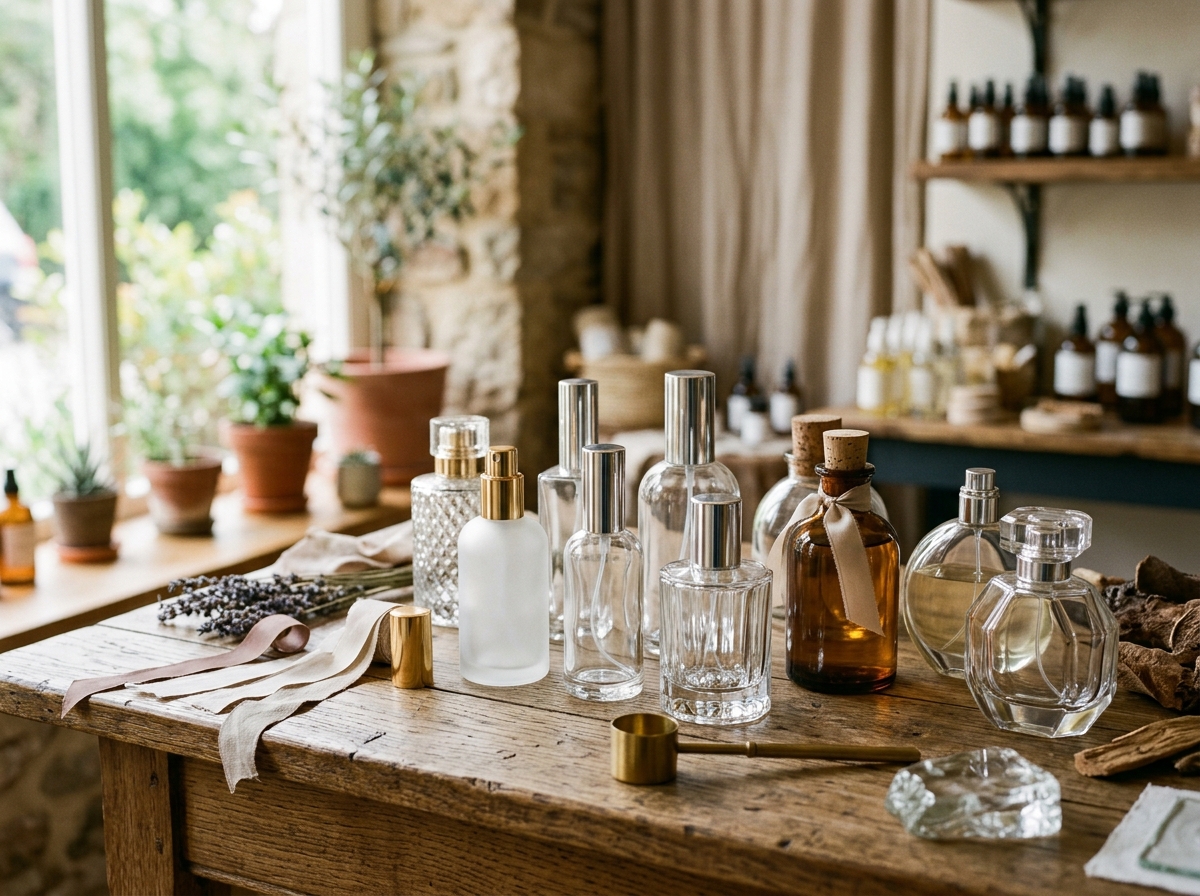
The most common mistake is approving a bottle from a photograph without testing the full assembly. Images cannot confirm neck compatibility, spray quality, cap retention, coating durability, or transit performance.
- Choosing the lowest quoted unit price before comparing tooling, decoration, packaging, and freight assumptions.
- Approving a cap and bottle separately without checking alignment, weight, and retention.
- Ignoring the fragrance formula during compatibility testing.
- Failing to define acceptable visual defects for glass, coating, printing, plating, and flocking.
- Designing a single bottle without considering future sizes, refills, gift sets, or coordinated skincare products.
Another mistake is treating communication as an administrative detail. For a boutique launch, fast and accurate clarification can prevent artwork errors, incorrect component assumptions, and missed seasonal windows. The best supplier relationship is structured around shared specifications, documented approvals, and transparent escalation when a problem appears.
How to make the final supplier decision
The best custom glass bottle supplier is the one that offers the strongest balance of design interpretation, technical control, quality consistency, and commercial communication. A supplier with attractive products but weak documentation may create more risk than a supplier with slightly fewer decorative options and stronger process discipline.
Use a weighted comparison based on the project’s priorities. For a signature perfume, customization and finish control may carry the greatest importance. For a fast seasonal launch, available components, sampling speed, and delivery coordination may matter more. For a fragrance collection, family consistency and repeat-order management should be central.
| Decision priority | Suggested buyer question | Editorial score |
|---|---|---|
| Brand expression | Can the supplier reproduce the desired shape, finish, color, and accessory language? | 0–2 |
| Technical fit | Has the complete bottle and closure assembly been tested with the intended formula? | 0–2 |
| Production confidence | Are inspection standards and approved references documented? | 0–2 |
| Launch support | Can the team manage samples, artwork, packaging, and export communication? | 0–2 |
| Future scalability | Can the supplier support coordinated products or repeat orders? | 0–2 |
This second table uses the same editorial scoring scale and should be adapted to the buyer’s project. It is not a substitute for physical testing, regulatory review, or a written quality agreement.
FAQ
What makes a custom glass bottle supplier suitable for a boutique perfume brand?
The supplier should combine design development, bottle manufacturing, closure compatibility, decoration, sampling, quality control, and export coordination. Boutique brands usually benefit from a partner that can manage the complete packaging system rather than sell a bottle alone.
Should a perfume brand choose a stock bottle or develop a custom bottle?
A stock bottle can shorten development and reduce tooling complexity. A custom bottle may create stronger differentiation and long-term brand recognition. The decision should consider launch timing, forecast, budget, desired exclusivity, and the need for future collection extensions.
How can a buyer test whether a perfume bottle is compatible with the formula?
Test the actual bottle, pump, cap, and representative fragrance together. Review leakage, spray behavior, component fit, surface changes, odor transfer, and decoration stability under the intended storage and handling conditions.
What information should be included in a packaging brief?
Include the fragrance type, target market, bottle capacity, desired silhouette, closure system, decoration, color references, filling method, forecast, delivery destination, carton requirements, and regulatory expectations.
Are heavy caps always better for luxury perfume packaging?
No. Weight can support a premium tactile impression, but it also affects cost, carton engineering, shipping protection, and user experience. The cap should be judged by fit, balance, finish durability, and alignment with the bottle concept.
What quality problems should buyers watch for in glass perfume bottles?
Common concerns include scratches, bubbles, uneven color, inconsistent frosting, dimensional variation, poor neck finish, logo misalignment, coating damage, cap looseness, and pump leakage. These should be defined in an approved reference and inspection plan.
Can one supplier support perfume, skincare, and essential-oil packaging?
Some packaging manufacturers can coordinate several categories, including perfume bottles, skincare sets, essential-oil bottles, airless containers, jars, pumps, and accessories. Buyers should verify the supplier’s experience with each formula type and component system instead of assuming that one capability covers every application.
About the company
Lemuel Packaging develops cosmetic and fragrance packaging systems for brands that need coordinated bottles, pumps, caps, jars, and presentation components. Its portfolio covers perfume bottles, skincare sets, essential-oil packaging, airless containers, spray components, and decorative accessories. The company focuses on custom development, visual finishing, series consistency, and export-oriented project communication. Brands can review the available packaging range and contact the team to discuss a launch brief, sample request, or complete packaging solution.
Post time: Sep-04-2026


