
- Cosmetic brands shortlist suppliers that can deliver full packaging systems, not isolated parts.
- Sample quality, color consistency, and closure compatibility often decide whether an order moves forward.
- Documented testing, stable lead times, and export-ready logistics matter as much as design.
- Premium beauty packaging is judged by both visual branding and functional protection.
When brands compare cosmetic packaging suppliers, they are usually trying to reduce launch risk, protect formula performance, and avoid expensive rework later. For skincare and fragrance projects, even small variances in neck finish, pump output, or decoration quality can affect shelf appeal and filling efficiency. Industry buyers often start with measurable requirements such as dimensional tolerance, closure fit, and packaging test conditions; for example, ISO 11607-1 defines the framework for packaging systems that maintain sterility in medical contexts, while cosmetic teams adapt the same discipline to their own fill, transport, and shelf-life needs. For brands seeking a custom packaging manufacturer, the question is not only “Can you make the bottle?” but “Can you deliver a complete packaging line that works in production, transit, and retail?”
 How Cosmetic Brands Build a Shortlist for Custom Packaging Manufacturer Partners
The first filter is whether the supplier can support the brand’s actual product architecture.
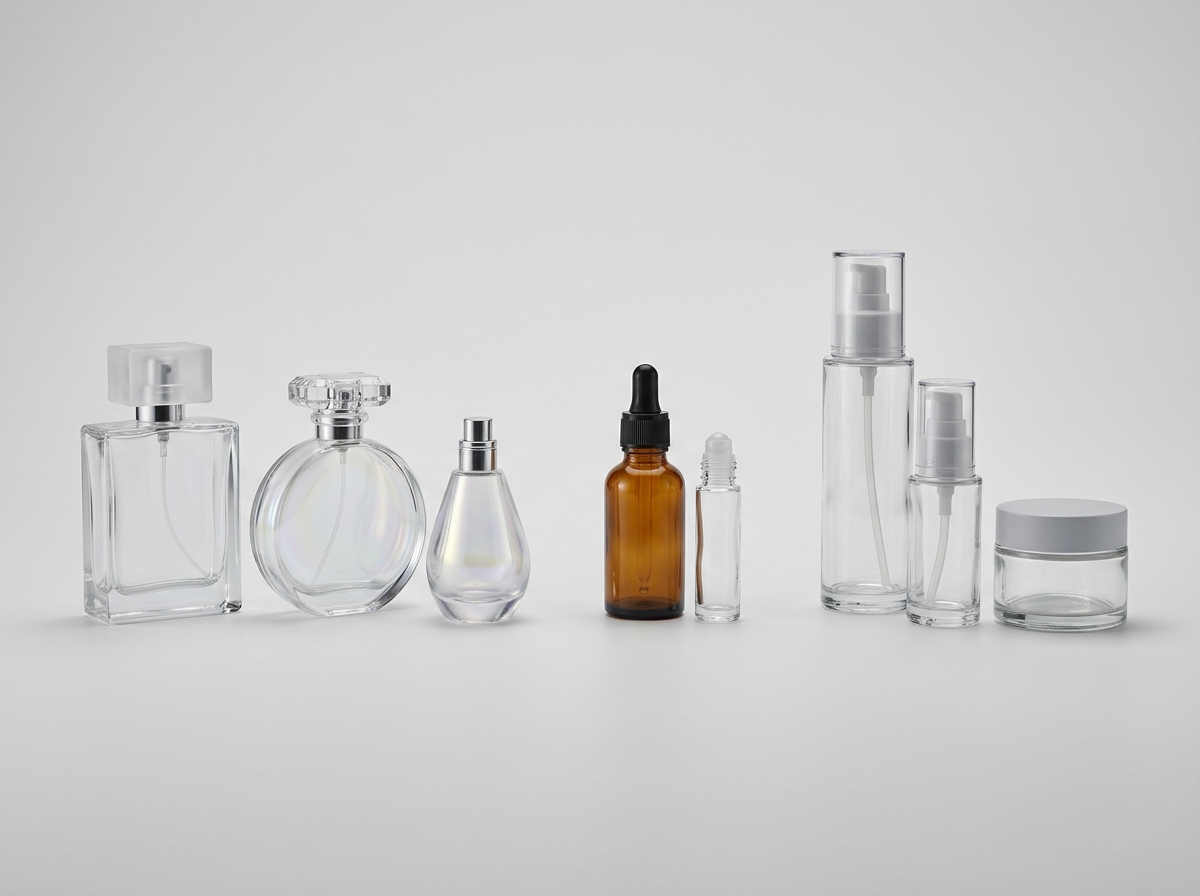
A luxury fragrance label may need glass perfume bottles, spray pumps, caps, and decorative finishes that all match one visual story, while a skincare brand may need cream jars, airless bottles, and set boxes that present as a family. Because of that, experienced buyers rarely compare suppliers by catalog depth alone. They compare whether the vendor can coordinate multiple components into one consistent launch system, including perfume bottles, airless bottles, cosmetic jars, and perfume caps.
That matters because packaging failures are usually system failures. A cap may fit the bottle but not survive torque testing. A pump may dispense correctly but leak after shipping vibration. A bottle may look premium in a sample photo but lose clarity or coating integrity after labeling or alcohol exposure. The best suppliers anticipate these interactions before the PO is placed.
What Buyers Check in Beauty Packaging Solutions Before Paying a Deposit
Product compatibility is the first technical gate.
Beauty packaging solutions are judged by how well the container matches the formula, filling method, and marketing goal. A serum with active ingredients may need better oxygen protection, which is why airless systems often outrank open jars for sensitive formulations. A perfume line may prioritize glass clarity, spray atomization, and cap weight, while a body mist brand may care more about spray consistency and ergonomic handling than decoration complexity.
| Evaluation Area | What Buyers Measure | Typical Decision Impact | Common Risk if Missed |
|---|---|---|---|
| Neck finish | Thread fit, closure alignment, mating surface | High | Leakage, crooked caps, filling rejects |
| Pump output | Dispense volume per stroke, spray pattern | High | Underfill perception, poor user experience |
| Surface finish | Coating adhesion, print clarity, color match | Medium to high | Brand inconsistency, peeling, returns |
| Material choice | Glass, PET, PP, aluminum, zinc alloy | High | Compatibility issues, weight, cost drift |
Another major factor is whether the supplier can support the brand’s sustainability brief. The ISO 18601:2013 series frames packaging as a system with recovery and environmental considerations. That does not mean every cosmetic brand must switch materials immediately, but it does mean buyers increasingly ask about recyclability, resin options, and component separation. For suppliers with high-recyclability PE and PET options, this becomes a practical advantage in retail and export pitches.
Why Sampling Speed and Communication Matter More Than the Catalog
Fast and accurate sampling often decides supplier credibility before pricing does.
In beauty packaging procurement, a sample is not just a physical sample; it is a proof of execution. Buyers use it to test neck fit, surface feel, closure symmetry, decoration quality, and overall presentation. If the sample arrives late or requires multiple corrections, the brand assumes production risk will also be slow.
That is why many procurement teams evaluate a supplier’s response process. How quickly do they confirm dimensions? How clearly do they label options? Do they provide technical drawings? Can they explain compatibility between a bottle and a pump without guesswork? These details matter because a cosmetic launch often has a fixed window tied to marketing, influencer seeding, or retail calendars.
For export buyers, communication quality also reduces freight mistakes. Misread artwork, misunderstood material notes, or unclear accessory selection can delay an entire shipment. A supplier that manages the sample stage carefully often saves the customer more money than a lower unit price would.
How Cosmetic Packaging Suppliers Are Assessed on Quality Control and Testing
Quality control is the strongest predictor of repeat orders.
Professional buyers want evidence, not promises. They look for a process that includes incoming inspection, in-process checks, final inspection, and shipment verification. They also want to know which test methods the factory uses and whether those methods align with recognized standards.
For example, packaging conditioning before testing is commonly organized around ASTM D4332-22, which covers the conditioning of containers, packages, and packaging components for testing. In practice, that means a cosmetic supplier should not test a bottle straight out of one uncontrolled room and present the result as universal. Temperature and humidity can influence closure fit, material behavior, and decoration performance.
| Test or Control | Why It Matters | Typical Buyer Expectation | Related Standard Reference |
|---|---|---|---|
| Conditioning | Stabilizes sample environment before tests | Documented temperature and humidity | ASTM D4332-22 |
| Package system integrity | Helps prevent leakage and transit damage | No visible failure after shipping simulation | ISO 11607-1 |
| Quality system | Shows process discipline | Traceable records and CAPA flow | ISO 15378:2017 |
| Recyclability framing | Supports sustainability claims | Material and component clarity | ISO 18601:2013 |
In cosmetic packaging, a failed closure test is not a minor issue. It can lead to leakage in transit, contamination risk, and retail returns. A fragrance buyer may tolerate a slightly higher decorative cost, but not a weak seal. A skincare buyer may accept a longer lead time for a premium finish, but not unstable dimensions. That is why quality evidence should always include measurable checks, not generic claims.
What Premium Beauty Packaging Solutions Need to Prove on the Line
Premium packaging must perform like a production part, not just look like a sample.
Luxury positioning in cosmetics is often won through detail. Velvet coatings, flocking, metal caps, zinc alloy accents, and transparent glass bodies can create a high-end shelf presence, but only if they remain stable across handling and transport. The real challenge is keeping the visual effect consistent from first sample to mass production.
Buyers should ask whether the supplier can replicate finish quality at scale. Can the same tone be repeated across a 5,000-piece order? Will the coating show variation under retail lighting? Does the cap weight feel balanced on the bottle? These are the questions that separate a decorative vendor from a dependable custom packaging manufacturer.
For fragrance projects, the packaging is often part of the brand identity system. For skincare sets, the packaging is part of the product architecture. A coordinated line of skincare bottles and skincare sets can help a brand look more coherent on shelves, which is especially important when launching multiple SKUs at once.
- Check whether decoration methods are compatible with the base material.
- Confirm whether cap weight and bottle proportions suit the target price tier.
- Ask for repeatability data across multiple production samples.
- Review whether the supplier can support matching accessories across the full line.
How Buyers Compare Custom Packaging Manufacturer Pricing Without Making a False Economy
The cheapest quote is often the most expensive choice after rework, freight, and delays are added.
Price comparisons in cosmetic packaging are only useful when they are normalized. A lower bottle quote may exclude the matching pump, cap, finish, or carton. Another supplier may offer a higher unit price but include better tolerance control, stronger export packing, and fewer rejected units at filling.
That is why experienced buyers calculate total landed value. They compare the cost of the component set, the packaging of the packaging, the probability of defect, and the risk of launch delay. If one supplier has better consistency, fewer communication loops, and fewer sample revisions, the true cost may be lower even when the invoice looks higher.
| Cost Factor | Low-Price Supplier Risk | More Reliable Supplier Benefit | Buyer Outcome |
|---|---|---|---|
| Unit price | Looks attractive early | May be slightly higher | Needs total-cost review |
| Sample revision count | Often higher | Usually lower | Faster launch approval |
| Defect rate impact | Hidden in production | More controlled | Lower rework and returns |
| Export packing | May be minimal | More protective | Fewer transit losses |
For importers, shipping efficiency also matters. Ningbo’s logistics advantage is relevant because access to large ports can improve consolidation and departure options for bulk orders. That does not guarantee faster delivery on every project, but it is a real operational advantage when managing international packaging programs.
Which Questions Cosmetic Brands Should Ask Before Placing an Order
The best supplier conversations focus on risk, not just aesthetics.
Before placing a purchase order, buyers should pressure-test the supplier with a practical checklist. This is where many projects succeed or fail, because vague answers usually become expensive problems later.
- Can you provide matching bottle, pump, cap, and carton options for the same collection?
- What dimensional or closure-fit checks do you perform before shipment?
- Can you support custom surface finishes such as coating, flocking, or metallic accents?
- How do you manage sample approval and revision tracking?
- What export packing methods do you use for fragile glass and premium sets?
- Can you explain material options for recycle-focused or premium-positioned products?
These questions help buyers identify whether a supplier is a true packaging partner or only a container reseller. The difference becomes obvious when the project includes multiple SKUs, mixed materials, or a launch deadline that cannot move.
When a Cosmetic Packaging Supplier Is Ready for Long-Term Partnership
Long-term partners make future launches easier, faster, and more consistent.
The strongest signal is not a polished sales presentation; it is repeatability. A supplier that can reproduce the same bottle shape, cap fit, and decoration quality across future orders creates operational confidence. That matters because many beauty brands grow by building families of products rather than one-off items.
For fragrance, that may mean extending from a hero perfume bottle into travel spray, refill, and gift set packaging. For skincare, it may mean moving from a single serum bottle into an entire lineup of jars, airless bottles, and coordinated cartons. A supplier that understands that roadmap can reduce future development time.
Brands should also look for evidence of process maturity: version control, labeling discipline, responsive quoting, and organized shipment follow-up. These are not glamorous features, but they are the ones that keep launch calendars intact.
FAQ
1. What do cosmetic brands look for first in cosmetic packaging suppliers?
They usually look for fit, quality consistency, sample accuracy, and whether the supplier can coordinate complete beauty packaging solutions instead of only selling separate components.
2. How do brands evaluate a custom packaging manufacturer before ordering?
They review sample quality, response speed, testing capability, decoration options, export packaging, and whether the supplier can reproduce the same result at scale.
3. Why are airless bottles important in skincare packaging?
Airless bottles help reduce air exposure, which is useful for sensitive formulas, premium positioning, and products that need stable dispensing.
4. What standards matter for packaging quality checks?
Common references include ISO 15378:2017 for quality systems, ASTM D4332-22 for conditioning before testing, and ISO 11607-1 for packaging system integrity concepts.
5. How do brands compare pricing between two suppliers?
They compare total landed cost, not just unit price. That includes sample revisions, defect risk, packing quality, freight protection, and launch delay exposure.
6. What makes beauty packaging solutions feel premium?
Premium perception comes from coordinated design, stable decoration, balanced proportions, tactile finishes, and reliable performance across filling, shipping, and shelf display.
7. Why is communication so important when choosing cosmetic packaging suppliers?
Because packaging projects have many variables. Clear communication reduces artwork errors, fit problems, lead-time surprises, and avoidable production delays.
In the end, cosmetic brands evaluate suppliers the same way they evaluate launch risk: they want a partner who can turn a concept into a stable, shippable, brand-ready packaging system. The best custom packaging manufacturer is the one that combines design coordination, technical consistency, and practical follow-through across the entire order cycle.
Post time: Aug-18-2026


