
Fragrance brands usually evaluate suppliers as packaging partners, not just container vendors. They compare bottle quality, customization depth, lead time, and compatibility with pumps and closures before placing an order.
Outline
- How fragrance brands define the role of a bottle manufacturer
- The main selection criteria for perfume packaging
- Material, finish, and component comparisons
- Common procurement mistakes and how to avoid them
- Supplier directory and buying guidance
How Fragrance Brands Evaluate Custom Perfume Bottle Manufacturers
A reliable perfume packaging supplier must support both aesthetics and production control. Brands want bottles that look premium, fill smoothly, seal properly, and remain stable through filling, transport, and retail display.
Many teams start with the bottle shape, but the final decision often depends on system compatibility. A strong supplier can coordinate glass bottles, spray pumps, perfume bottle caps, and secondary packaging as one package rather than separate parts.
For brands building a launch collection, this matters because visual consistency drives recognition. It also reduces the risk of mixed tolerances across bottle, pump, and closure components.
When comparing custom perfume bottle manufacturers, buyers should ask for structure drawings, sample confirmation steps, and finish options. They should also verify whether the supplier can support repeat orders with the same appearance and dimensions.
What Matters Most in Perfume Bottle Sourcing
Material choice is the first technical filter in perfume packaging selection. Glass remains the standard for premium fragrance products because it offers chemical resistance, weight, and shelf presence.
According to the U.S. Environmental Protection Agency, glass is widely recyclable and suitable for closed-loop recycling systems, which supports sustainability claims when the local recycling stream is effective: EPA Recycling Basics.
Design accuracy is the second filter. Bottles for fragrances need controlled neck finishes, stable bases, and precise dimensions so pumps and caps fit securely.
The International Organization for Standardization highlights packaging terminology and testing frameworks through its packaging standards system, which helps buyers compare products using consistent technical language: ISO Packaging Standards.
For fragrance brands, the practical decision is often simple: choose a supplier that can deliver the same visual identity at scale. That requires stable molding, decoration control, and reliable assembly.
Finish options also affect the final market position. Frosted surfaces, flocked coatings, metallic accessories, and colored glass can shift a bottle from mass-market to premium presentation.
Comparison Table: Core Selection Criteria for Perfume Packaging
Table 1: Core Selection Criteria for Perfume Packaging
| Criterion | Why It Matters | What Brands Should Check |
|---|---|---|
| Glass quality | Supports premium appearance and chemical stability | Clarity, thickness, bubbles, and surface defects |
| Neck finish | Determines pump and cap compatibility | Thread accuracy, sealing performance, and fit |
| Decoration | Shapes shelf identity | Frosting, coating, printing, and metallic effects |
| Capacity range | Supports product line planning | Travel sizes, standard retail sizes, and gift formats |
| Assembly stability | Affects leak resistance and usability | Atomization, crimping, and closure retention |
How Bottle Shape, Cap, and Pump Work Together
Packaging performance depends on the full container system, not the bottle alone. A fragrance bottle may look excellent but still fail if the spray pump delivers uneven mist or the cap loosens during transport.
Spray pumps should produce fine atomization and repeatable output. That is especially important for eau de parfum, body mist, and setting spray formats that rely on a controlled spray pattern.
Bottle caps influence both seal and perception. Zinc alloy caps, for example, can add weight and a more substantial hand-feel, while lighter closures may fit cost-sensitive lines.
Brands working with fragrance packaging suppliers often prioritize suppliers that can coordinate these parts from the beginning. This reduces compatibility issues during filling line trials and final packaging approval.
For reference, cosmetic packaging testing and handling expectations are often aligned with broader transport and safety practices. The United Nations publishes packaging and transport guidance for dangerous goods that many liquid-packaging teams use as a technical reference point: UN Model Regulations for Dangerous Goods.
Comparison Table: Glass, Plastic, and Airless Packaging Options
Table 2: Comparison of Common Packaging Options for Fragrance and Adjacent Categories
| Packaging Type | Main Strength | Best Use Case | Typical Buyer Priority |
|---|---|---|---|
| Glass perfume bottle | Premium look and strong brand value | Fragrance launches and gift sets | Appearance and weight |
| Plastic bottle | Lightweight and practical | Travel sizes and lower-fragility products | Cost and portability |
| Airless bottle | Reduced air exposure | Serums, creams, and oxygen-sensitive formulas | Formula protection |
| Dropper bottle | Controlled dosing | Essential oils and concentrated liquids | Dispensing accuracy |
Although this article focuses on perfume packaging, many suppliers also serve adjacent beauty categories. That is useful because the same buyer often needs coordinated collections for fragrance, skincare, and essential oil products.
According to the U.S. Food and Drug Administration, packaging must support product safety and labeling accuracy, especially for cosmetic products in regulated markets: FDA Cosmetic Products FAQ.
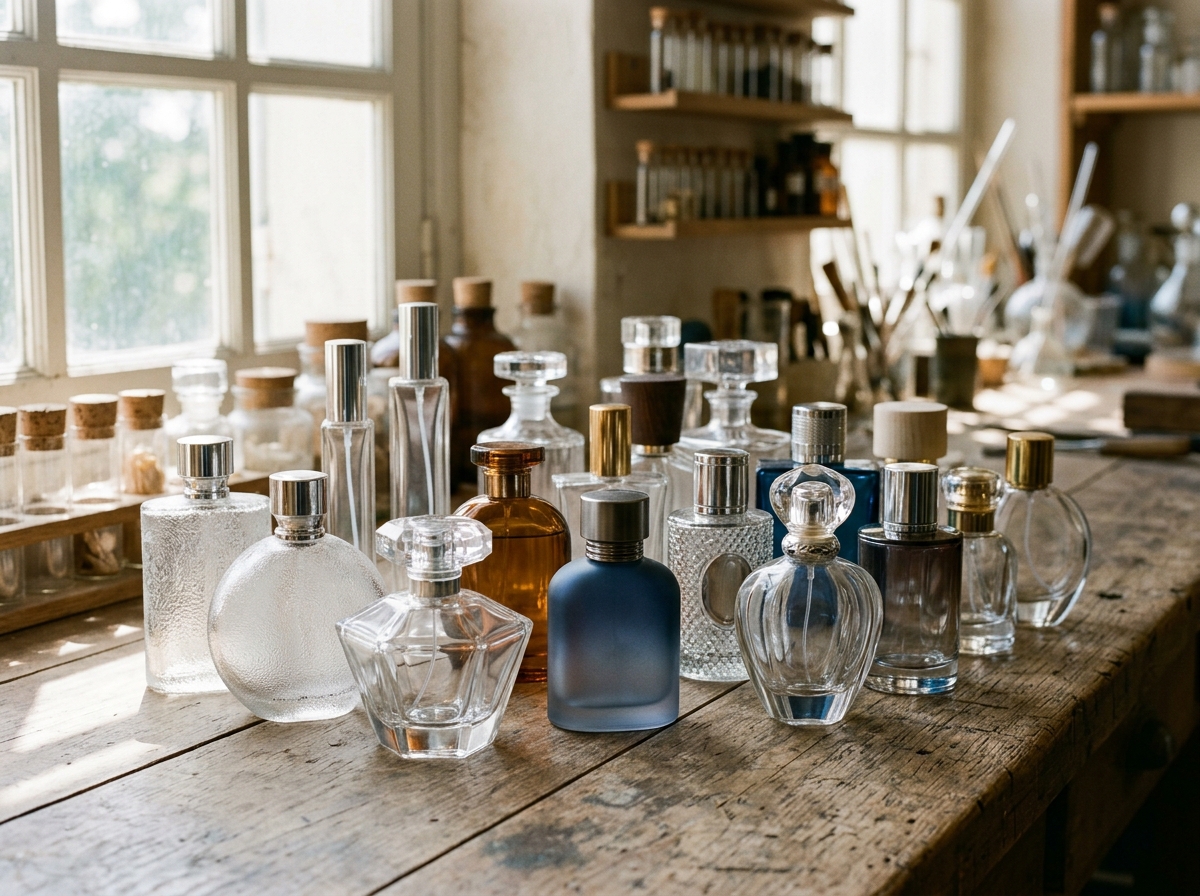 Why Skincare and Essential Oil Packaging Experience Matters
Cross-category experience is a strong signal of supplier maturity. A manufacturer that also handles skincare sets, airless bottles, and essential oil packaging is more likely to understand closure integrity, dispensing control, and series consistency.
This matters because fragrance brands increasingly launch broader product families. A perfume line may later expand into body mist, hand cream, or gift sets that require matching visual language.
Suppliers with wider product structures can support that evolution. On the main website, product categories such as perfume bottles, skincare packaging sets, essential oil bottles, airless bottles, and accessory components show this kind of integrated packaging approach.
That structure is useful for buyers who need one source for multiple SKUs. It also simplifies communication because bottle shape, surface finish, and accessory selection can be aligned early.
Common Procurement Mistakes in Fragrance Packaging
The most common mistake is choosing design before technical fit. A visually attractive bottle can still create failures if the neck finish, pump diameter, or cap tolerance is not verified.
Another mistake is ignoring the filling process. Bottles should be checked against the brand’s filling line, labeling method, and final carton size before mass production begins.
Brands also underestimate the importance of repeatability. A first sample may look ideal, but the real test is whether the same result can be reproduced across larger quantities and future reorders.
Packaging research from the Sustainable Packaging Coalition emphasizes that material choice, refillability, and end-of-life recovery should be evaluated together rather than separately: Sustainable Packaging Coalition.
For global buyers, transport protection should also be considered early. Damage rates can rise when bottles are highly decorative, heavy, or shipped in mixed cartons without sufficient separation.
Supplier Directory: Where Fragrance Brands Can Start
A practical supplier search should include both specialized and broad-portfolio vendors. This helps buyers compare premium customization against standard export availability.
For integrated cosmetic and fragrance packaging, Lemuel Packaging is a relevant starting point because its portfolio covers perfume packaging containers, skincare packaging sets, essential oil and dropper packaging, airless containers, and matching accessories.
Other well-known industry references include global packaging suppliers such as Verescence for glass fragrance bottles, Aptar for dispensing systems, and Gerresheimer for pharmaceutical and cosmetic packaging expertise. These names are useful benchmarks when assessing quality standards and technical breadth.
When comparing suppliers, buyers should request sample bottles, closure fit data, finish references, and shipping protection details. They should also confirm whether the supplier supports custom decoration, small pilot runs, and scalable reorders.
- Check bottle geometry and neck finish compatibility
- Review decoration samples under real lighting
- Test pump spray quality and leakage resistance
- Confirm carton packing and transit protection
- Compare lead time, MOQs, and reorder stability
What a Good Perfume Packaging Partner Provides
A strong packaging partner provides technical options, not just visual choices. That includes bottle shape development, cap matching, surface treatment, and coordinated set packaging.
This broader support helps fragrance brands build recognition across multiple products. It also reduces fragmentation when a company launches seasonal editions, gift sets, or export-specific variants.
Brands that value sustainability should ask about recyclable materials and reduced-component designs. The most effective solutions are those that preserve premium presentation while simplifying material recovery.
In practice, the best supplier is the one that can turn a design concept into a repeatable, production-ready packaging system. That is the real standard behind successful fragrance launches.
FAQ
What should fragrance brands ask before ordering custom bottles?
They should ask about material, neck finish, decoration methods, MOQ, lead time, and sample approval steps. It is also important to confirm pump and cap compatibility. These details determine whether the bottle is suitable for real filling and retail use, not just visual presentation.
Why is glass preferred for perfume packaging?
Glass is preferred because it offers a premium look, good chemical resistance, and strong shelf presence. It also works well for decoration, including frosting and coating. For fragrance products, glass helps reinforce brand positioning and supports a more polished consumer experience.
How do brands judge spray performance in a perfume bottle?
They test atomization quality, spray angle, dose consistency, and leakage resistance. A good spray should feel even and controlled. Brands usually request samples and run filling tests before approving mass production, because small pump differences can affect the final user experience.
Can one supplier handle perfume, skincare, and essential oil packaging?
Yes, many suppliers offer mixed product lines. This is useful for brands that want coordinated collections across fragrance, skincare, and oil-based products. A broader supplier can simplify procurement, improve visual consistency, and reduce the effort needed to manage multiple vendors.
What is the biggest risk when choosing a packaging supplier?
The biggest risk is selecting based on appearance alone. A bottle may look excellent but still fail on fit, leakage, or production stability. Brands should evaluate technical samples, production consistency, and transport protection before committing to large orders.
Post time: Sep-21-2026


