
- Brand identity in fragrance starts with repeatable packaging cues such as shape, color, finish, and closure design.
- Luxury bottles must balance aesthetics with technical requirements like spray performance, glass quality, and compatibility with fragrance formulas.
- Packaging consistency across bottle, cap, and set box improves recognition, trust, and perceived value in competitive fragrance markets.
- Material choice and decoration method influence both sustainability perception and premium positioning.
Premium perfume packaging is one of the fastest ways to strengthen fragrance brand identity, because consumers often identify a scent line by the bottle before they read the label. In packaging engineering, visual identity must also work within measurable quality limits: for example, ISO 13357-1 and related packaging standards show why compatibility, sealing, and stability matter in liquid products, while fine tolerances and spray consistency help luxury bottles feel dependable. A strong package system can include perfume bottles, caps, sprayers, and set packaging that all speak the same design language.
Why premium perfume packaging shapes fragrance brand identity
The bottle is the brand’s silent salesperson, because it communicates price tier, taste level, and product intent within seconds.
Fragrance is an especially visual category: shoppers cannot test every scent on a shelf or in a feed, so they rely on form, finish, and naming cues to decide what feels expensive. That is why luxury perfume bottles often use thicker glass walls, heavier caps, restrained graphics, and a controlled color palette. These elements create what brand teams call a recognition system. When the silhouette remains consistent across a line, the brand becomes easier to spot in retail displays, online listings, and gift sets.
This matters even more in premium segments, where packaging is expected to justify price. In practice, premium perfume packaging does three jobs at once: it protects the formula, signals quality, and anchors the brand’s visual memory. A customer may forget the ad copy, but they often remember a fluted bottle, a velvet finish, or a metal accent that feels distinct from mass-market alternatives.
Luxury bottles and the visual codes that make them memorable
Luxury bottles are memorable because they use repeated visual codes, not because they look complicated.
Successful fragrance brand identity usually depends on a small set of repeatable cues. A cylindrical bottle with a square shoulder can communicate modern minimalism. A rounded bottle with a soft matte coating can suggest elegance and femininity. A heavy metal cap can imply craftsmanship and higher value. These cues are not decorative extras; they are the packaging equivalent of a logo system.
| Design cue | Brand effect | Common luxury application |
|---|---|---|
| Heavy cap weight | Signals substance and premium feel | Fine fragrance, prestige gifting |
| Thick glass base | Improves perceived value and stability | Hero SKUs, display bottles |
| Matte or velvet finish | Adds tactile differentiation | Limited editions, niche launches |
| Metallic accents | Creates visual contrast and sharp shelf presence | Luxury and fashion fragrance |
For fragrance brands, the best packaging choices are usually the ones that can be repeated across a full line. A single standout bottle may sell one SKU, but a coherent family of bottles builds the brand.
That is why premium fragrance teams often source luxury perfume bottles together with compatible closures and decoration options, instead of treating each component separately. The more unified the system, the stronger the identity.
How perfume bottle structure affects premium perception and usability
Form is part of brand identity, but function is what keeps the identity credible.
Luxury buyers may admire a bottle visually, but they also expect it to work smoothly in daily use. Spray quality, leakage resistance, filling stability, and cap alignment all affect the user experience. In cosmetic packaging manufacturing, these details are not minor. A bottle that looks expensive but sprays unevenly damages the brand faster than a simpler bottle with consistent performance.
Technical compatibility also matters. Different fragrance formulas can interact differently with seals, liners, and decorative coatings. Alcohol-based perfumes, oil-rich scents, and sensitive natural blends need packaging components selected for chemical resistance and stable closure performance. That is one reason premium suppliers offer integrated packaging systems rather than isolated parts.
| Component | Brand impact | Technical risk if poorly chosen |
|---|---|---|
| Bottle neck finish | Defines cap fit and product consistency | Loose fit, leakage, uneven assembly |
| Sprayer | Shapes dispensing feel and atomization | Clogging, poor mist quality |
| Cap | Drives tactile premium feel | Low perceived value, unstable closure |
| Glass body | Frames silhouette and shelf appeal | Weak visual differentiation |
Brands that want stronger market positioning should review bottle structure as part of the identity strategy, not after the visual concept is finalized. If the bottle cannot support the right pump, cap, or decoration method, the result is a compromise that weakens the story.
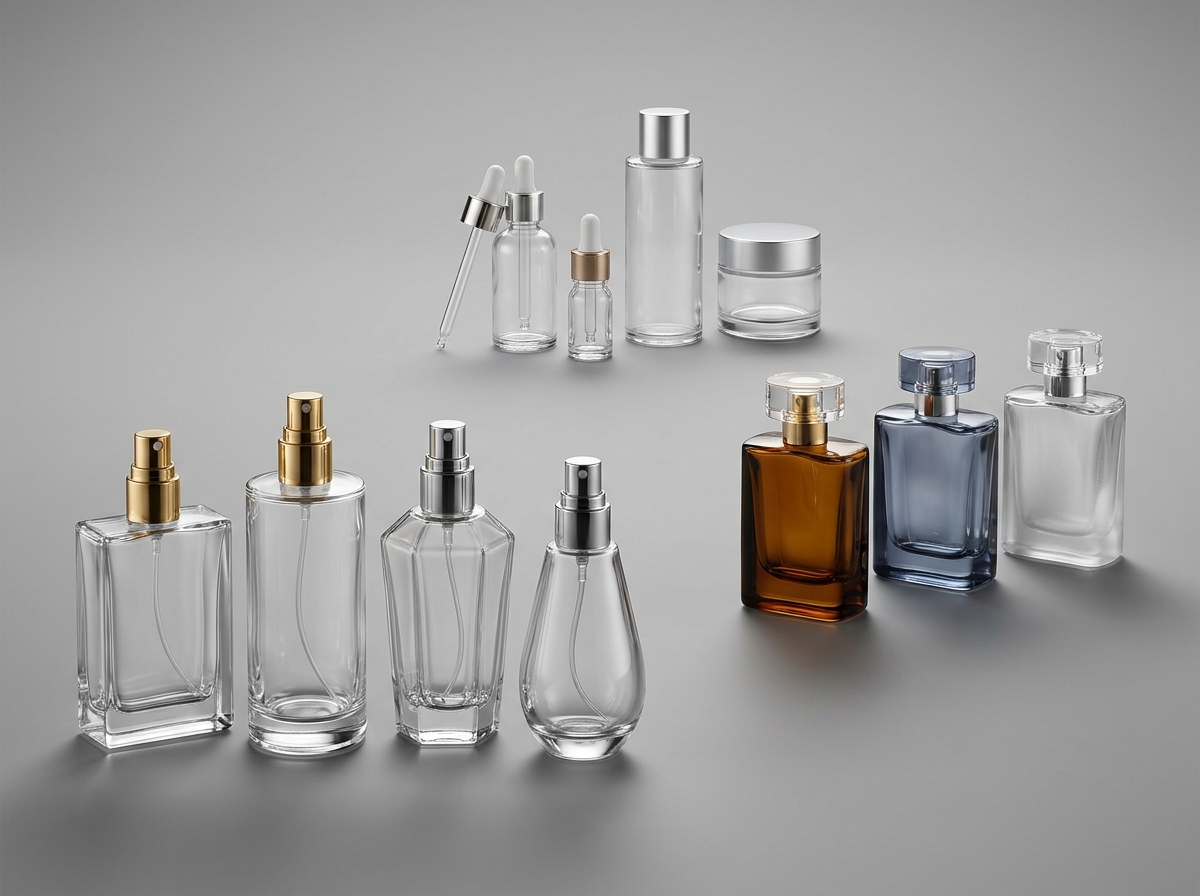 Premium perfume packaging materials: glass, metal, velvet, and recycled polymers
Material choice is one of the clearest signals of price tier in fragrance packaging.
Glass remains the dominant choice for premium perfume bottles because it offers clarity, weight, and chemical stability. Metal parts such as zinc alloy caps can create a more substantial hand-feel and stronger shelf contrast. Velvet, flocking, and soft-touch coatings add a tactile layer that many consumers associate with high-end products. Recycled PET and high-recyclability PE are increasingly used in packaging narratives when brands want to support sustainability without losing a refined appearance.
Material performance should also align with the product category. Transparent glass is useful when the color of the fragrance is part of the presentation. Frosted glass can reduce visual noise and create a cleaner luxury impression. Recycled polymers are more common in secondary packaging, accessory parts, or select bottle formats where the brand wants to communicate lower environmental impact.
| Material | Brand signal | Best use case |
|---|---|---|
| Glass | Clarity, purity, prestige | Main perfume bottle |
| Zinc alloy | Weight, durability, luxury touch | Cap and decorative parts |
| Velvet or flocking finish | Soft tactile premium feel | Niche and gift-oriented lines |
| Recycled PET / PE | Sustainability story | Secondary packaging and select skincare formats |
Material decisions should be made with both design and compliance in mind. The U.S. National Institute of Standards and Technology emphasizes traceability and measurement discipline in quality systems, which is why packaging suppliers that control dimensional consistency and surface quality usually deliver more reliable brand results. See NIST for measurement and standards resources relevant to manufacturing quality.
Decoration methods that make luxury bottles feel distinct
Decoration is what turns a generic container into a branded object.
For fragrance packaging, decoration is more than printing a logo. It includes silk screening, hot stamping, frosting, spraying, UV coating, gradient color application, and tactile finishes such as flocking or velvet texture. Each method changes how the bottle reflects light, holds color, and feels in the hand. The right choice depends on the brand narrative.
A minimal niche fragrance may benefit from a frosted bottle with one-color print and a clean cap. A fashion fragrance may need a bolder metallic accent and high-contrast decoration. A gift-focused line may use soft-touch finishes and coordinated outer packaging to create a stronger unboxing moment.
The key is consistency. If one SKU uses gold hot stamping, another uses black silk screen, and a third uses a fully different cap language, the line can start to feel fragmented. Premium perfume packaging works best when every element belongs to the same visual family.
- Choose one dominant identity cue, such as color, cap form, or finish.
- Repeat that cue across the full fragrance line.
- Keep typography and logo placement consistent.
- Match the bottle with the same quality level in pump and closure.
Why set packaging matters as much as the bottle
Secondary packaging is often the final layer that turns a fragrance into a giftable brand experience.
A luxury perfume bottle can be strong on its own, but the outer box, insert, and set presentation often determine how the product is perceived at first touch. In prestige categories, consumers expect the product to feel curated from the outside in. That is why coordinated set packaging is so important for fragrance launch strategy.
Well-designed set packaging helps with protection, merchandising, and storytelling. It also creates a clearer brand system in retail displays. When the bottle, box, and insert follow the same visual logic, the product looks more intentional and more expensive. For e-commerce, this is especially important because packaging is often the only physical clue customers see before purchase.
Brands looking for line consistency often combine bottle development with perfume set packaging and cosmetic jars for broader category extension. That approach supports both fragrance launches and adjacent beauty product collections.
Brand identity benefits beyond aesthetics
Strong packaging identity improves commercial performance because it reduces confusion and increases confidence.
When customers can recognize a fragrance line quickly, they are more likely to remember it, repurchase it, and recommend it. In a crowded market, packaging identity can also reduce comparison shopping by making the product feel more specialized. That is a major advantage for niche brands and premium private-label launches.
Identity also supports portfolio expansion. Once a brand establishes a recognizable bottle system, it can introduce new scents, seasonal editions, and travel sizes without rebuilding recognition from zero. The packaging becomes a platform, not a one-off design.
This platform thinking is especially relevant for brands that want to move from a single hero SKU to a broader collection. A stable packaging architecture makes it easier to expand into body mist, hair fragrance, or gift sets while keeping the same brand DNA.
- Higher shelf recognition in retail environments.
- Better ad recall in digital and social channels.
- Stronger price justification through perceived quality.
- Easier line extension across sizes and seasonal launches.
How to choose premium perfume packaging for a new fragrance brand
The best packaging choice is the one that fits the product strategy, not just the mood board.
Before approving a bottle, a fragrance brand should define its target price tier, sales channel, and brand personality. A minimalist clean-beauty fragrance needs a very different package from a theatrical luxury scent sold through gifting channels. Packaging should support how the customer discovers, buys, and displays the product.
For practical selection, teams should compare bottle shape, material thickness, decoration method, cap weight, and fill volume. They should also confirm compatibility with the pump and closure before final sampling. This is where integrated suppliers are useful, because they can coordinate bottle, sprayer, cap, and outer packaging in one workflow.
| Selection factor | What to check | Why it matters |
|---|---|---|
| Volume | 30 ml, 50 ml, 100 ml | Matches retail tier and usage pattern |
| Closure fit | Cap alignment, neck compatibility | Prevents leakage and assembly issues |
| Decoration | Print, spray, frost, metal finish | Defines brand look and shelf presence |
| Packaging set | Bottle, box, insert, accessory fit | Improves launch consistency |
If a brand wants a full packaging system instead of separate parts, it is usually better to start with a packaging partner that can handle bottle and accessory integration. That is where perfume accessories and related component sourcing become important to the final result.
What premium packaging buyers often overlook
The biggest packaging mistakes are usually caused by treating identity and production as separate decisions.
One common mistake is choosing a beautiful bottle that does not scale well across variants. Another is using a cap that looks premium but feels unstable in repeated use. A third is approving a finish that photographs well but scratches easily in transit. These failures are costly because they affect both brand image and product quality.
Buyers also underestimate the role of sample testing. A proper evaluation should include visual inspection, spray testing, closure fit, and shipping simulation. For international fragrance brands, this should be done before full production to avoid late-stage redesigns.
- Test the spray pattern and atomization quality.
- Check cap fit after repeated opening and closing.
- Inspect surface finish under shipping and handling conditions.
- Review packaging consistency across multiple units.
Premium perfume packaging and sustainability expectations
Sustainability now influences premium packaging decisions, but it must be handled carefully to preserve luxury perception.
Consumers increasingly want recyclable materials, lower-waste packaging, and clearer environmental messaging. However, a sustainability claim only helps brand identity if the package still feels premium. In fragrance, this means balancing recycled content with clean design, durable construction, and a refined unboxing experience.
Brands can improve sustainability perception by reducing unnecessary layers, selecting recyclable components where possible, and designing packaging that is durable enough to avoid damage in transit. Clear communication matters too. If a brand uses recycled polymers or recyclable glass, that message should be consistent and credible across product pages and packaging inserts.
For manufacturers and brand owners, the best approach is not to chase every eco trend. It is to select a packaging system that can support both brand image and practical environmental goals.
For regulatory and material guidance, the U.S. EPA National Recycling Strategy is a useful reference point for recyclable material systems and waste reduction priorities.
Conclusion: premium perfume packaging is a brand system, not a container
Premium perfume packaging builds strong brand identity when it creates a repeatable, recognizable experience across the bottle, closure, decoration, and set presentation.
Luxury fragrance brands win when their packaging is coherent, technically reliable, and emotionally distinctive. The bottle should look premium, feel premium, and perform consistently. The outer box should extend the same visual language. The whole system should help the customer remember the brand, not just the scent.
If your goal is to build a fragrance line that feels premium from the first glance to the final unboxing, the smartest move is to design the packaging as a unified identity platform. That is where luxury becomes recognizable, scalable, and commercially durable.
FAQ
What makes premium perfume packaging different from regular packaging?
Premium perfume packaging uses stronger visual cues, better material quality, and more consistent component integration. It is designed to communicate luxury, protect the formula, and support brand recognition.
Why is the bottle shape important for fragrance brand identity?
Bottle shape is one of the fastest ways customers identify a fragrance line. A consistent silhouette helps the brand become more memorable across shelves, social media, and gifting channels.
Which materials are most common in luxury bottles?
Glass is the most common main material, while metal, zinc alloy, velvet finishes, and specialty coatings are often used for caps and decoration.
How do caps and sprayers affect brand perception?
Caps and sprayers affect both function and feel. A stable cap and smooth spray action make the product seem more refined and trustworthy.
Should fragrance brands use the same packaging across all SKUs?
Yes, a shared packaging system strengthens recognition and makes it easier to launch new variants without losing the brand’s visual identity.
How does sustainable packaging fit into luxury fragrance?
Sustainable packaging works best when it preserves a premium look while reducing waste or using recyclable materials. The sustainability message must remain credible and visually coherent.
What should a brand test before approving perfume packaging?
Brands should test spray quality, cap fit, surface durability, fill compatibility, and shipping resilience before moving into full production.
Post time: Aug-25-2026


