
- Serum lotion pump bottles improve accuracy, hygiene, and repeat use compared with open-mouth containers.
- Packaging decisions should start with viscosity, pump output, neck finish, and formula compatibility.
- Modern skincare lines win when bottle, pump, cap, and outer pack are designed as one system.
- Material choice matters: PET, glass, and airless formats each solve different product risks and brand goals.
- Compliance, testing, and decoration quality are part of packaging performance, not optional extras.
Serum lotion pump bottles are now a core part of skincare packaging because they balance controlled dispensing, premium presentation, and formula protection, which matters even more when brands are launching highly active products under tight quality expectations. Packaging consistency is not a cosmetic detail: the ISO 22716:2007 cosmetic GMP framework and the dimensional testing principles in ISO 15378:2017 show why packaging fit and process control influence both safety and market readiness. For brands seeking scalable procurement, the most useful serum bottle options and airless bottle formats are usually the ones that align packaging structure with the formula, not the other way around.
Why serum lotion pump bottles matter in modern skincare packaging
Serum lotion pump bottles solve a practical problem: consumers want precise, clean, one-hand dispensing, while brands need stable performance across millions of cycles. A pump format helps reduce product contamination because users do not need to dip fingers into the container, and that matters for water-based lotions, antioxidant serums, and emulsions that are more sensitive to repeated exposure. In procurement terms, this is why packaging teams often compare pump output, spring compatibility, and bottle geometry before they compare decoration.
The most effective skincare packaging also supports brand storytelling. A bottle, pump, cap, and label system creates a visual hierarchy that can make a line look clinical, natural, luxury, or dermocosmetic. For that reason, brands often move from single-container buying to coordinated packaging programs. On the supplier side, that is why skincare bottle sets and cosmetic jars are important categories, because they help keep line architecture consistent across multiple SKU sizes.
Core keyword factors: serum lotion pump bottles, skincare packaging, cosmetic pump bottles
The right cosmetic pump bottle is determined by three technical variables: viscosity, dose volume, and closure compatibility. This is the main reason brands cannot select packaging by appearance alone. A thin facial essence may need a small-output pump, while a lotion or cream may require a larger stroke and wider dip tube path. If the product is too viscous, the result is incomplete priming, irregular output, or consumer complaints about clogging.
| Decision factor | Why it matters | Common range | Risk if ignored |
|---|---|---|---|
| Output per stroke | Controls user dose | About 0.2 ml to 2.0 ml, depending on pump type | Overuse, product waste, or under-dosing |
| Neck finish | Ensures pump-to-bottle sealing | Common cosmetic finishes include 18/410, 20/410, 24/410, 28/410 | Leakage, fit failure, line stoppage |
| Viscosity match | Determines whether the formula can be pumped cleanly | Low, medium, or high viscosity formulations | Clogging, air intake, poor priming |
| Material compatibility | Protects formula integrity | PET, PP, glass, acrylic, airless systems | Deformation, haze, permeability issues |
For skincare brands, this means packaging selection should be tied to formula development. A serum with volatile ingredients behaves differently from a lotion with heavier emollients, and packaging should reflect that reality. Strong packaging programs usually test pump output during line trials, not after launch.
How skincare packaging design affects product performance and consumer trust
Skincare packaging is a functional system, not just a visual shell. The bottle body, pump head, actuator shape, overcap, and decoration all affect the consumer experience, from first opening to final use. A rigid, unstable closure can make a premium product feel cheap even when the formula is excellent, while a well-calibrated pump can make an entry SKU feel more refined than its price suggests.
One widely used reference point for package performance is the droplet and stroke consistency expectation in pump testing, where repeatability matters more than a single perfect actuation. In commercial packaging QA, brands often inspect leakage, weight loss, and output variation after vibration, drop, and temperature cycling. That testing mindset is consistent with the broader quality-control logic in ASTM D4169-23, which covers performance testing of shipping containers and systems under distribution risks.
In practical terms, a skincare brand launching a premium serum set needs more than an attractive container. It needs a repeatable packaging architecture that can survive filling, shipping, retail handling, and daily use without visible defects. That is why series-based packaging, such as coordinated bottle-and-jar programs, tends to support stronger product-line recognition.
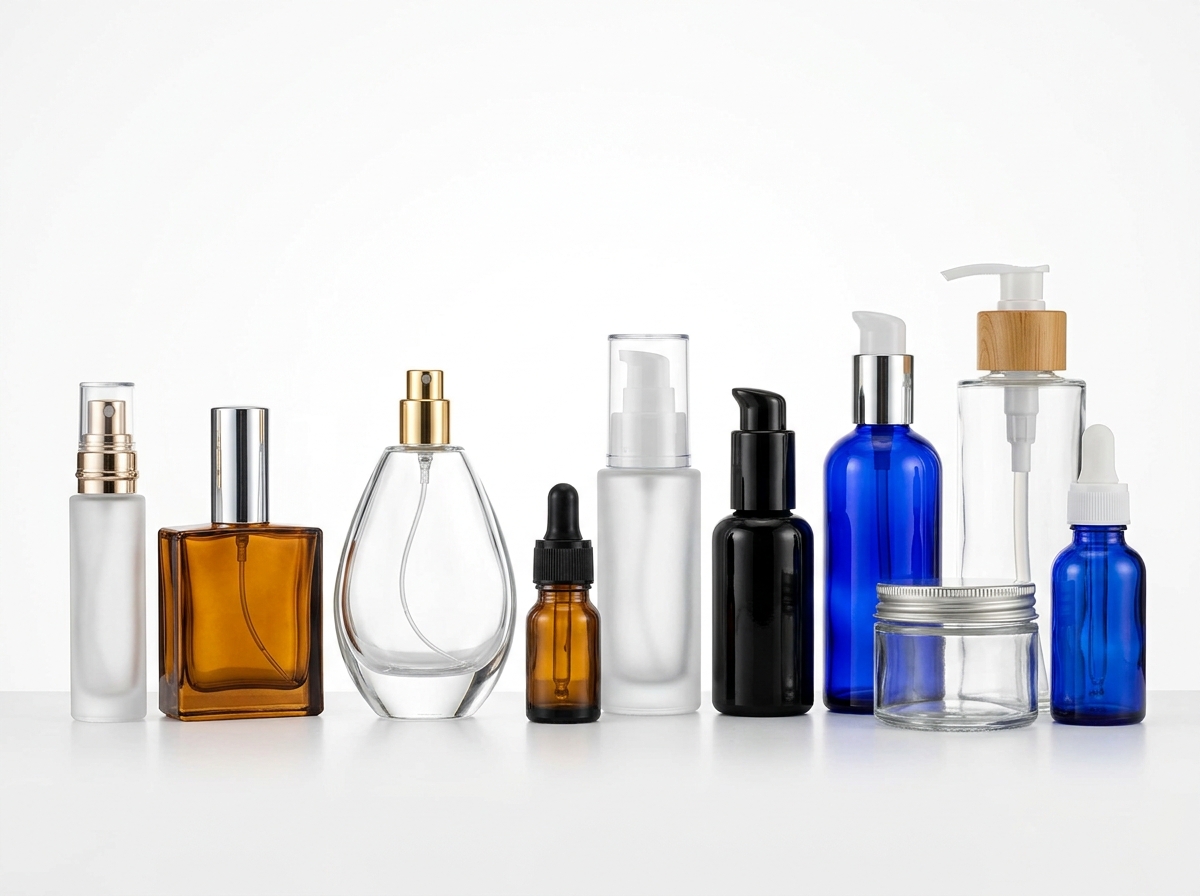 Material choices for cosmetic pump bottles: PET, glass, and airless systems
Material choice drives both brand perception and formula protection. PET is popular for lightweight, shatter-resistant packaging and is often used where logistics efficiency matters. Glass supports a more premium look and better barrier performance, especially when visual clarity is part of the brand brief. Airless systems are often selected when the formula is sensitive to oxygen exposure, contamination, or oxidation during repeated use.
| Material or format | Main strength | Typical use case | Operational trade-off |
|---|---|---|---|
| PET | Lightweight and durable | Lotions, cleansers, travel products | Lower barrier than glass or airless formats |
| Glass | Premium appearance and barrier stability | Serums, high-end skincare, display sets | Heavier, breakable, higher freight sensitivity |
| Airless bottle | Formula protection and controlled dispensing | Active serums, sensitive emulsions, premium skincare | Higher component complexity and cost |
| PP pump system | Good chemical resistance and broad compatibility | Many lotion and cosmetic formulations | Less luxury feel unless decorated well |
For brands working with sensitive ingredients, the packaging conversation should include oxygen exposure, light exposure, and closure performance. That is especially relevant for antioxidant formulas, retinol-based products, and active serums. In those cases, airless packaging is often used as a risk-reduction tool, not only a design choice. For suppliers with broader category depth, airless bottles and essential oil bottles provide a useful illustration of how format should follow ingredient sensitivity.
Technical specifications brands should verify before ordering
Packaging failure is often caused by mismatched specifications, not manufacturing defects alone. Before ordering serum lotion pump bottles, brands should verify neck finish, pump output, bottle volume, tolerances, and decoration method. These details determine whether the packaging will run smoothly on the filling line and whether the final item will feel coherent in the customer’s hand.
One useful benchmark comes from dimensional control standards such as ISO 286-1:2010, which defines the general system of limits and fits. While cosmetic packaging does not always cite this standard directly, the principle is the same: fit matters. If the closure geometry is out of tolerance, leakage and alignment issues quickly appear during production.
| Specification | Typical cosmetic benchmark | Why it matters | Test method |
|---|---|---|---|
| Neck finish | 18/410, 20/410, 24/410, 28/410 | Ensures closure compatibility | Go/no-go fit check |
| Pump output | About 0.2 ml to 2.0 ml per stroke | Controls dose and waste | Repeated actuation weighing |
| Leak test | No visible leakage after pressure or inversion | Prevents transit damage | Inversion and torque testing |
| Decoration | Silk screen, hot stamping, coating, frosted finish | Defines brand appearance | Adhesion and abrasion checks |
These numbers are not just production details. They affect whether the product can be filled, packed, shipped, displayed, and used without complaint. Brands that skip this review often discover problems only after the first retail run.
How modern skincare lines use pump bottles to build a stronger product system
Modern skincare lines perform better when packaging is designed as a portfolio, not as isolated items. A brand might use one bottle family for serum, another for lotion, and a matching jar for cream, but the visual language should remain consistent. That consistency improves shelf recognition and reduces the cognitive load for shoppers browsing a crowded category.
This is where line architecture becomes a commercial advantage. A coordinated set helps a brand launch multiple SKUs faster because the same cap, finish, or decoration theme can be reused across sizes. It also simplifies sourcing, since procurement can standardize around shared components. Suppliers that offer multi-piece skincare sets and cream jars are usually better positioned to support that kind of SKU family planning.
In retail environments, a coherent package family can do part of the marketing work before a consumer reads the label. That matters for premium skincare, where visual unity often signals product discipline and ingredient seriousness.
Quality control and compliance in cosmetic pump bottles
Quality control is where packaging moves from attractive to dependable. Cosmetic brands should treat leak testing, torque control, actuation force, and transport simulation as part of launch readiness. If those checks are not done, the brand risks broken seals, inconsistent dispensing, or damaged goods after distribution.
Cosmetic quality systems also benefit from environmental and safety thinking. FDA’s cosmetics resources explain that cosmetics must be safe for consumers under labeled or customary conditions of use, and the agency’s labeling guidance helps brands avoid preventable compliance mistakes. The relevant official resource is available at FDA Cosmetics. For packaging teams that need a materials reference point, the NIST materials measurement ecosystem is also useful for understanding how dimensional accuracy and surface properties are evaluated in controlled settings, see NIST Materials Measurement Laboratory.
For shipping durability, many brands use protocol-based testing aligned with distribution hazards, and the logic of ASTM D4169-23 remains relevant when packages must survive compression, vibration, drop, and handling stress. In high-volume skincare launches, that testing can save far more than it costs by preventing returns and damaged inventory.
Practical checklist for choosing serum lotion pump bottles
A good packaging decision follows a simple sequence: formula first, dispensing second, branding third. That order prevents costly redesigns later. Brands should evaluate the bottle system against the actual product, the fill line, and the target customer experience.
- Confirm formula viscosity and sensitivity to air, light, and repeated opening.
- Select the right format: standard pump, lotion pump, or airless bottle.
- Match neck finish, closure diameter, and dip tube length to the bottle.
- Test dose output, priming behavior, and leakage across several cycles.
- Review decoration, labeling area, and shelf-facing proportion.
- Validate transit performance using drop and vibration testing.
- Lock artwork only after the sample set is approved.
This process is especially important for export-oriented brands, because product failure in transit can be expensive and difficult to reverse. Suppliers with integrated packaging programs, such as new packaging arrivals and perfume bottles, often help brands keep visual consistency across skincare and fragrance families while reducing sourcing complexity.
What modern skincare buyers really expect from packaging
Skincare buyers expect packaging to feel intuitive, safe, and premium the first time they use it. That expectation is stronger in the serum category because consumers often associate serums with actives, higher price points, and more careful formulation. If the pump sputters, leaks, or dispenses unevenly, the customer may question the formula itself, even when the issue is purely mechanical.
The best pump packaging therefore serves as a trust signal. It tells the buyer that the brand paid attention to application quality, hygiene, and portion control. In premium and dermocosmetic segments, that can be as important as the ingredient story. A stable, elegant bottle system can also help a brand move from trial to repurchase because the user experience feels predictable every time.
That is why serum lotion pump bottles remain central to modern skincare lines: they convert packaging from a passive container into an active part of product performance, brand identity, and customer retention.
FAQ
What are serum lotion pump bottles used for?
They are used for controlled dispensing of serums, lotions, emulsions, and other skincare formulas that benefit from hygienic, repeatable application.
Are airless bottles better than standard cosmetic pump bottles?
Airless bottles are better when the formula is sensitive to oxygen, contamination, or oxidation, but standard pump bottles are often more cost-effective for many lotions and routine skincare products.
What bottle material is best for skincare packaging?
The best material depends on the formula and positioning: PET is lightweight, glass is premium, and airless systems offer stronger protection for sensitive products.
Which pump size is most common for skincare lines?
Common cosmetic neck finishes include 18/410, 20/410, 24/410, and 28/410, while pump output is often selected within about 0.2 ml to 2.0 ml per stroke depending on the formula.
How do brands test cosmetic pump bottles before launch?
They usually test leakage, actuation consistency, priming, torque, and transit durability across repeated cycles and simulated shipping conditions.
Why do skincare brands prefer coordinated packaging sets?
Coordinated sets improve shelf recognition, simplify sourcing, and create a more coherent brand system across serum, lotion, cream, and cleanser products.
What should brands ask a packaging supplier before ordering?
They should ask about formula compatibility, neck finish, output per stroke, decoration options, sample lead time, and shipping protection for export orders.

Post time: Aug-13-2026


