
- Premium cosmetic packaging is a system, not a single bottle or jar.
- Compatibility between formula, closure, and decoration determines whether the pack feels luxury and performs reliably.
- Small brands should validate samples, tolerances, and logistics before committing to mass production.
- Series consistency across perfume, skincare, and accessories strengthens brand recognition and reduces launch risk.
For small beauty brands, premium packaging is a commercial decision as much as a design one. The right OEM packaging supplier helps convert a concept into a complete packaging architecture with measurable tolerances, material choices, and decoration rules, which matters because cosmetic pumps, bottles, and jars must perform under real handling conditions. Dimensional control is not just an engineering detail: ISO 286-1 defines the general system of limits and fits used across precision manufacturing, and packaging projects benefit from the same discipline when components must mate cleanly and seal reliably. Brands that want custom beauty packaging should treat the first sample round as a technical audit, not a visual approval only.
Why premium cosmetic packaging starts with a system, not a single SKU
The core mistake small brands make is buying one attractive container and hoping the rest will follow. Premium cosmetic packaging works when the bottle, pump, cap, liner, label space, and carton all support the same customer experience. A glass perfume bottle with a zinc-alloy cap may look elegant, but it still needs closure compatibility, spray consistency, and transport stability to feel premium after delivery.
This is why OEM packaging supplier selection matters so much. An experienced supplier can assemble a package line that keeps the same visual language across a fragrance bottle, an airless pump bottle, and a cream jar. For a small brand, that consistency is often more valuable than a single high-cost hero item. It creates a recognizable shelf system, lowers design drift, and makes the launch look more established.
Industry standards also remind us that packaging performance is measurable. ASTM D4169 is a widely used distribution-testing standard for shipping containers and systems, and it is often used to simulate the vibration, compression, and handling stresses that cause cracks, leakage, and decoration failure in transit. If a brand spends heavily on premium cosmetic packaging but skips distribution testing, it is paying for appearance without proving durability.
| Packaging element | Why it matters for premium perception | Typical validation point | Practical risk if ignored |
|---|---|---|---|
| Bottle or jar body | Defines shape, weight, and shelf presence | Fill volume, wall thickness, finish compatibility | Leakage, deformity, weak visual hierarchy |
| Pump or closure | Affects user feel and dispensing control | Thread engagement, output consistency, torque | Misfit, product waste, poor user experience |
| Surface decoration | Signals brand tier immediately | Adhesion, abrasion resistance, color match | Logo wear, fading, low-end appearance |
| Outer carton or set box | Turns a product into a giftable system | Drop resistance, print accuracy, insert fit | Transit damage, unboxing disappointment |
How small beauty brands brief an OEM packaging supplier for custom beauty packaging
A strong brief starts with product behavior, not with decoration ideas. The supplier needs to know whether the formula is water-based, oil-rich, alcohol-based, oxygen-sensitive, or light-sensitive before recommending premium cosmetic packaging. That information changes the choice between glass, PET, acrylic, aluminum, or airless formats, and it determines whether a spray bottle, dropper, jar, or pump system is appropriate.
Small brands should also define three commercial constraints early: target retail price, launch quantity, and market channel. A DTC skincare line selling in small batches can justify a different finish than a wholesale fragrance program moving through stores and distributors. If the target is luxury positioning, the OEM packaging supplier should be asked to balance aesthetics with manufacturing repeatability, because premium packaging fails when every batch looks slightly different.
At this stage, the most useful questions are operational. What is the minimum order quantity? How many colors can be matched consistently? Which decoration methods are available? Can the supplier provide bottle, pump, cap, and carton as an integrated set? For small beauty brands, these questions reduce hidden costs later, especially when multiple packaging pieces must arrive in the same shade and finish.
- Define the formula type and its sensitivity to oxygen, light, heat, and alcohol.
- Choose the primary packaging format before selecting decoration.
- Confirm closure compatibility and neck finish early.
- Ask for sample hierarchy: blank sample, decorated sample, and shipping-tested sample.
- Request a lead-time map for tooling, sampling, production, and freight.
Material selection for premium cosmetic packaging: glass, PET, aluminum, and airless systems
Material choice is the most visible technical decision in custom beauty packaging. Glass communicates weight, clarity, and perceived value, which is why it is common in fragrance packaging and premium skincare sets. PET offers lighter weight and better shatter resistance, which can help travel products, mist bottles, and some cleansing formats. Airless systems are important when formula protection matters more than simple display, especially for active skincare and preservative-sensitive products.
Material properties should be linked to function. For example, glass has strong barrier properties and a premium hand feel, while PET is easier for logistics and lower breakage risk. In fragrance, decorative options such as frosted glass, flocking, or metal caps help signal luxury. In skincare, clarity, clean lines, and series consistency often matter more than heavy ornamentation. An OEM packaging supplier should be able to explain why one material supports the brand story better than another, rather than pushing the easiest-to-make option.
There is also a sustainability layer. PET is widely recyclable when it is properly sorted, and the U.S. EPA notes that PET bottles and jars are common packaging formats in recycling streams. If a brand wants to talk about recyclability, it should understand local collection realities rather than making vague green claims. In packaging, credible sustainability messaging is part of trust.
| Material | Best-fit use cases | Strengths | Trade-offs |
|---|---|---|---|
| Glass | Perfume bottles, cream jars, premium serums | High clarity, strong barrier, luxury feel | Heavier, breakable, higher shipping risk |
| PET | Spray bottles, lotion bottles, travel formats | Lightweight, durable, cost-efficient | Less premium feel than glass, lower heat tolerance |
| Aluminum | Refill packs, mist bottles, light-sensitive products | Excellent barrier, modern look, recyclable | Limited visibility of formula, denting risk |
| Airless composite | Serums, creams, active skincare | Formula protection, controlled dispensing | More complex structure, higher unit cost |
Surface finishes that make premium cosmetic packaging feel expensive
Surface finish is often the difference between a standard container and a premium cosmetic package. The same bottle geometry can feel mass-market or luxury depending on frosting, soft-touch coating, metallization, silk screen printing, hot stamping, or flocking. In fragrance packaging, tactile effects such as velvet or flocked surfaces can create immediate differentiation. In skincare, a cleaner matte finish may communicate clinical confidence and ingredient seriousness.
Decoration should be selected for durability, not just style. A logo that scratches off after shipping is a brand problem, not a decoration issue. This is why small brands should request rub testing and sample comparisons before approving the final custom beauty packaging design. A good OEM packaging supplier will show how ink systems, coatings, and secondary prints behave under handling, instead of treating decoration as a purely aesthetic choice.
For brands launching into retail, color consistency matters as much as texture. If a collection uses a cream jar, serum bottle, and outer carton, the white should read as one family rather than three different whites. In premium packaging, small inconsistencies in gloss level, cap tone, or metallic reflection can reduce the sense of quality even when the product itself is excellent.
| Decoration method | Premium effect | Durability focus | Best use case |
|---|---|---|---|
| Frosting | Soft, refined, light-diffusing | Surface uniformity | Serum bottles, fragrance bottles |
| Hot stamping | Metallic accent, luxury signal | Adhesion and edge sharpness | Logos, gift sets, caps |
| Silk screen printing | Clean branding, strong legibility | Rub resistance | Labels on glass and PET |
| Flocking or velvet coating | High tactile value | Fiber retention and wear | Perfume bottles and gift packaging |
How OEM packaging supplier coordination reduces launch risk for small beauty brands
Coordination is where many promising packaging concepts fail. Small beauty brands usually work with tight launch timelines, changing artwork, and multiple stakeholders, so the supplier must manage timing as well as manufacturing. The best OEM packaging supplier does not just send samples; it organizes the project sequence so the brand can approve structure, decoration, and carton layout in the right order.
This coordination matters because packaging is a chain. A bottle neck change can affect the pump. A pump change can affect the fill line. A carton insert can change the spacing inside the shipping box. If the supplier understands these dependencies, the brand avoids late-stage redesign costs. That is especially important for premium cosmetic packaging, where a minor mismatch can force the whole set to look unbalanced.
Packaging testing should follow the same logic. A practical launch program usually includes dimensional checks, closure fit, leak testing, drop testing, and transport simulation. When a supplier can show test discipline, a small brand has more confidence to move from sample to production. If the brand sells online, that confidence is essential because damage rates can erase margin quickly.
- Approve the technical drawing before decoration begins.
- Check compatibility among bottle neck, pump thread, and cap depth.
- Test at least one decorated sample and one transit-tested sample.
- Verify carton insert fit with final pack dimensions.
- Lock artwork only after the final structure is confirmed.
Testing language should also be understood by the brand team. ISO 8317 covers child-resistant packaging for reclosable packages, while ASTM D4169 focuses on distribution performance. Not every beauty product needs both, but knowing the distinction helps a brand ask better questions. If the product is a fragrance or functional cosmetic with higher handling risk, the supplier should at least discuss whether protective design choices are needed.
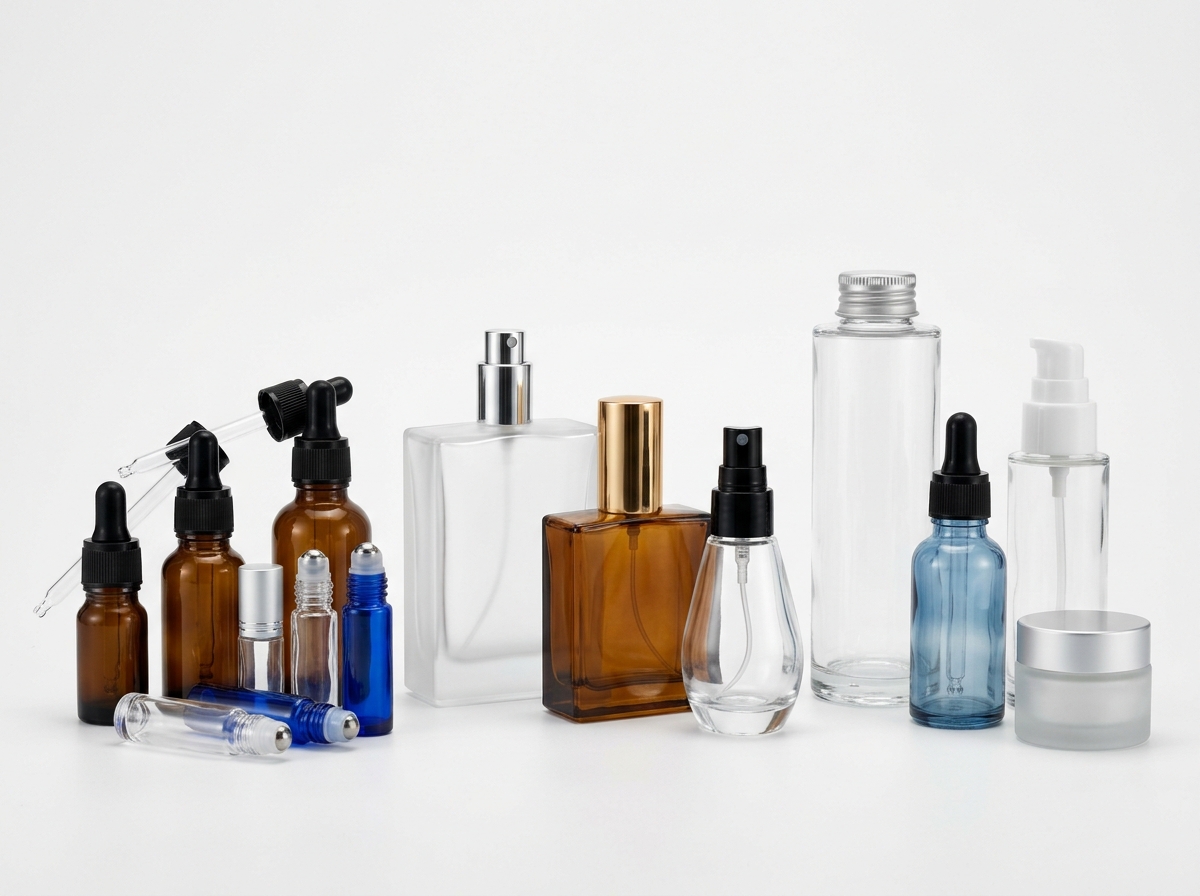 Premium packaging for fragrance, skincare, and oil-based formulas
Different beauty categories need different packaging logic, even when they all look premium on shelf. Fragrance packaging often prioritizes visual drama, cap design, and spray atomization. Skincare packaging usually prioritizes dosage control, oxygen protection, and series consistency. Essential oils and treatment oils often need small-volume bottles, dropper compatibility, and better control of evaporation and contamination.
For perfume, the bottle shape and spray quality are central to brand identity. Many premium fragrance projects use glass bottles with metal caps or decorative finishes to create a more collectible appearance. For skincare sets, small brands often choose multi-piece collections such as a serum bottle, cream jar, toner bottle, and pump dispenser because the unified system gives the line a mature retail presence. For oil-based formulas, the closure and orifice control can matter more than the visual ornament because product waste is expensive and user experience depends on dosing accuracy.
This is where a thoughtful OEM packaging supplier becomes strategic. The supplier can recommend family architecture: one design language for perfume, another for skincare, and a third for treatment oils, while still preserving a recognizable brand code. That approach makes custom beauty packaging scalable, because future launches can reuse the same visual grammar without repeating the entire development cycle.
| Category | Common pack formats | Main purchase driver | Typical premium cue |
|---|---|---|---|
| Fragrance | Spray bottle, glass bottle, metal cap | Perceived luxury | Weight, transparency, cap detail |
| Skincare | Airless bottle, cream jar, serum bottle | Formula protection | Clean geometry, series consistency |
| Essential oils | Dropper bottle, small glass vial | Dose control | Dark glass, precise closure |
| Spray care products | Trigger spray, mist bottle | Dispensing comfort | Even spray pattern, ergonomic feel |
What small brands should measure before ordering premium cosmetic packaging
Small brands should measure more than aesthetics before placing an order. The dimensions that matter most are fit, fill, and function. Fit means the parts mate correctly. Fill means the stated volume matches the actual product usage model. Function means the package survives opening, closing, shipping, and daily use without failure. These are the measures that separate attractive packaging from premium cosmetic packaging that performs.
There are also tolerance expectations. ISO 286-1 provides the general framework for fits and tolerances, and while cosmetic packaging does not behave like aerospace engineering, the principle is the same: when interfaces are controlled, defects fall. Brands that work with an OEM packaging supplier should ask for dimensional tolerances on neck finish, cap alignment, pump stroke, and decoration placement. That request sounds technical, but it is really a quality-control shortcut.
If a brand sells internationally, documentation matters too. Customs data, material declarations, and carton specifications can affect freight and clearance. A professional supplier should be able to explain the shipping box count, gross weight, and pallet structure for the chosen pack. For small beauty brands, that reduces surprises when the first production run moves from sample desk to warehouse.
- Confirm usable fill volume, not just nominal capacity.
- Measure closure torque and opening feel on finished samples.
- Request drop and vibration test results for the outer shipper.
- Check decoration placement against final dielines.
- Review pallet and carton data before approving freight booking.
How to compare OEM packaging supplier options without overpaying
Comparing suppliers only by unit price is a false economy. A lower quote can hide weak decoration quality, higher breakage, or slower response times. For premium cosmetic packaging, the true cost includes sample revisions, defect rate, freight damage, and the time spent managing exceptions. A supplier that can deliver integrated bottle, pump, cap, and carton solutions often creates better total value than a cheaper source selling only one component.
The best comparison framework is a weighted scorecard. Brands should assign points to structural capability, decoration quality, communication speed, quality documentation, and logistics reliability. This is particularly important for custom beauty packaging because the launch depends on coordination across multiple SKUs. If the supplier cannot handle a series of products consistently, the brand risks ending up with beautiful individual items that do not look like one collection.
When the brand is small, flexibility also matters. A supplier that supports limited first runs, clear sample protocols, and practical revisions can help the brand launch without overcommitting inventory. That flexibility is often more valuable than an aggressive quote, especially for a new line testing market response.
| Supplier criterion | What to ask | Why it matters | What a strong answer looks like |
|---|---|---|---|
| Technical scope | Can you supply bottle, pump, cap, and carton? | Reduces coordination gaps | Single project manager, integrated package |
| Sampling process | How many sample stages are standard? | Controls revision risk | Blank, decorated, and tested samples |
| Quality control | What checks are made on fit and finish? | Protects premium appearance | Dimensional, visual, and transport checks |
| Logistics support | Can you support export packing? | Prevents transit damage | Carton specs, palletization, clear labeling |
Best practices for custom beauty packaging that feels premium in market
Premium packaging is strongest when it feels intentional at every touchpoint. The opening action should be smooth, the dispensing should be controlled, and the visual language should remain consistent from the primary container to the outer box. For small beauty brands, that consistency helps the customer understand the line quickly, which is especially important when launching online, in boutiques, or through distributors who only give a product a few seconds of attention.
Good OEM packaging supplier partnerships are built on realism. The supplier should tell the brand which features are feasible at the desired order size, which finishes require more lead time, and which combinations create higher risk. That kind of honesty is valuable because it keeps premium cosmetic packaging grounded in manufacturing reality. A package that looks beautiful but misses launch dates is not premium in commercial terms.
One practical rule is to design for the second order as well as the first. If the first launch succeeds, the brand will need replenishment, line extensions, or seasonal sets. A coherent packaging platform makes that easier. That is why many successful small beauty brands start with a core bottle or jar family and then expand into related spray bottles, droppers, and gift sets once the visual system is established.
For broader technical context, the FDA’s cosmetic labeling guidance can help brands understand that packaging is also a compliance surface, not only a branding surface. Likewise, the National Institute of Standards and Technology is a useful reference point for measurement discipline in manufacturing systems. Those references matter because premium packaging is partly an aesthetic promise and partly a quality-control promise.
In the end, the most effective custom beauty packaging is the one that a customer notices for the right reasons: clear identity, reliable use, and a finish that still looks refined after shipping and handling.
FAQ
What is the first step in working with an OEM packaging supplier?
The first step is to define the product formula, target market, and launch quantity so the supplier can recommend the right pack structure, material, and closure.
How do small beauty brands make packaging look premium on a limited budget?
They focus on one strong visual system, use consistent materials and colors, and invest in a durable finish rather than adding too many decorative effects.
Is glass always better than PET for premium cosmetic packaging?
No. Glass usually feels more luxurious, but PET can be better for lightweight shipping, travel formats, and breakage reduction.
Why is airless packaging popular for skincare?
Airless packaging helps protect sensitive formulas from air exposure and gives controlled dispensing, which is valuable for actives and preservative-sensitive products.
What should be checked in custom beauty packaging samples?
Check fit, decoration accuracy, dispensing performance, leakage, and how the full set looks together under real lighting.
How important is outer carton design for premium packaging?
Very important. The carton shapes the unboxing experience, protects the product, and reinforces the brand’s visual hierarchy.
How can brands reduce launch risk when ordering from overseas?
They should request clear drawings, sample stages, shipping test evidence, and complete packing specifications before production approval.
Useful references: ISO 286-1:2010, ASTM D4169, FDA Cosmetics Labeling Guidance, U.S. EPA Recycling Basics, and NIST.
Internal resources for further product exploration: Featured products, New arrivals, Cosmetic bottles and jars, Perfume packaging, and Airless bottle solutions.

Post time: Aug-14-2026


