
Luxury skincare packaging is judged by both shelf impact and product protection. The right jar supports brand positioning, improves user experience, and reduces packaging risk during launch.
How to Choose Premium Glass Jars for Luxury Skincare Brands
The best premium glass jars are selected by matching container performance to the formula, brand image, and retail channel. For a luxury skincare line, the jar is not just a vessel; it is part of the product identity.
Article Outline
- Define the primary packaging goal and target audience.
- Compare glass quality, closure systems, and surface treatments.
- Evaluate filling, shipping, and sustainability requirements.
- Review supplier categories and technical documentation.
- Use FAQ checks to confirm final selection.
The most effective buying process starts with use-case clarity. A cream jar for a prestige moisturizer should be judged differently from a jar for a face mask or balm.
What Makes Premium Glass Jars Suitable for Luxury Skincare?
Premium glass jars create perceived value through weight, clarity, finish, and precision. In luxury cosmetic packaging, these cues often matter as much as the formula itself.
Glass is also preferred because it offers strong barrier performance, broad decoration options, and a high-end tactile feel. The FDA cosmetic labeling and packaging guidance confirms that packaging must support safe, truthful consumer use, which makes reliable closures and readable labeling important.
For luxury brands, the best choice usually includes a thick-wall jar, a stable lid, and decoration that matches the full product line. Many brands also use coordinated sets to create consistent shelf presence across SKUs.

Key Criteria for Selecting Skincare Jar Packaging
Technical fit is the most important selection factor for skincare jar packaging. If the jar does not suit the formula, even strong branding will not compensate for poor usability.
Below are the main criteria buyers should evaluate before placing a wholesale order.
- Material thickness: Thicker glass often improves perceived quality and stability.
- Closure compatibility: Lids, inner seals, and liners must match the product viscosity.
- Decoration method: Frosting, coating, printing, and hot stamping affect visual identity.
- Capacity range: Common sizes should fit retail and travel formats.
- Filling efficiency: Wide-mouth designs simplify production and reduce waste.
- Shipping resistance: Packaging must survive export handling and palletization.
Most luxury skincare buyers also ask about compliance and environmental claims. The U.S. EPA recycling guidance and the Ellen MacArthur Foundation’s packaging research both reinforce the importance of recyclable design and material reduction in modern packaging strategy.

Comparison Table: Glass Jar Selection Factors for Luxury Skincare
| Selection Factor | Why It Matters | What to Check |
|---|---|---|
| Glass weight | Signals premium quality and stability | Wall thickness, base strength, handling feel |
| Closure system | Affects sealing and user convenience | Liner type, thread fit, torque consistency |
| Surface finish | Shapes luxury perception | Frosted, coated, tinted, or printed effects |
| Capacity | Matches product category and price point | Travel, standard, and prestige volumes |
| Decoration durability | Preserves brand image after use | Scratch resistance and color stability |
 Which Jar Styles Work Best for Luxury Cosmetic Packaging?
Different jar styles serve different skincare formulas and brand stories. The most suitable format depends on texture, dosage, and consumer expectations.
For rich creams and balms, wider-mouth jars support easy access and better filling. For high-value treatments, smaller jars can communicate exclusivity and control usage.
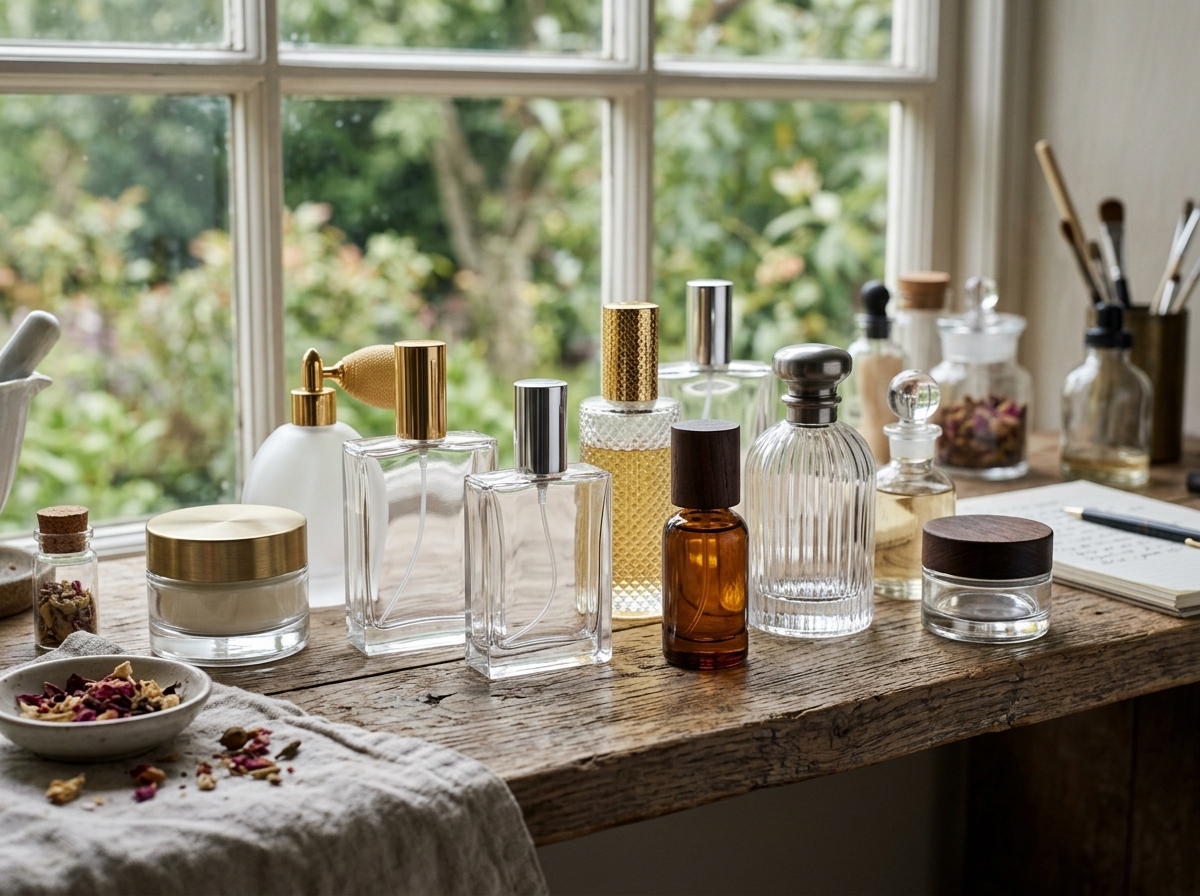
Luxury cosmetic packaging often uses frosted glass, deep colors, or metal-accent caps to create stronger shelf differentiation. Lemuel’s main site shows a product structure that includes perfume containers, skincare sets, essential oil packaging, airless containers, and matching accessories, which is useful for brands seeking coordinated packaging systems.
When a brand launches a full skincare routine, coordinated packaging is usually more effective than isolated jars. A set approach can unify toner, serum, lotion, and cream under one visual language.
Comparison Table: Common Glass Jar Styles and Their Best Use Cases
| Jar Style | Best For | Typical Brand Signal |
|---|---|---|
| Clear glass jar | Visible creams, masks, and gels | Transparency and simplicity |
| Frosted glass jar | Prestige moisturizers and serums | Soft luxury and elegance |
| Colored glass jar | SPF, night cream, and sensitive formulas | Protection and differentiation |
| Heavy-base jar | High-end facial care lines | Weight and value perception |
| Metal-accent jar | Gift sets and limited editions | Premium retail presentation |
How to Match the Jar to the Formula and Brand Positioning
Formula compatibility is essential because not every luxury jar works for every skincare product. The wrong choice can cause dosing issues, contamination risk, or weak merchandising.
Water-based gels, balms, emulsions, and anhydrous creams each need different headspace, liner, and seal considerations. According to the ISO 22716 cosmetic GMP framework, packaging controls should support hygiene, traceability, and consistent manufacturing practices.
Brand position should also guide the selection. A minimalist clinical brand may prefer restrained glass and simple labeling, while a prestige gift line may need richer decoration and a more substantial lid.
The most efficient approach is to define the packaging role before sampling. Is the jar meant to protect a sensitive formula, present a luxury image, or both?
- Clinical skincare: Use clean shapes, clear labeling, and controlled decoration.
- Prestige skincare: Use heavier glass, metallic accents, and coordinated closures.
- Gift or seasonal editions: Use bold colors, special finishes, and premium lids.
Where Supplier Capability Matters Most
Supplier capability becomes critical when a brand needs consistent decoration, stable lead times, and matched accessories. A good supplier should provide jars, lids, pumps, and coordinated sets under one system.
For buyers evaluating product breadth, Lemuel’s homepage is relevant because it groups packaging into perfume containers, skincare packaging sets, essential oil and dropper packaging, airless packaging containers, and accessory components. That structure fits brands looking for one-source coordination rather than isolated containers.
In practice, that matters most for brands launching multi-SKU lines. A single design language across several products can reduce visual fragmentation and strengthen recall.
If your line also includes treatment products, the supplier’s airless and accessory range may be as important as the jar itself. A coordinated portfolio reduces the risk of mismatched finishes or inconsistent closure quality.
Supplier Directory: Typical Options for Luxury Skincare Packaging Buyers
- Specialized cosmetic packaging suppliers with glass jar and closure integration.
- Global packaging companies with validated quality systems and broad decoration capabilities.
- Independent glass manufacturers offering custom mold and finish development.
- Brand-oriented packaging partners such as Lemuel for coordinated beauty packaging sets.
Well-known industry references such as Lumson and Silgan Dispensing are also useful benchmarks when comparing packaging systems and closure performance.
Practical Buying Checklist Before Ordering
A structured checklist reduces costly sampling mistakes and supports better procurement decisions. Buyers should confirm technical, visual, and logistical details before approving final production.
Before ordering, request samples, artwork proofs, and compatibility testing. The ASTM packaging standards overview is a useful reference point for testing methods and material expectations, especially when shipment durability is important.
- Confirm product type, fill volume, and expected usage frequency.
- Check closure fit, liner type, and leak resistance.
- Review decoration durability under handling and transit conditions.
- Verify carton protection and pallet configuration for export.
- Test visual consistency across the full skincare line.
According to industry estimates, many premium packaging failures come from poor fit between closure design and formula behavior rather than from the glass jar itself. That is why testing should cover the entire packaging system.
Why Sustainability Should Influence the Final Choice
Sustainability is now a packaging selection requirement, not a secondary benefit. Luxury brands increasingly need recyclable formats that still deliver premium presentation.
Glass supports this goal well because it is widely recyclable and compatible with upscale brand positioning. The WRAP and UNEP packaging resources both emphasize design choices that reduce waste and improve recovery outcomes.
That said, sustainability should not undermine function. If a lighter jar or simpler closure improves transport efficiency without hurting usability, it may be the better long-term option.
Luxury brands can also strengthen sustainability narratives through refillable systems, removable labels, and fewer mixed materials. These choices make packaging easier to sort and recycle.
Conclusion
The right premium glass jar is the one that aligns formula needs, brand identity, and manufacturing reliability. For luxury skincare brands, the best packaging decisions are technical, visual, and operational at the same time.
A strong selection process compares jar weight, closure fit, decoration quality, and supply capability before final approval. When those elements work together, the package supports both shelf appeal and product performance.
FAQ
What size glass jar is best for luxury face cream?
Most luxury face creams use mid-size jars because they balance premium presentation with practical dosing. Common capacities depend on formula texture and retail strategy, but the best size is the one that matches daily use, pricing, and shelf expectations without creating excess headspace.
Should luxury skincare jars be frosted or clear?
Both can work, but the right choice depends on brand position and formula sensitivity. Frosted jars usually signal elegance and help conceal internal content, while clear jars show product color and texture. Brands should decide based on visual story, ingredient protection, and retail context.
How important is the lid in skincare jar packaging?
The lid is highly important because it affects sealing, usability, and premium perception. A well-designed closure helps protect the formula, improves the consumer opening experience, and completes the visual identity. For luxury packaging, the lid should be tested with the jar, not chosen separately.
Can glass jars be used for refillable skincare systems?
Yes, glass jars are often suitable for refillable systems because they are durable and recyclable. Successful refillable packaging needs a stable outer jar, a removable inner component, and clear user instructions. This approach can support sustainability goals while preserving a luxury feel.
What should buyers ask a supplier before placing an order?
Buyers should ask about mold options, decoration methods, closure compatibility, lead time, sample approval, and export packaging. It is also important to confirm whether the supplier can provide coordinated accessories and matching line items, especially for brands developing a full skincare range.
Post time: Sep-08-2026


