
- The right cosmetic packaging manufacturer should sell a packaging system, not just a single container.
- OEM cosmetic packaging decisions should be based on material, compatibility, decoration, and supply reliability.
- For beauty brands, packaging quality affects shelf appeal, product protection, and launch timing.
- Sample approval, tooling control, and export logistics are as important as unit price.
- High-end packaging often wins on consistency, finish, and brand storytelling, not on the lowest MOQ.
Finding an OEM cosmetic packaging manufacturer for a beauty brand starts with one hard truth: cosmetic packaging is a product-performance decision, not only a design choice. In practical terms, a packaging system must protect formula integrity, support filling efficiency, and present a consistent brand image across SKUs. That matters even more when your line includes perfume bottles, airless bottles, serum bottles, pumps, and matching set packaging. In quality management, ISO 15378 is widely used as a reference for primary packaging materials, while NIST emphasizes measurement discipline and traceability as a foundation for repeatable quality control. For premium beauty brands, that combination is what turns packaging from a cost center into a launch asset.
How to Find an OEM Cosmetic Packaging Manufacturer That Fits Your Beauty Brand
The best OEM cosmetic packaging manufacturer is the one that can match your formula, brand position, and market timeline.
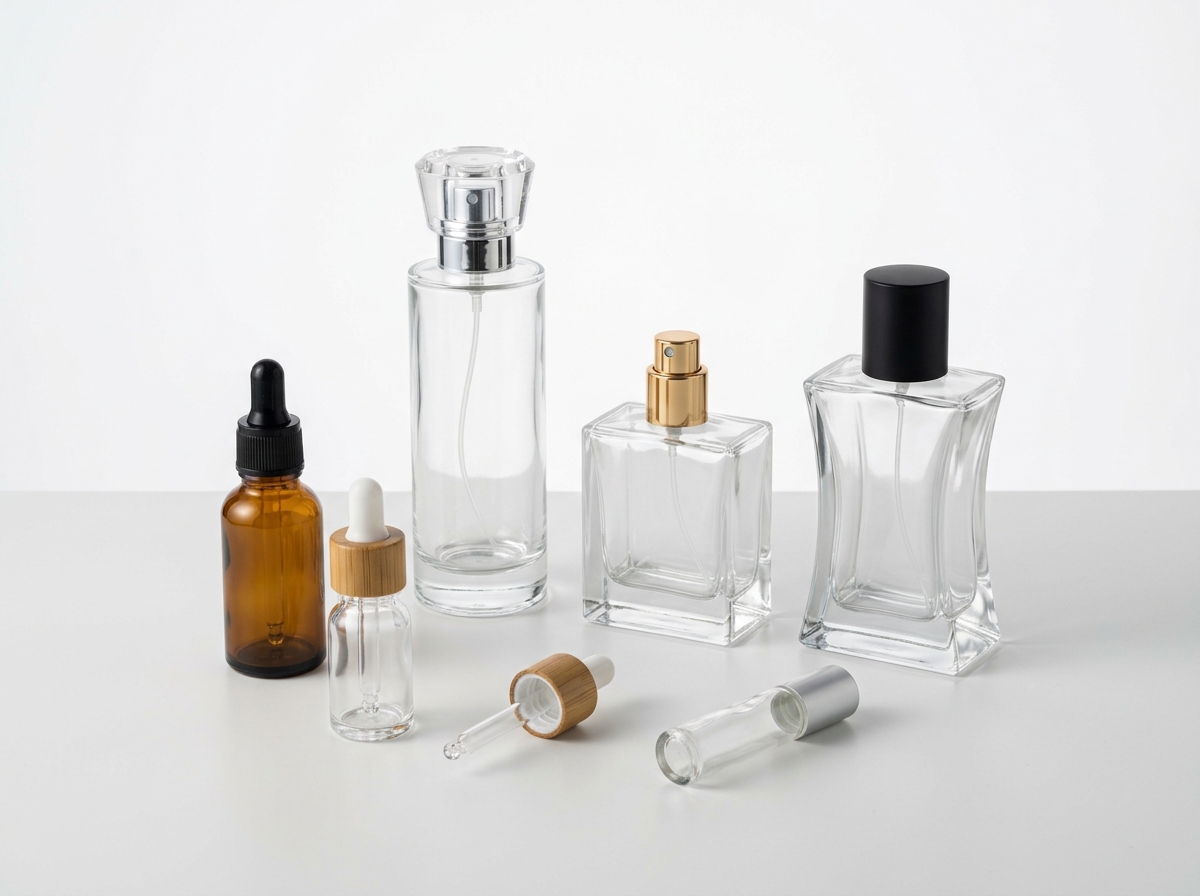
Most beauty brands begin with a visual idea, but the real procurement question is whether the supplier can support the full packaging chain: bottle body, pump head, cap, closure system, decoration, and secondary packaging. On the Lemuel Packaging site, that system-oriented approach is visible in categories such as perfume bottles, airless bottles, and essential oil bottles. For a brand owner, that matters because a beautiful bottle that cannot work with the pump, fit the cap, or survive shipping is not a finished solution.
Start by asking whether the supplier can support your launch as a coordinated system. If the answer is yes, you are likely dealing with a true beauty packaging supplier rather than a simple container reseller.
What a Cosmetic Packaging Manufacturer Must Prove Before You Place an Order
A serious cosmetic packaging manufacturer should prove capability in engineering, quality, and brand execution.
| Evaluation Area | What to Check | Why It Matters | Typical Evidence |
|---|---|---|---|
| Material selection | Glass, PET, PP, aluminum, zinc alloy | Impacts compatibility, weight, and premium feel | Material spec sheets, MSDS, sample lot traceability |
| Dimensional control | Thread finish, neck size, pump fit, closure tolerance | Prevents leakage and assembly problems | Measured drawings, go/no-go checks |
| Decoration quality | Spray coating, frosting, hot stamping, flocking | Defines shelf impact and brand positioning | Color chips, adhesion tests, visual standards |
| Packaging function | Airless protection, spray output, sealing performance | Affects product safety and user experience | Compatibility and functional tests |
In packaging procurement, a small dimensional error can become a costly launch delay. For example, thread and neck compatibility must be tightly managed because bottle, pump, and cap tolerances stack together. In precision manufacturing, standards such as ISO 286-1 define tolerance systems for linear dimensions, and that logic translates well to packaging interfaces even when the part geometry differs. In beauty packaging, that is why a supplier should not just show you a catalog image; it should show you how parts fit, seal, and repeat across production runs.
OEM Cosmetic Packaging and the Beauty Packaging Supplier Search Process
The search process should move from brand fit to technical fit, then to commercial fit.
- Define your packaging type, including bottle, cap, pump, jar, or full set.
- Confirm formula sensitivity, especially for fragrance, oil-based, or oxygen-sensitive products.
- Request samples that match both decoration and function, not only appearance.
- Check MOQs, tooling ownership, lead time, and reorder stability.
- Compare export experience, document control, and shipping protection.
A good beauty packaging supplier understands that a serum line and a perfume line need different decisions. Airless bottles are used to reduce backflow and exposure to air, while perfume packaging often prioritizes atomization feel, visual luxury, and closure alignment. If your product includes a pump, spray, or dropper, the supplier should explain the working interface, not just the cosmetic shell. Lemuel Packaging’s category mix, including spray bottles and cream jars, suggests the type of cross-category sourcing many brands need when launching a broader skincare or fragrance range.
Why Packaging Material Choice Changes Product Performance
Material choice is one of the most important decisions in OEM cosmetic packaging because it affects chemistry, weight, recycling, and perception.
| Material | Typical Use | Strength | Common Limitation |
|---|---|---|---|
| Glass | Perfume, serum, cream jars | Premium look, good barrier, high clarity | Heavier, breakable in transit |
| PET | Toners, sprays, travel packaging | Lightweight, shatter-resistant, recyclable in many systems | Lower premium feel than glass |
| PP | Airless systems, caps, inner components | Good chemical resistance, cost-effective | Less transparent |
| Aluminum or zinc alloy | Decorative caps and luxury accents | Strong visual value, premium weight | Higher cost, more complex finishing |
For beauty brands, this choice is often tied to the formula itself. Fragrance products usually need strong sealing and clean atomization, while skincare formulas often require barrier protection and stable dispensing. The packaging should fit the product, not force the product to fit the packaging. If your line includes eco-positioning, materials such as recyclable PET can support that story, but only when the decoration, cap design, and secondary packaging are also aligned. That is where a full beauty packaging supplier has more value than a single-item vendor.
What Makes Airless Bottles, Serum Bottles, and Perfume Bottles Different
Different packaging formats solve different brand and formula problems.
An airless bottle is designed to limit air exposure and help preserve sensitive formulas. A serum bottle usually focuses on precise dosage and controlled dispensing. A perfume bottle must balance atomization, leakage resistance, and visual luxury. The wrong choice can create customer complaints even if the product formula is excellent. In practice, many brands launch a formula successfully and then lose trust because the packaging leaks, clogs, or feels cheap in hand.
| Package Type | Primary Function | Typical Brand Use | Key Risk to Avoid |
|---|---|---|---|
| Airless bottle | Reduce exposure to air | Serum, lotion, essence | Poor pump compatibility |
| Perfume bottle | Visual luxury and spray performance | Fragrance and body mist | Weak sealing or uneven decoration |
| Essential oil bottle | Small-dose dispensing | Aromatherapy, concentrates | Dropper mismatch or leakage |
| Cream jar | Easy access to viscous formulas | Creams, balms, masks | Contamination from poor closure design |
The best suppliers explain these trade-offs clearly and help you choose based on actual use, not only aesthetics. That is especially important for premium launches where packaging cost is a visible part of the brand promise.
 How Standards and Testing Reduce Risk in OEM Cosmetic Packaging
Testing is the fastest way to separate a professional packaging partner from a purely visual supplier.
Packaging should be tested for compatibility, leakage, transport stress, and repeated use. For transport simulation, ASTM D4169 is a widely recognized distribution-testing standard for shipping containers and systems. For environmental management, ISO 14001 is relevant when a brand wants packaging decisions to align with sustainability processes. And for performance-sensitive cosmetics, industry practice typically includes compatibility testing across temperature cycles, closure torque checks, and visual inspection after vibration or drop simulation.
These tests are not abstract. A bottle that passes a visual check but fails closure retention under shipment stress can still create returns, leakage claims, and retailer complaints. In other words, a packaging supplier should be able to talk through the test plan, the pass/fail criteria, and the sample approval timeline.
- Check fit between bottle, pump, cap, and insert before mass production.
- Validate seal integrity under expected shipping and storage conditions.
- Review decoration durability after rubbing, handling, and temperature exposure.
- Confirm repeatability between prototype, pilot run, and mass order.
How to Compare Quotes Without Choosing the Wrong Supplier
The lowest quote is often the most expensive choice after defects, delays, and rework.
When comparing OEM cosmetic packaging quotations, do not compare only unit price. Compare total landed value, including tooling, decoration, sample rounds, quality rejection risk, shipping protection, and reorder stability. A packaging supplier that saves a few cents per piece but causes a missed launch can destroy far more value than it saves. This is especially true for brands with fixed campaign dates or retailer launch windows.
| Quote Item | Good Practice | Warning Sign |
|---|---|---|
| Tooling | Clear ownership and one-time charge defined | Hidden mold fees after sampling |
| Samples | Functional and decorated samples | Only blank samples provided |
| Lead time | Separate sample and production timing | Unclear delivery commitment |
| Quality control | Inspection method and acceptance standard listed | “Checked before shipping” with no detail |
For brands entering wholesale or international channels, supplier consistency matters more than one-off bargain pricing. If your order is large, ask about production capacity, color consistency, and packaging of transit cartons. If your order is small, ask how the supplier handles sampling and pilot runs. Both scenarios require a partner that understands commercial reality, not just catalog selling.
Launch Scenarios Where OEM Cosmetic Packaging Matters Most
Packaging choice becomes critical when the product story depends on premium presentation or formula protection.
For perfume launches, the bottle and cap often define the entire shelf identity. For skincare, a coordinated set can make a new line look established on day one. For essential oils or small-batch concentrates, droppers and tight sealing drive usability. That is why many brands now prefer matching kits rather than single components. A coordinated system can support the line architecture across face care, fragrance, and specialty items.
Sites that feature 4-piece sets and 5-piece sets reflect this logic well: the brand is not buying a jar, a bottle, or a cap in isolation, but a launch-ready identity package. For a beauty brand, that can simplify sourcing, improve visual consistency, and reduce the risk of mismatched components.
What to Ask Before You Choose a Beauty Packaging Supplier
The most effective questions reveal whether the supplier can support your launch from sampling through replenishment.
- Can you provide matched bottle, pump, cap, and decoration options for my formula?
- What are your standard sample lead times and production lead times?
- How do you test fit, seal, and transport durability?
- Which materials do you recommend for fragrance, oil, or airless skincare?
- Can you support consistent reorder quality across multiple batches?
- Do you offer export packaging and carton protection for long-distance shipping?
These questions make the difference between a supplier that sells packaging and a manufacturer that can support a brand program. If the answers are vague, the risk will show up later in leakage, mismatch, or supply delay.
FAQ About Finding an OEM Cosmetic Packaging Manufacturer
How do I know if a cosmetic packaging manufacturer is reliable?
A reliable cosmetic packaging manufacturer can show sample consistency, clear quality checks, and realistic lead times. It should also be able to explain material compatibility and decoration methods in practical terms.
What is the difference between OEM cosmetic packaging and standard packaging?
OEM cosmetic packaging is developed for your brand specifications, while standard packaging is usually pre-made and only lightly customized. OEM gives you more control over shape, finish, and system compatibility.
Should I choose glass or PET for beauty packaging?
Glass is often preferred for premium presentation and strong barrier performance, while PET is lighter and more impact-resistant. The better choice depends on formula, shipping risk, and brand position.
Why are airless bottles popular in skincare?
Airless bottles help reduce formula exposure to air, which is useful for sensitive skincare products. They also support cleaner dispensing and a more premium user experience.
What should I review before approving samples?
Check fit, sealing, spray or pump function, decoration quality, and any visible defects. Ask for samples that reflect real production materials and finishes, not only concept models.
How can I compare different beauty packaging suppliers fairly?
Compare total value, not only price. Look at tooling terms, sample quality, lead time, test documentation, and shipping protection.
Can a packaging supplier help with a full product line?
Yes, the best suppliers can support a coordinated system across bottles, jars, caps, pumps, and set packaging. That approach is especially useful for brands building a recognizable collection.
In the end, the right OEM cosmetic packaging manufacturer helps you launch faster, reduce technical risk, and build a stronger brand presence. If you choose a supplier that understands product compatibility, packaging systems, and international delivery, your packaging becomes a strategic part of the beauty brand rather than a last-minute purchase.
Post time: Aug-14-2026


