
- Check whether the supplier can coordinate bottles, pumps, caps, jars, and secondary packaging as one launch-ready system.
- Request documented material, decoration, compatibility, inspection, and packaging-control procedures before discussing volume pricing.
- Use samples to assess fit, finish, spray performance, filling behavior, and visual consistency.
- Separate factory capability from trading-company claims by asking for production evidence and a clear escalation process.
- Choose a supplier that understands international shipment protection and the regulatory responsibilities of your destination market.
Choosing a China glass packaging factory is a risk-management decision involving design, component compatibility, quality control, logistics, and compliance. The United States Food and Drug Administration notes that cosmetics have been regulated under the Federal Food, Drug, and Cosmetic Act since 1938, so packaging decisions should support product safety and responsible market access, not only visual appeal.
What a beauty brand should expect from a cosmetic glass manufacturer
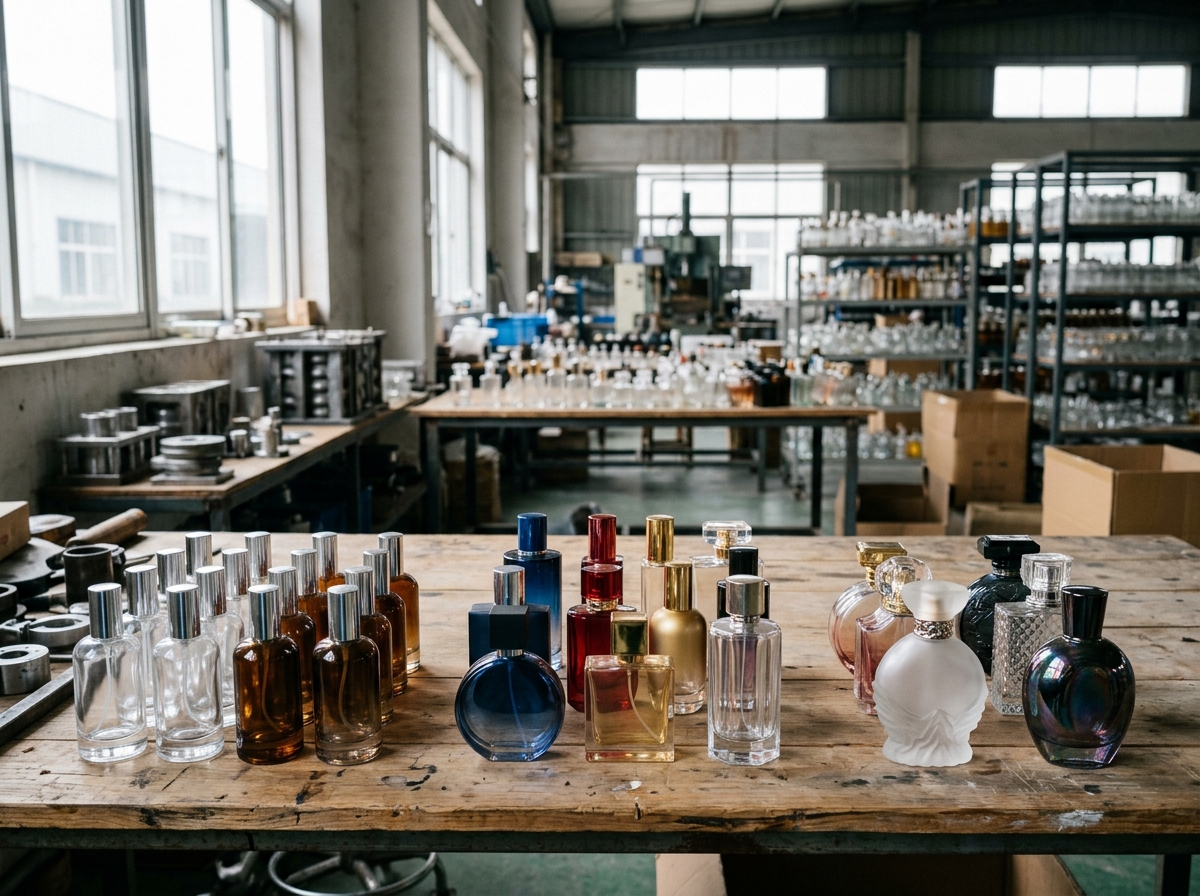
The right supplier should help turn a packaging concept into a repeatable product system. A perfume launch may require a glass bottle, atomizer, collar, cap, decoration, carton, and protective shipping solution. A skin-care range may require several bottle sizes, matching cream jars, airless components, and a coordinated finish across the entire shelf set.
A supplier that sells only individual containers may still be useful for a simple project, but a custom packaging factory is more valuable when the brand needs coordinated development. Ask whether the supplier manages component sourcing, engineering communication, sampling, decoration approval, assembly, inspection, and export packing through one accountable team.
Packaging should be evaluated as part of the formula delivery system. Fragrance, essential oils, alcohol-based products, emulsions, serums, and active skin-care formulas can place different demands on glass, elastomers, dip tubes, coatings, and closures. The supplier should therefore request the formula type, viscosity, filling method, storage conditions, and intended market before recommending a component.
China glass packaging factory selection criteria
The most reliable evaluation begins with capability evidence rather than a catalog. A polished product page can demonstrate design range, but it cannot by itself prove production consistency, decoration control, or successful export handling.
| Evaluation area | Evidence to request | Why it matters |
|---|---|---|
| Glass container capability | Material description, drawings, sample history, and production photographs | Confirms whether the supplier understands the actual container and not only resale terminology |
| Component integration | Compatibility records for pumps, caps, collars, droppers, and jars | Reduces leakage, misalignment, poor actuation, and assembly problems |
| Decoration | Approved color standards, coating samples, print proofs, and inspection criteria | Controls differences in color, gloss, flocking, metallic effects, and branding details |
| Quality process | Incoming, in-process, and final inspection records | Shows how defects are detected before shipment |
| Export packing | Carton structure, dividers, pallet method, and transit-test approach | Addresses breakage and cosmetic damage during international transport |
Factory transparency is a practical trust signal. A serious supplier should be able to explain which processes are performed internally, which are outsourced, how decoration partners are controlled, and who owns corrective action when a sample or production batch fails.
How to assess bottles, pumps, caps, and cosmetic glass packaging
Component compatibility is more important than a bottle’s appearance. A visually impressive package can fail if the neck finish does not match the pump, the dip tube is unsuitable for the formula, the cap does not seat correctly, or the decoration interferes with filling and inspection.
Glass and formula considerations
Glass offers a rigid, premium presentation and can provide a strong barrier for many cosmetic and fragrance applications, but the complete package still requires testing. Evaluate the internal contact surfaces, closure liner, pump materials, adhesive areas, and coating system together. For essential oils and concentrated actives, request compatibility testing rather than relying on general claims about glass.
Pumps and sprayers
Spray packaging should be tested with the intended formula and filling method. Ask for evidence covering priming, spray pattern, dosage consistency, leakage, cap retention, and operation after storage. A pump that performs well with water may behave differently with an alcohol-based fragrance, a viscous serum, or an oil-rich product.
Airless and dropper systems
Airless packaging is often selected when a brand wants controlled dispensing and reduced exposure to air during use. It is not automatically suitable for every formula. Confirm piston movement, residual product, filling compatibility, decoration tolerance, and consumer actuation. Dropper packs require equal attention to bulb material, pipette design, seal integrity, and dosage behavior.
Surface finishes and identity
Decoration should reinforce the brand system without creating avoidable quality risk. Frosting, coating, silk screening, hot stamping, metallic parts, flocking, and textured finishes can create a premium effect, but each process needs clear color references, adhesion requirements, abrasion expectations, and acceptable-defect limits.
A practical supplier comparison framework
A structured comparison prevents a low quotation from hiding development and delivery risks. Score suppliers against the same evidence requirements and separate confirmed capability from unverified claims.
| Decision factor | Illustrative buyer weight | Questions to answer | Warning sign |
|---|---|---|---|
| Technical fit | 30% | Can the supplier match the formula, filling line, closure, and dispensing method? | Recommendations are made without asking about the product |
| Quality control | 25% | Are specifications, inspection limits, and corrective actions documented? | Quality is described only as “high” or “perfect” |
| Customization | 20% | Can the supplier support shape, finish, decoration, and coordinated components? | Only stock items are offered for a custom brief |
| Supply reliability | 15% | Can the supplier explain capacity, lead-time assumptions, and change control? | Dates are quoted without explaining approvals or tooling |
| Communication and logistics | 10% | Is there one responsible contact and a practical export-packing plan? | Questions are repeatedly transferred between parties |
The percentages in this table are an illustrative buyer-defined framework, not an industry benchmark. Adjust them according to launch risk. A fragrance launch with complex decoration may assign more weight to visual control, while a clinical skin-care product may prioritize formula compatibility and dispensing performance.
Sampling and quality control before mass production
The sample approval process is the most important opportunity to prevent expensive production disputes. Do not approve a sample solely from photographs; inspect physical components under the lighting and filling conditions relevant to the final product.
- Define the product brief, including formula type, nominal fill, finish, color reference, decoration, closure, and destination market.
- Approve an engineering or component sample before committing to decorative details.
- Test the complete filled package for leakage, actuation, spray behavior, closure fit, appearance, and storage conditions.
- Approve a signed or otherwise controlled production standard showing the accepted color, artwork, assembly, and packaging method.
- Require pre-shipment inspection evidence and a documented process for handling nonconforming goods.
Quantitative specifications should be agreed in writing for the individual project. Examples include acceptable dimensional tolerance, decoration adhesion, leak-test conditions, spray output, color difference, and defect classification. The correct values depend on the component design, formula, equipment, and buyer’s quality standard, so a responsible factory should not invent universal limits.
Quality control should cover more than broken glass. Common commercial problems include uneven coating, scratches, bubbles, neck damage, loose pumps, incorrect dip-tube length, cap mismatch, artwork movement, carton compression, and mixed components. A supplier that explains how these risks are prevented is more useful than one that promises zero defects without defining inspection criteria.
 Regulatory, sustainability, and export questions
Regulatory responsibility is shared across the supply chain, but the brand or responsible person normally remains accountable for the finished cosmetic product in its target market. The FDA’s official overview of cosmetic authority explains the legal framework under which cosmetics are marketed in the United States: FDA authority over cosmetics. Packaging suppliers should provide accurate material and component information without presenting themselves as the brand’s regulatory adviser.
Market requirements can also affect packaging claims and material choices. For European projects, consult the European Commission’s overview of packaging waste policy and related obligations: European Commission packaging waste policy. Ask the supplier for transparent information about glass, plastics, coatings, adhesives, pumps, and secondary packaging so the brand can assess its own compliance and sustainability claims.
Sustainability should be discussed as a design and supply-chain question rather than a slogan. Consider material reduction, refill potential, component separability, recycled-content claims, transport protection, decoration complexity, and the actual recycling infrastructure in the destination market. A recyclable bottle does not make the whole package recyclable if the pump, coating, or mixed-material assembly prevents practical recovery.
Why Ningbo location and logistics deserve attention
Supplier location matters because packaging is fragile, bulky, and often shipped as a coordinated set. A Ningbo-based partner may offer useful access to export logistics, but the buyer should still verify the actual port plan, consolidation method, carton design, palletization, insurance responsibility, and documentation process.
Request a shipment plan that distinguishes production completion from cargo readiness. Confirm how the factory handles partial shortages, replacement cartons, damaged goods, and reorders. For a new supplier, a controlled pilot shipment can reveal packing weaknesses before the brand commits to a larger commercial program.
Ask for the commercial terms in a form that makes responsibility clear. The quotation should identify tooling, sampling, decoration, assembly, inner packing, outer cartons, inspection, shipping terms, and any assumptions about order quantity. The lowest unit price is not necessarily the lowest landed cost if breakage, rework, or delayed launch materials are excluded.
Questions to ask before selecting a custom packaging factory
The best supplier interview focuses on how the company behaves when the project becomes difficult. Ask who approves color, who confirms component fit, who investigates defects, how changes are recorded, and how the supplier communicates an unavoidable delay.
- Which processes are performed in-house, and which are handled by approved partners?
- Can the supplier provide drawings and component specifications before tooling or decoration?
- How are glass defects, cosmetic defects, assembly defects, and packing defects classified?
- What information is required to evaluate formula compatibility?
- How are sample approvals and production standards recorded?
- What happens if production does not match the approved sample?
- How are fragile goods packed for international transport?
A supplier should answer these questions with documents, examples, and named responsibilities. Clear answers reduce ambiguity during development and create a stronger basis for a long-term packaging program.
Conclusion
The right China glass packaging factory is selected through evidence, not appearance or price alone. Compare technical fit, component integration, decoration control, sampling discipline, quality records, export packing, and communication. For beauty brands seeking perfume bottles, skin-care sets, essential-oil packaging, airless systems, or related accessories, a complete packaging partner can reduce coordination effort and help the product reach market with a coherent visual and functional identity. Explore cosmetic and fragrance packaging solutions when comparing suppliers and preparing a project brief.
FAQ
What is the first question to ask a China glass packaging factory?
Ask whether it can support the complete package required for your product, including the glass container, dispensing component, closure, decoration, assembly, and export packing. This quickly reveals whether you are speaking with an integrated packaging partner or only a reseller.
How can I check whether a cosmetic glass manufacturer is reliable?
Request production evidence, component drawings, inspection records, sample references, decoration standards, and a clear corrective-action process. Also verify who performs each process and who is responsible when components do not match the approved sample.
Should I choose stock packaging or custom packaging?
Stock packaging usually reduces development complexity, while custom packaging offers stronger differentiation and coordinated brand identity. Choose custom development when shape, ergonomics, shelf impact, or series consistency is central to the launch and the project can support the required approvals.
What compatibility tests should beauty brands request?
Test the filled package for leakage, closure fit, pump or dropper operation, spray behavior, decoration durability, and storage performance. The exact test conditions should reflect the formula, filling process, intended use, and destination market.
How important are pumps and caps in a glass package?
They are critical because the customer experiences the dispensing system rather than the glass alone. A mismatched pump or cap can cause leakage, poor dosing, difficult actuation, and an inconsistent premium experience even when the bottle looks correct.
What should be included in a packaging quotation?
Ask for the container, component, decoration, tooling, sampling, assembly, inner packing, outer cartons, inspection, shipment terms, minimum order assumptions, and lead-time assumptions. Written scope prevents apparently low prices from excluding essential launch costs.
How can a supplier support a complete beauty product launch?
A capable packaging partner can coordinate the container, pump, cap, decoration, set configuration, sampling, production approval, and shipment preparation. The brand should still retain responsibility for formula, claims, market compliance, and final product release.
About the company
Lemuel Packaging develops cosmetic and fragrance packaging for international beauty brands, with capabilities spanning perfume bottles, skin-care sets, essential-oil bottles, airless packaging, jars, spray components, and decorative accessories. Its value is in coordinating complete packaging concepts rather than treating every container as an isolated item. Brands can review the available packaging range and contact the team through the company website to discuss samples, customization, component matching, and export requirements.
Post time: Sep-07-2026


