
- Design the luxury perfume bottle and its closure as a coordinated identity system.
- Confirm formula compatibility, spray quality, decoration durability, and assembly tolerances before production.
- Use collection-level packaging standards so several fragrances look related without becoming indistinguishable.
- Plan cartons, inserts, transport protection, sampling, and replenishment at the same time as the primary container.
- Choose a supplier that can coordinate components, customization, sampling, and export delivery.
Luxury perfume bottle development is a packaging engineering and brand-design decision, not simply a container purchase. The U.S. Food and Drug Administration explains that intended use is central to how a product is regulated, which makes formula, claims, labeling, and pack presentation part of the launch review. This guide shows how to build fragrance packaging solutions that are distinctive, practical, and ready for commercial scale.
What a New Fragrance Collection Needs from Custom Perfume Packaging
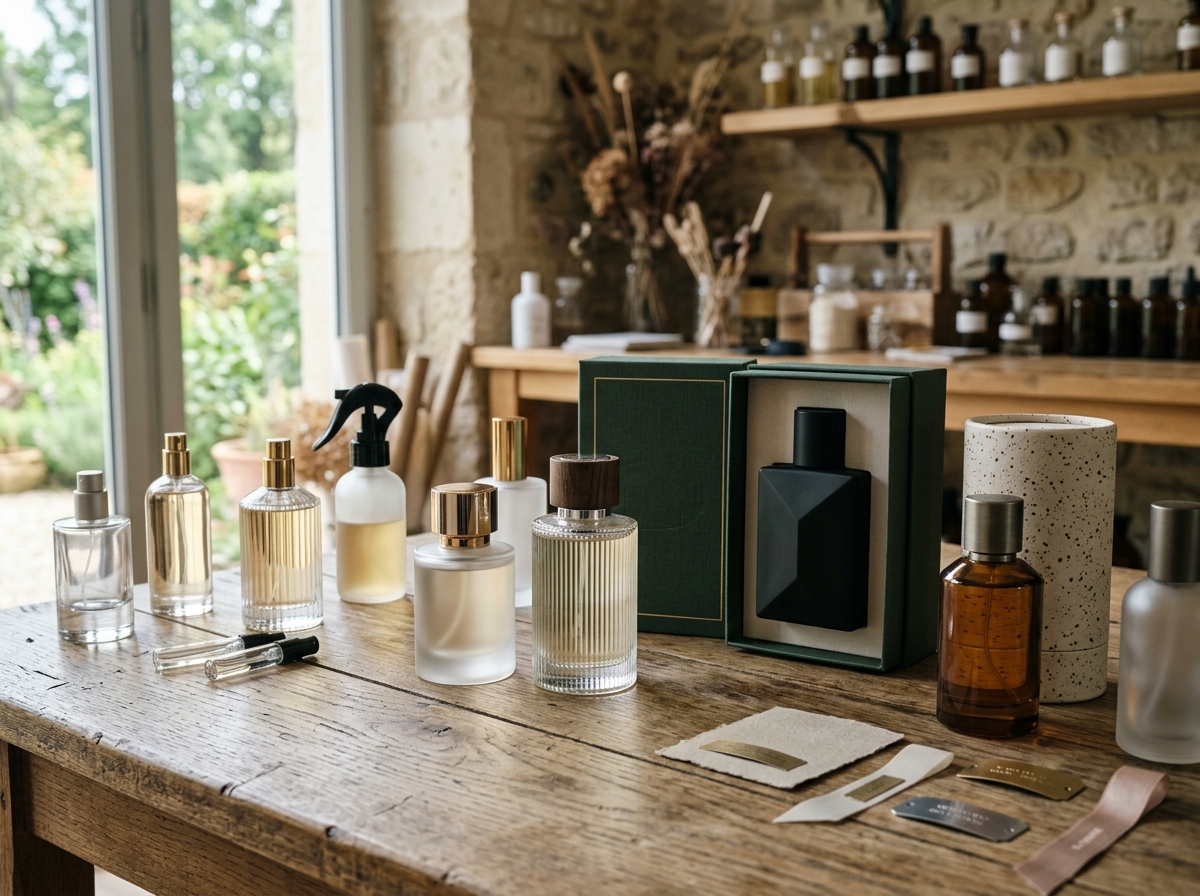
The strongest fragrance launches begin with a collection architecture rather than a single attractive bottle. A portfolio may need a shared shoulder profile, common cap language, related color treatments, or a consistent carton structure while allowing each scent to have its own visual code.
A luxury perfume bottle should communicate value before the consumer reads the label. Glass weight, silhouette, transparency, surface treatment, collar detail, cap material, and actuator finish all influence the first physical impression. However, visual appeal cannot compensate for a loose pump, inconsistent spray pattern, fragile decoration, or a secondary pack that fails during shipping.
Custom perfume packaging should therefore answer five procurement questions: What does the consumer touch first? Which components must be unique? Which parts can be standardized across the collection? How will the pack protect the product? Can the approved design be replenished consistently?
| Packaging decision | Primary objective | Editorial priority score, 1-5 | Typical review evidence |
|---|---|---|---|
| Bottle silhouette | Recognition and shelf presence | 5 | Approved drawings, samples, and visual mockups |
| Atomizer and collar | Controlled dispensing and assembly fit | 5 | Spray testing and component checks |
| Cap construction | Closure feel and protection | 4 | Fit, finish, pull-off feel, and repeat handling |
| Surface decoration | Differentiation and tactile value | 4 | Color approval, adhesion review, and handling simulation |
| Carton and insert | Protection and retail presentation | 5 | Pack-out review and transport assessment |
The scores in this table are an editorial purchasing framework, not market statistics or supplier specifications. They help a brand decide where limited development time should be concentrated.
How to Select a Luxury Perfume Bottle Architecture
The correct bottle architecture depends on the relationship between fragrance formula, dispensing system, target price, visual language, and distribution environment.
Glass form and visual proportion
Clear glass supports color visibility and can make a collection feel clean, modern, and ingredient-led. Tinted, frosted, flocked, or coated surfaces create a more tactile and opaque presentation. A tall rectangular form may support a fashion-oriented identity, while a rounded profile can feel softer and more sensorial. The decision should begin with the brand story and filling line requirements, not with decoration alone.
Spray pump and collar compatibility
The atomizer is a functional component that directly shapes the user experience. Review the actuator force, spray cloud, wetness, dosage consistency, collar alignment, and cap retention. The pump must also be evaluated with the actual fragrance base because alcohol, oils, colorants, and other ingredients can interact with elastomers, seals, or internal components.
Request a filled compatibility sample instead of approving an empty component in isolation. A cap that fits a dry bottle may feel different after decoration, filling, crimping, or transport. Supplier drawings should identify the neck finish, pump interface, collar dimensions, and assembly method without relying on verbal assumptions.
Cap material and tactile identity
Metallic components, zinc alloy details, coated plastic, wood-look finishes, and flocked or velvet surfaces can create different signals of luxury. The practical question is whether the cap remains stable in repeated consumer handling and whether its finish can be reproduced across replenishment batches. A premium cap should feel deliberate, align cleanly, and protect the actuator without adding unnecessary complexity.
Fragrance Packaging Solutions for Collection-Level Consistency
Collection consistency is achieved by controlling a small set of repeatable design rules while reserving selected elements for fragrance differentiation.
- Standardize the closure language, label hierarchy, carton proportions, or color logic across the range.
- Differentiate scents through controlled changes in glass tint, coating, secondary color, typography, or decorative detail.
- Define approved references for color, gloss, texture, logo placement, and component alignment.
- Separate mandatory brand elements from optional seasonal treatments before requesting quotations.
A supplier with bottle, pump, cap, and gift-set capability can reduce coordination gaps between separate vendors. This is particularly useful when a launch includes an individual bottle, a discovery set, a gift box, or a matching body product. Integrated development does not remove the need for independent checks; it makes accountability clearer because the component interfaces are reviewed together.
| Collection model | Shared elements | Variable elements | Editorial risk score, 1-5 |
|---|---|---|---|
| Core family | Silhouette, cap, carton structure | Color and label details | 2 |
| Premium tiers | Brand mark and visual grid | Glass treatment and metal components | 3 |
| Limited editions | Base bottle and pump interface | Surface finish, sleeve, and presentation box | 4 |
| Gift or discovery format | Typography and scent coding | Pack count, insert, and outer structure | 3 |
These risk scores are a practical comparison tool. They indicate development complexity relative to a standardized family and should be adjusted after reviewing the actual design, decoration process, and shipping route.
 Material, Decoration, and Sustainability Considerations
Material selection should balance appearance, formula protection, manufacturability, and end-of-life expectations. Glass offers a strong premium signal and visible product presentation, but it requires careful protection during packing and distribution. Plastic components can support lighter formats and complex shapes, while the environmental profile depends on resin selection, recycled content, decoration, collection systems, and local infrastructure.
Use sustainability language precisely. A packaging claim should identify what is recyclable, recycled, reusable, or reduced, and under which local system that claim applies. The European Commission overview of packaging waste provides regulatory and policy context for packaging design and waste management in Europe. Brands selling internationally should avoid presenting one market’s disposal pathway as a universal result.
Decoration also deserves technical review. Flocking and velvet effects can add depth but may require special handling and cleaning controls. Metallic finishes can elevate a cap or collar but need color and adhesion approval. Frosting, coating, printing, and labeling each have different durability considerations. Approve a decorated production-intent sample, not only a computer rendering.
Testing and Approval Workflow for Custom Perfume Packaging
A disciplined approval workflow reduces late changes because it exposes interface problems before tooling, filling, and mass production.
- Brief: define fragrance format, target channel, collection rules, desired tactile experience, distribution region, and estimated purchasing plan.
- Concept: compare available bottle forms, custom shapes, cap options, pumps, decoration routes, and secondary packaging structures.
- Technical review: check neck finish, pump compatibility, cap fit, decoration zones, filling access, labeling area, and assembly sequence.
- Sample validation: review appearance, spray behavior, filled-product compatibility, handling, and pack protection.
- Pre-production approval: confirm color references, artwork, component drawings, packaging configuration, and quality checkpoints.
- Launch readiness: align production timing, inspection records, carton markings, shipping protection, and replenishment communication.
Fragrance safety and labeling requirements vary by market and product claims. The International Fragrance Association provides a library of fragrance safety standards and guidance, while the relevant market authority remains responsible for legal compliance. Packaging suppliers can support component and documentation coordination, but the brand and formula stakeholders should retain responsibility for final regulatory review.
How to Compare Suppliers for Luxury Fragrance Packaging
The best supplier comparison focuses on evidence, not adjectives such as premium, innovative, or high quality. Ask each candidate to explain which components it supplies directly, which processes are subcontracted, how samples are recorded, and how deviations are handled.
- Can the supplier coordinate the bottle, spray pump, collar, cap, and gift packaging as one project?
- Are technical drawings and decoration references available for approval?
- How are filled samples and formula compatibility checks managed?
- What information is required to quote a custom bottle or a semi-custom option?
- How are inspection points, packaging protection, and export documentation communicated?
- Can the supplier support both a first launch and later replenishment without changing approved components?
For an overseas buyer, location and logistics capability also matter. A supplier operating near major port infrastructure may simplify export coordination, but port proximity is not a substitute for documented production control, clear lead-time communication, and protective pack-out design.
Practical Launch Checklist
The launch is ready for commercial discussion when the brand can answer the following questions without ambiguity.
| Checkpoint | Approval question | Evidence status |
|---|---|---|
| Brand identity | Does the bottle belong unmistakably to the collection? | Pass or revise |
| Function | Does the pump deliver the intended spray experience? | Pass or revise |
| Compatibility | Has the filled fragrance been reviewed with the final components? | Pass or revise |
| Decoration | Are color, texture, placement, and durability approved? | Pass or revise |
| Protection | Does the inner and outer pack protect the bottle through distribution? | Pass or revise |
| Replenishment | Are drawings, references, and component definitions archived? | Pass or revise |
FAQ
What makes a perfume bottle look luxurious?
Luxury usually comes from the combined effect of proportion, glass clarity or treatment, closure quality, tactile surfaces, decoration precision, and consistent secondary packaging. One expensive-looking component cannot compensate for poor alignment or weak functionality.
Should a new fragrance brand choose a stock or custom bottle?
A stock bottle generally reduces development complexity and can accelerate sampling. A custom bottle offers stronger differentiation but may require more design, tooling, testing, and production planning. Semi-custom options can balance recognizable form with controlled customization.
How should a brand test a fragrance spray pump?
Evaluate the pump with the actual fragrance formula. Review spray pattern, actuator feel, dosage consistency, leakage resistance, collar alignment, cap fit, and the appearance of the filled and decorated pack.
Can one bottle design support several fragrances?
Yes. A shared bottle and closure system can strengthen collection recognition. Use controlled changes in color, finish, label treatment, or carton design to distinguish the scents while preserving a coherent family appearance.
What information should be included in a packaging inquiry?
Include the product type, intended market, target format, preferred material, estimated purchasing plan, decoration requirements, closure preference, secondary packaging needs, delivery destination, and whether the project requires stock, semi-custom, or fully custom development.
How important is the carton for a luxury perfume launch?
The carton protects the bottle and creates the opening experience. Its structure should be developed with the bottle dimensions, cap height, insert design, label visibility, shelf presentation, and transport requirements in mind.
What should be approved before mass production?
Approve the final bottle, pump, collar, cap, decoration, artwork, filled sample, carton, insert, assembly configuration, and inspection references. Keep the approved records available for future replenishment.
About Lemuel Packaging
Lemuel Packaging develops cosmetic and fragrance packaging solutions that combine bottles, spray pumps, caps, jars, and presentation sets. Its portfolio supports perfume, skincare, essential oil, and airless packaging projects, with options for custom shapes, flocked finishes, metal details, and coordinated collections. Based in Ningbo, the company serves international wholesale and brand-development needs. Explore the packaging portfolio to discuss a new fragrance collection or request project guidance.
Post time: Sep-04-2026


