
- Assess the complete packaging system, including the bottle, pump, cap, decoration, and secondary packaging.
- Confirm compatibility between the glass container, closure, formula, and filling process before approving production.
- Use samples and documented quality checkpoints to reduce defects, leakage, color variation, and delivery risk.
- Separate genuine customization capability from simple logo printing or catalog selection.
- Choose a supplier that understands export packaging, communication, and repeat-order consistency.
Before selecting a cosmetic glass bottle supplier, brands should connect packaging design with formula protection, regulatory presentation, manufacturing feasibility, and delivery execution. In the United States, cosmetic ingredient declarations are addressed under 21 CFR 701.3, which illustrates why packaging decisions must fit the broader product and labeling process rather than being treated as an isolated container purchase.
What a Cosmetic Glass Bottle Supplier Should Actually Provide
The right supplier provides a coordinated packaging solution, not merely a glass vessel. A cosmetic package may include the bottle, pump, actuator, collar, cap, decoration, inner components, carton, and protective export packaging. If these parts come from disconnected sources, brands often face mismatched finishes, inconsistent colors, uncertain fit, and more complicated quality claims.
A capable supplier should therefore explain how each component works together. For a serum bottle, that may involve a glass body, treatment-resistant pump, dip tube, overcap, and decorative finish. For a fragrance package, the critical system may include a spray bottle, crimp or screw fitment, actuator, metal or zinc alloy cap, and flocked or velvet surface treatment. For a premium skincare line, several bottle and jar formats may need consistent decoration and shelf presentation.
The supplier’s value is highest when it helps the brand move from concept to launch. This includes interpreting reference samples, reviewing technical drawings, identifying production constraints, coordinating sampling, and preparing the approved specification for repeat orders.
Evaluate Glass Quality and Formula Compatibility
Glass quality should be evaluated through both visible finish and functional compatibility. A bottle can look attractive while still creating problems through dimensional variation, unstable decoration, poor sealing, or an unsuitable dispensing system.
Brands should ask for information about the glass type, wall consistency, neck dimensions, internal finish, surface defects, and inspection criteria. The exact glass composition may matter when a formula contains alcohol, essential oils, acids, or other ingredients that can interact with closures, coatings, or decorative layers. Compatibility testing should be performed with the actual formula and the final closure system.
Packaging performance also depends on the product’s use environment. A facial oil in a dropper bottle has different dispensing and sealing requirements from a water-based mist in a fine-spray bottle. An airless bottle is selected when limiting formula exposure to air and improving dispensing control is important, but its pump and internal piston must still match the product viscosity and filling method.
| Screening area | Buyer question | Supplier evidence | Suggested review score |
|---|---|---|---|
| Glass appearance | Are transparency, color, seams, and surface defects controlled? | Approved sample, inspection standard, defect photographs | 1-5 |
| Neck and closure fit | Does the component fit remain stable across samples and production? | Dimensional drawing, fit test, retained sample | 1-5 |
| Formula compatibility | Has the finished package been tested with the actual formula? | Compatibility record, filled sample, leakage observations | 1-5 |
| Dispensing performance | Does the pump, dropper, or spray deliver the intended user experience? | Actuation review, spray pattern or dosage assessment | 1-5 |
| Repeat-order consistency | Can the approved appearance be reproduced later? | Master sample, color reference, change-control process | 1-5 |
The score column is a buyer-defined screening framework, not a claim about any particular supplier. It helps procurement teams compare evidence consistently instead of relying on product photographs or price alone.
Understand Custom Bottle Manufacturing Capability
Custom bottle manufacturing ranges from minor decoration changes to a fully engineered mold and component system. Brands should define the customization level before requesting quotations because tooling, sampling, decoration, and production requirements can differ substantially.
Catalog customization may include logo printing, frosting, spraying, electroplating, hot stamping, labeling, or a different cap. Semi-custom development may adapt an existing bottle with a new decoration or closure. Fully custom development can require a new mold, detailed drawings, prototype review, and a longer approval process.
True manufacturing capability is demonstrated by process clarity. Ask who owns the mold, how design changes are documented, whether the supplier can coordinate multiple components, and how approved colors and surface treatments are controlled. A supplier that only resells stock bottles may not be able to manage dimensional changes, decoration tolerances, or integrated packaging development.
- Provide the target product category, formula type, fill volume, and intended market.
- Share visual references, brand guidelines, color targets, and preferred surface effects.
- Request a technical review covering closure fit, filling compatibility, decoration, and protection.
- Approve a representative sample before authorizing mass production.
- Record the final specification, artwork, finish, component list, and packaging method.
 Compare Decoration, Materials, and Brand Expression
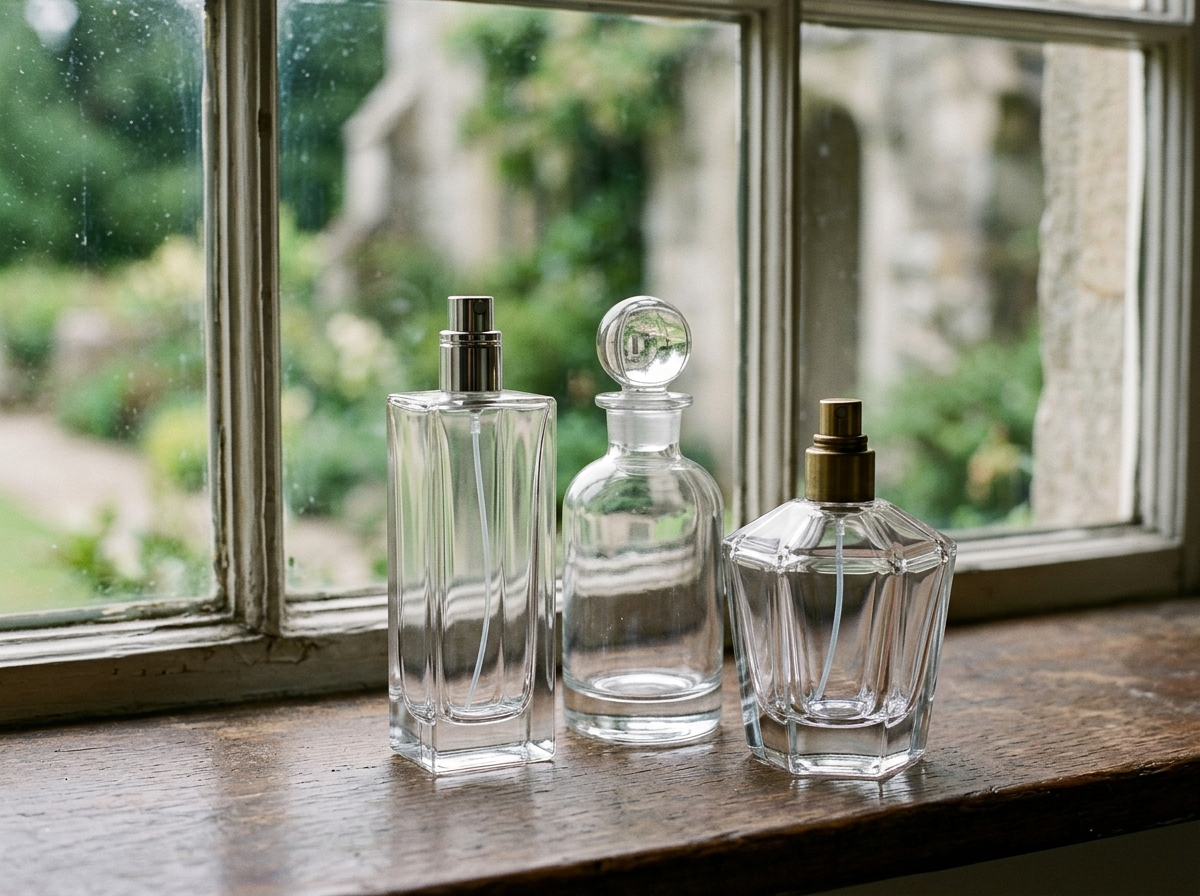
Glass cosmetic packaging is part of the brand identity because weight, transparency, color, touch, and sound influence how consumers perceive a product. A clear bottle can emphasize formula visibility, while frosted glass can create a softer or more refined visual effect. Velvet or flocking can add tactile contrast, and metal components can create a more substantial fragrance presentation.
Decoration should be evaluated for both appearance and durability. Ask whether the finish is applied to the glass, cap, collar, or secondary package; how it is protected during transport; and how the supplier checks scratches, adhesion, color variation, and alignment. A decoration that looks excellent in a showroom may perform differently after filling, packing, and shipment.
Sustainability claims also need careful wording. The Federal Trade Commission Green Guides explain how environmental marketing claims should be qualified and supported. A brand should distinguish between a glass container, a recyclable component, recycled content, and a complete package that is accepted by local recycling systems. The Glass Packaging Institute provides industry information about glass recycling, but brands should still verify local collection conditions for the markets they serve.
| Packaging direction | Common application | Primary benefit | Key risk to check | Buyer score |
|---|---|---|---|---|
| Clear glass | Serums, oils, fragrance | Formula visibility and clean presentation | Light exposure and visible surface defects | 1-5 |
| Frosted or coated glass | Premium skincare and fragrance | Soft visual identity and tactile differentiation | Scratch resistance and color consistency | 1-5 |
| Decorative metal component | Luxury fragrance and gift sets | Strong shelf presence and perceived weight | Plating durability, fit, and transport protection | 1-5 |
| Dropper system | Essential oils and concentrated treatments | Controlled dispensing for small-volume products | Seal integrity and formula interaction | 1-5 |
| Airless system | Higher-value skincare formulas | Controlled dispensing and reduced air exposure | Pump performance, filling method, and residual product | 1-5 |
Review Sampling, Quality Control, and Production Risk
The sample approval process is the most practical opportunity to identify problems before production. A useful sample review should cover appearance, dimensions, component fit, dispensing, decoration, filling behavior, closure torque where relevant, and protection during handling.
Procurement teams should request a clear quality plan rather than a general promise of high quality. The plan should identify inspection points, acceptable defect categories, artwork approval, color references, packaging configuration, and the procedure for handling nonconforming goods. For a series of coordinated products, consistency between different bottle shapes is as important as the quality of each individual item.
Transport protection deserves equal attention. Glass packaging can be damaged by impact, vibration, compression, and unstable palletization. Ask the supplier to show the inner dividers, carton strength, pallet arrangement, moisture protection, and drop or handling considerations used for the intended route. A lower unit price does not create savings if breakage, replacement, or delayed launch costs follow.
Assess Export Readiness and Total Cost
Total cost includes more than the quoted bottle price. Brands should consider tooling, decoration, pumps, caps, cartons, sampling, inspection, packing, freight preparation, storage, and the cost of managing multiple vendors.
Geographic location can affect export coordination, but it should not replace operational evidence. A supplier near major ports may offer useful logistics access; the buyer should still confirm lead-time assumptions, packing details, documentation, communication process, and responsibility for resolving transit damage.
When comparing quotations, request the same specification from every supplier. The comparison should state the glass finish, closure type, decoration method, artwork requirements, sample status, packaging configuration, order terms, and any exclusions. Otherwise, a cheaper quotation may simply omit components or quality controls included elsewhere.
A Practical Supplier Selection Checklist
- Define the formula, fill volume, dispensing method, target market, and desired visual language.
- Separate stock, semi-custom, and fully custom requirements.
- Request technical drawings, component details, decoration options, and sample evidence.
- Test the complete package with the actual formula and filling process.
- Review quality controls, export packing, documentation, and repeat-order management.
- Compare total landed cost and operational risk rather than unit price alone.
- Approve a signed or documented master specification before production.
For brands launching a fragrance collection or a coordinated skincare range, an integrated supplier can simplify communication across bottles, pumps, caps, jars, and gift-set components. This is especially useful when the commercial goal is not simply to purchase containers, but to create a consistent packaging architecture that can support future products.
FAQ
What is the most important question to ask a cosmetic glass bottle supplier?
Ask whether the supplier can provide the complete package and manage compatibility between the glass bottle, closure, dispensing component, formula, decoration, and transport packaging. This reveals whether the supplier is a packaging partner or only a container reseller.
Should a brand choose stock bottles or custom bottles?
Stock bottles are usually suitable when speed, lower development complexity, or a proven shape is more important than uniqueness. Custom bottles are more appropriate when silhouette, tactile experience, shelf differentiation, or long-term brand recognition justifies additional development work.
How can brands test a cosmetic glass bottle before mass production?
Use filled samples with the intended formula and final components. Review leakage, dispensing, closure fit, decoration, appearance, handling, and filling behavior. The approved sample should become part of the documented production specification.
What information should be included in a packaging inquiry?
Include the product category, formula characteristics, target fill volume, bottle style, closure preference, decoration, estimated demand, destination market, artwork status, and whether you need a complete set or only a bottle body.
Are glass cosmetic bottles automatically sustainable?
No. Glass has useful recycling characteristics, but the sustainability profile depends on the complete package, local collection infrastructure, transport weight, decoration, closures, coatings, and the accuracy of environmental claims. Sustainability language should be specific and supported.
Why are pumps and caps important when selecting the bottle?
The bottle neck and closure must work as a dimensional system. An attractive bottle is not commercially useful if the pump leaks, the cap fits poorly, the actuator feels inconsistent, or the component is incompatible with the formula and filling line.
What makes a supplier suitable for international wholesale orders?
Look for clear communication, documented specifications, repeat-order control, protective packing, realistic production planning, sample discipline, and experience coordinating several packaging components. Export readiness should be demonstrated through process details rather than broad marketing statements.
About the Packaging Partner
Lemuel Packaging develops cosmetic and fragrance packaging systems for brands seeking coordinated bottles, pumps, caps, jars, airless containers, essential-oil packaging, and gift-set solutions. Its product scope supports custom presentation, series-based skincare packaging, tactile fragrance finishes, and practical export coordination from Ningbo. Brands can discuss a packaging concept, request samples, or submit an inquiry for a complete product-launch solution.
Post time: Sep-02-2026


