
- Flocking adds tactile differentiation that supports premium fragrance positioning.
- Niche fragrance packaging works best when bottle, cap, pump, and carton are designed as one system.
- Luxury perfume bottles should balance visual impact, filling compatibility, and shipping durability.
- Quality checks, material selection, and finish consistency matter as much as the design concept.
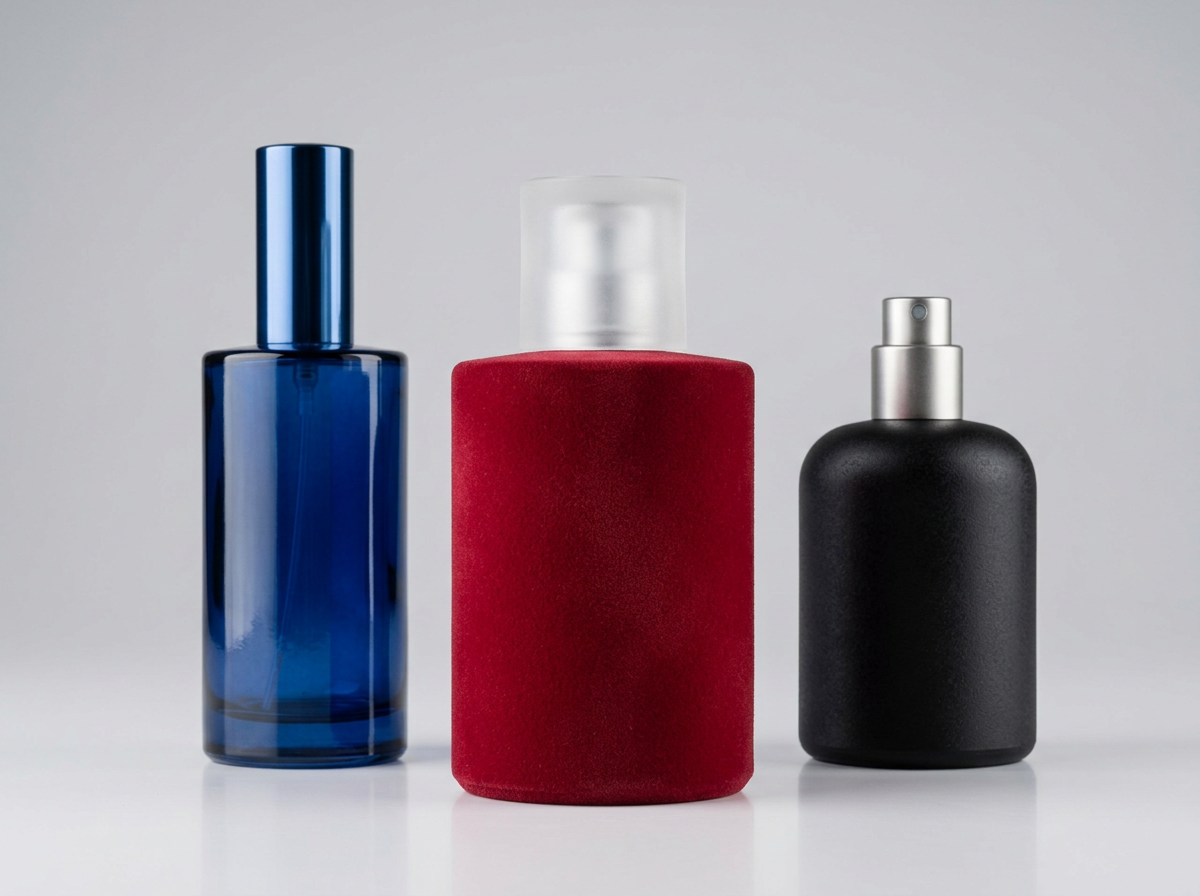
Flocking perfume bottles are gaining attention in niche fragrance packaging because premium scent brands need more than a standard glass bottle to win first impressions. In the United States, the FDA cosmetics labeling rules and practical packaging compliance requirements already shape how brands present and ship cosmetic products, while decorative packaging finishes help support market differentiation. A velvet-touch surface can add contrast against clear glass, metal caps, or matte cartons, making luxury perfume bottles feel more deliberate and collectible. For brands building a signature look, a flocked finish can be part of a broader packaging system that also includes perfume bottles, cosmetic jars, and spray bottle formats.
 Why flocking perfume bottles create stronger shelf impact
Flocking perfume bottles stand out because touch changes perception faster than color alone.
In fragrance retail, the consumer often sees dozens of cylindrical glass bottles before reading a single brand claim. A flocked exterior interrupts that visual sameness. The soft, fabric-like surface communicates warmth, rarity, and care, which are all useful for niche fragrance packaging. That is one reason luxury perfume bottles with velvet finishes are frequently used for limited releases, artisanal blends, and gift-focused collections.
From a design psychology perspective, tactile packaging can raise perceived value because the hand immediately registers the difference. For fragrance brands selling an identity, that difference can be more persuasive than a louder logo. It also works well in small-batch lines where the story is centered on craftsmanship, ingredient sourcing, or mood-led concepts.
| Packaging element | Standard look | Flocked look | Brand effect |
|---|---|---|---|
| Surface feel | Smooth glass | Velvet-touch texture | More premium and memorable |
| Shelf contrast | Medium | High | Better visual separation |
| Gift appeal | Moderate | Strong | More suitable for gifting |
| Limited-edition use | Common | Distinctive | Supports scarcity positioning |
For procurement teams, the important question is not only whether the finish looks good, but whether it holds up during filling, labeling, transport, and storage. That is why packaging should be evaluated as a complete system, not as a bottle alone.
Niche fragrance packaging works best as a full brand system
Niche fragrance packaging performs best when every component supports the same brand message.
Lemuel’s product structure reflects that reality, because fragrance buyers often need coordinated bottles, pumps, caps, and secondary packaging rather than a single item. A flocked bottle becomes more effective when it is paired with a suitable closure, such as a metal cap or a custom decorative cap, and protected in a carton that matches the brand palette. That is the difference between a pretty object and a sellable product line.
In practical sourcing terms, this means the supplier must be able to align neck finish, spray performance, decoration method, and decoration durability. For example, a 100 ml bottle may look elegant on a mood board, but if the closure seal is inconsistent or the sprayer output is poor, the packaging fails at the usage stage. This is why premium packaging buyers usually evaluate compatibility, not just appearance.
Many niche fragrance brands also use different formats for different buying occasions. Discovery sets may use smaller bottles, while signature SKUs use heavier glass with more decorative finishes. That layered strategy helps brands balance margin, usability, and brand theater across the line.
| Component | Common choices | Decision factor | Risk if mismatched |
|---|---|---|---|
| Bottle | Glass, flocked glass, custom shape | Brand identity | Poor shelf consistency |
| Pump | Fine mist, standard spray | Atomization quality | Uneven spray or leakage |
| Cap | Metal, zinc alloy, decorative plastic | Perceived value | Weak premium signal |
| Secondary pack | Carton, tray, sleeve | Protection and presentation | Transit damage or low gift appeal |
For brands that want to compare bottle styles before choosing a final platform, browsing glass bottle options and perfume bottle collections is often the most efficient starting point.
Luxury perfume bottles need decoration that matches filling and logistics
Luxury perfume bottles must look refined while still surviving real-world production.
A decorative finish has to coexist with the mechanics of filling, capping, palletizing, and export shipping. That is especially true for flocked surfaces, because the decorative layer should not interfere with labeling adhesion, closure fit, or final carton appearance. In luxury perfume bottles, the most successful designs usually keep the bottle silhouette simple enough to protect manufacturing consistency, then add character through texture, color, and closure detailing.
For export-focused brands, logistics also matter. According to the ISO 8317 child-resistant packaging standard for reclosable packages, packaging systems must be evaluated for usability and safety, which reinforces the need for closure and component compatibility in retail packaging design. While fragrance bottles are not automatically subject to the same rules in every market, the standard illustrates a broader point: premium packaging cannot be judged by appearance alone.
High-end buyers should also think about glass thickness, decoration durability, and abrasion resistance during transport. If the flocked coating rubs off in transit, the perceived value drops before the customer opens the box. That makes sample testing essential.
| Test area | What to check | Why it matters | Typical failure mode |
|---|---|---|---|
| Closure fit | Neck alignment, seal integrity | Leak prevention | Loose cap or spray loss |
| Surface durability | Rub resistance, scuffing | Retail presentation | Visible finish damage |
| Carton fit | Insert tolerance | Shipping protection | Rattling or cracking |
| Label performance | Adhesion on coated surface | Brand consistency | Peeling or edge lift |
If a brand is also considering other premium formats, airless bottles and essential oil bottles can help build a more complete portfolio around skincare and fragrance adjacencies.
Material and finishing choices shape perceived value
Material selection is the hidden driver behind how flocking perfume bottles are judged.
Most luxury perfume bottles rely on glass because it signals clarity, weight, and product purity. A flocked finish changes the sensory profile, but the underlying container still needs to feel substantial. In practice, brands often use transparent or colored glass underneath a decorative coating so the bottle maintains structural credibility while gaining tactile distinction. This is one reason packaging teams often request custom shapes and coordinated cap systems.
For fragrance projects, finish decisions typically include flocking color, cap material, spray actuator style, and carton texture. A matte flock on a deep black bottle tells a different story than a soft rose or ivory flock. The finish should support the scent family as well. Fresh citrus lines usually want cleaner visual cues, while ambery, oud, or gourmand profiles can support denser, more dramatic surfaces.
When brands evaluate sustainability claims, they also need to ask whether the full packaging system can be separated for recycling. Decorative layers can complicate recycling streams, so environmental claims should be carefully aligned with actual material composition and local disposal rules.
- Use flocking for emotional and tactile differentiation.
- Keep bottle geometry stable for filling and capping.
- Match cap finish to the fragrance positioning.
- Verify carton protection before mass production.
- Test decoration wear under transit conditions.
Quality control for flocking perfume bottles is more important than the mood board
Quality control determines whether a decorative perfume bottle becomes a premium product or a production headache.
The most common failure points in flocking perfume bottles are uneven coverage, weak adhesion, inconsistent color density, and scuffing during packing. Those problems are avoidable if the supplier defines acceptance criteria before sampling. A strong QC plan should include visual inspection under consistent lighting, dimensional checks for bottle and neck finish, and assembly trials with the actual pump and cap.
In the fragrance industry, filling line compatibility is equally important. For example, spray performance should be checked after the bottle is fully assembled, because the actuator and dip tube length affect user experience. Even a beautiful bottle can underperform if the mist pattern is too narrow or the closure torque is inconsistent.
To reduce launch risk, buyers often request pre-production samples and a small pilot lot. That process is slower than ordering from a catalog, but it protects the final brand image.
- Confirm bottle dimensions and neck finish early.
- Approve flock color under daylight and store lighting.
- Test cap torque and spray output on assembled samples.
- Check finish abrasion after packing and transport simulation.
- Review the carton and insert system before mass production.
What niche fragrance brands should ask before ordering
Buying the right flocked bottle depends on asking the right technical questions.
Many first-time fragrance founders focus on shape and color, then discover late-stage issues with filling, decoration, or shipping. A stronger sourcing process starts with the product brief: target capacity, scent type, closure style, distribution market, and expected retail price. Once those variables are clear, packaging teams can narrow the bottle format and decoration method.
The following checklist helps brands compare options without getting distracted by aesthetics alone.
| Question | Why it matters | Decision impact |
|---|---|---|
| What is the target capacity? | Controls bottle size and fill weight | Line planning and cost |
| Which closure system is required? | Affects sealing and user experience | Leak risk and premium feel |
| Will the bottle be gift boxed? | Changes carton and insert design | Transit protection |
| Is the finish decorative or functional? | Determines durability requirements | Testing scope |
| Is the market retail or wholesale? | Influences volume and customization | MOQ and lead time |
For brands building a broader catalog, perfume pumps and lotion pumps are useful reference pages for understanding closure families and component compatibility.
How flocking perfume bottles support brand storytelling
Flocking perfume bottles are most effective when the finish reinforces a clear narrative.
A niche fragrance brand usually sells a point of view: seasonal mood, ingredient provenance, city memory, gender expression, or collectible design. The packaging should make that story visible before the first spray. Velvet texture is powerful because it feels intimate and deliberate, which fits brands trying to position themselves away from mass-market fragrance conventions.
This is also why limited editions work so well with flocking. Scarcity and texture amplify each other. A bottle that feels different in the hand invites slower handling, stronger gifting intent, and more social sharing. For online fragrance brands, that helps product pages communicate value more quickly, especially when the bottle is photographed from multiple angles.
That said, storytelling only works if it is credible. If the packaging claims luxury but the closure feels light, the carton is thin, or the finish shows wear, the story collapses. The tactile promise has to be matched by mechanical quality.
FAQ
Are flocking perfume bottles suitable for everyday retail fragrance?
Yes, but they work best when the brand wants differentiation, gift appeal, or a premium shelf presence. For high-volume everyday lines, the finish should be tested for abrasion and packing durability before launch.
Do flocked finishes make luxury perfume bottles look more expensive?
Usually yes, because texture changes perception quickly. A velvet surface often reads as more crafted and collectible than plain glass, especially when paired with a coordinated cap and carton.
What is the biggest technical risk with flocking perfume bottles?
The main risk is finish wear during transport and handling. If the coating scuffs easily, the product can lose value before the customer opens the box.
Should niche fragrance packaging include a custom cap?
Often it should. A custom cap improves visual coherence and can make the entire package feel more intentional, provided the fit and torque are verified during sampling.
How many components should be evaluated together?
At minimum, the bottle, pump, cap, and outer carton should be reviewed as one system. That is the most reliable way to avoid leakage, mismatch, and inconsistent presentation.
Can flocking be used with other cosmetic packaging formats?
Yes. The same design logic can extend to jars, sprays, and specialty containers if the brand wants a unified premium line across fragrance and adjacent categories.
What should a brand ask before placing a wholesale order?
Ask about capacity, neck finish, material, decoration durability, carton fit, sample approval steps, and lead time. Those details matter more than a catalog photo when the goal is a successful launch.
Post time: Aug-05-2026


